Jennifer Darling came to Las Vegas with a rejected SAFER grant application and one question: What went wrong?
By the time she left the IAFF’s inaugural Strive for Excellence Summit, the Skagit, WA Local 1983 member had answers she could take home – and a clearer strategy for the next grant cycle.
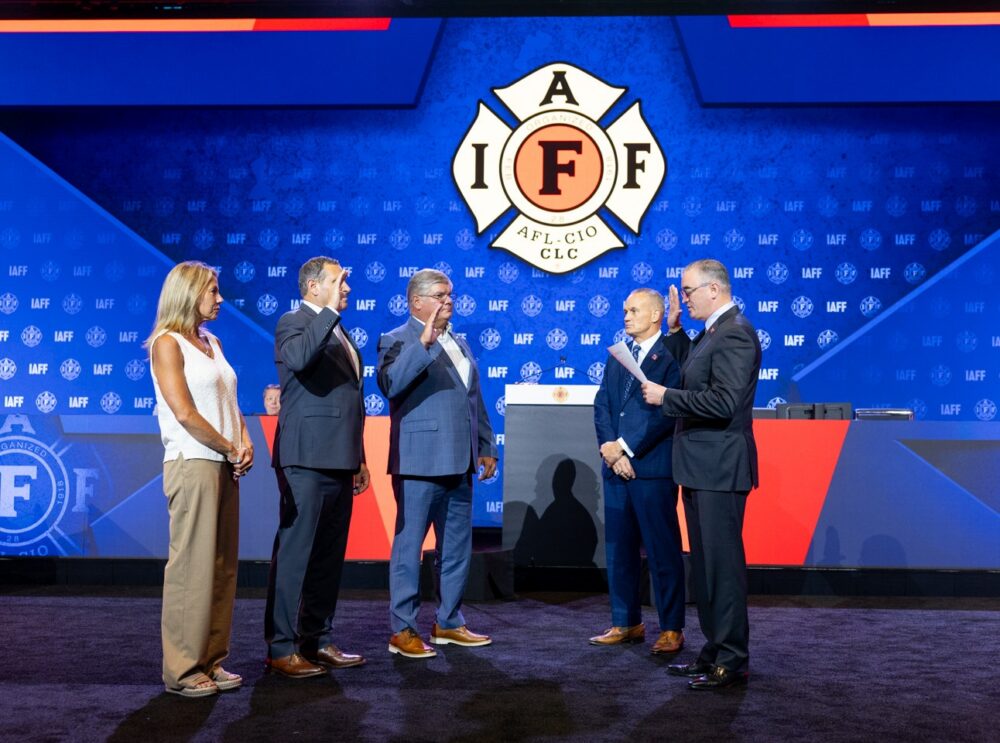
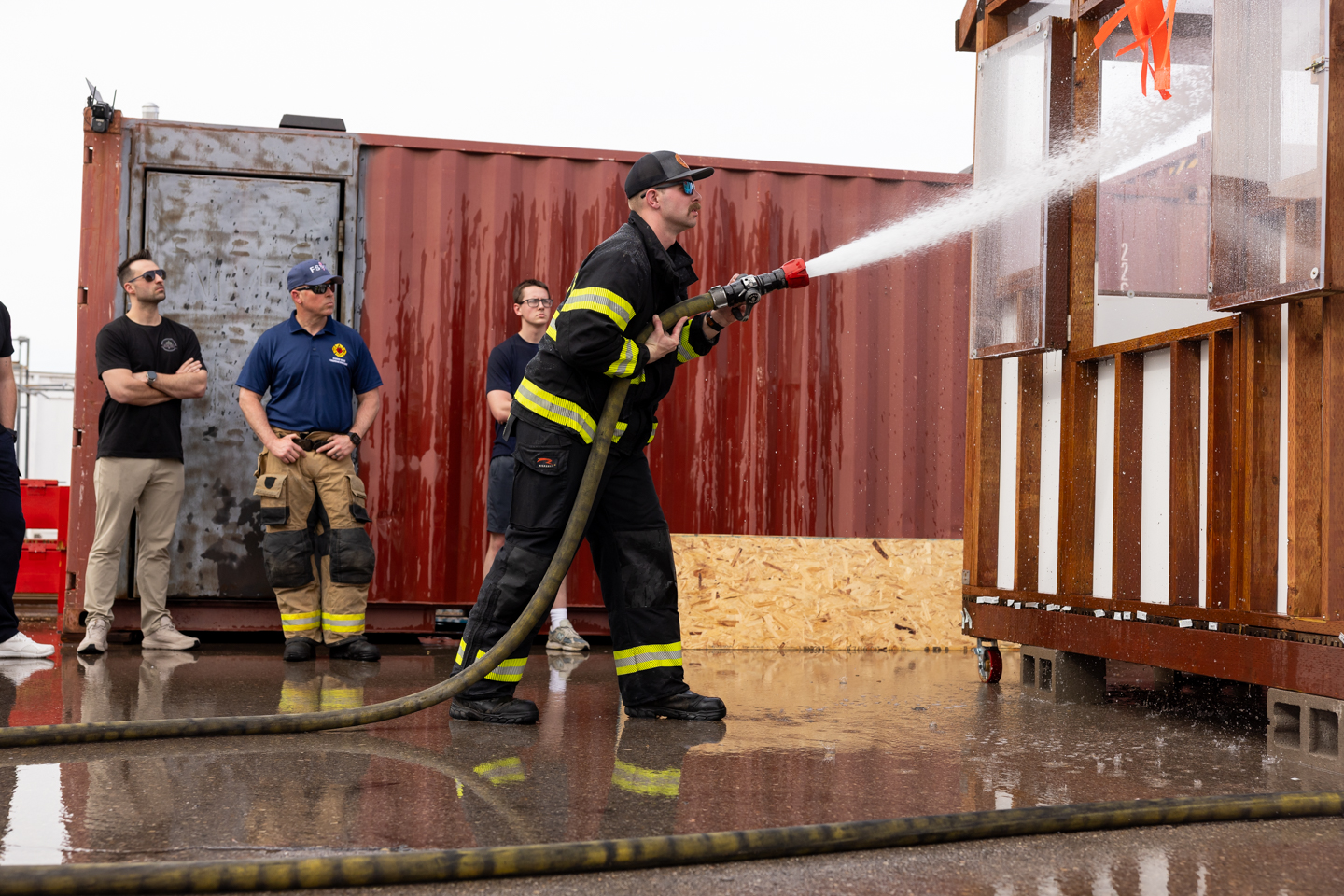
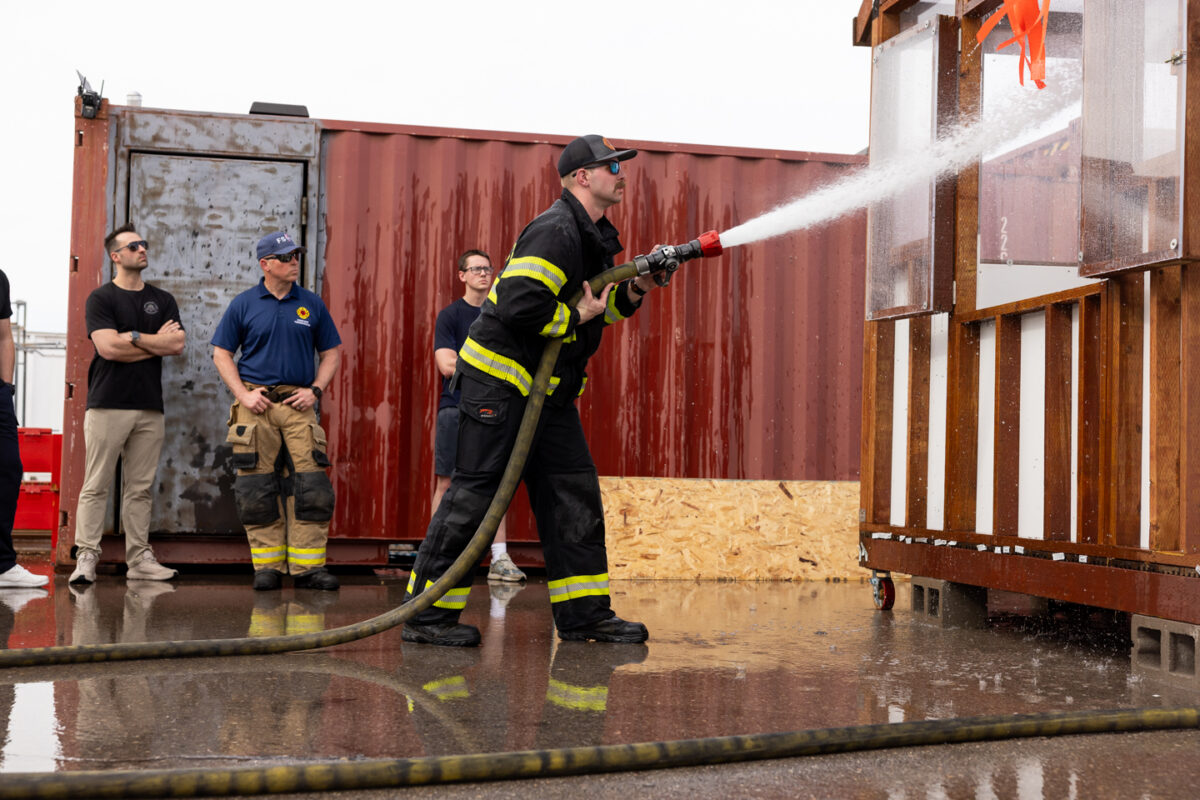
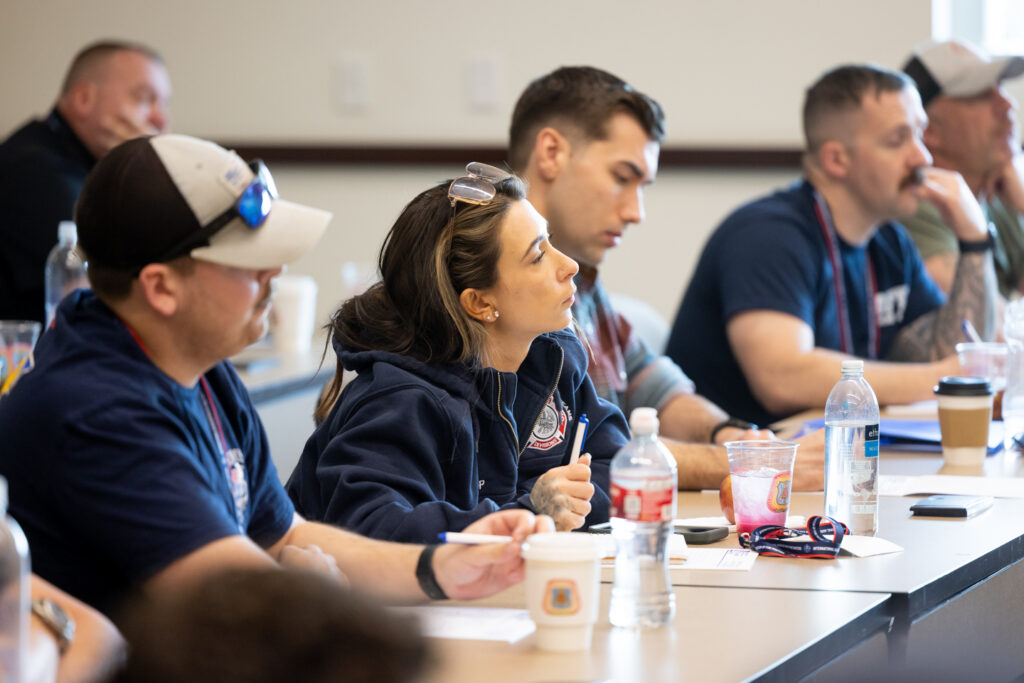
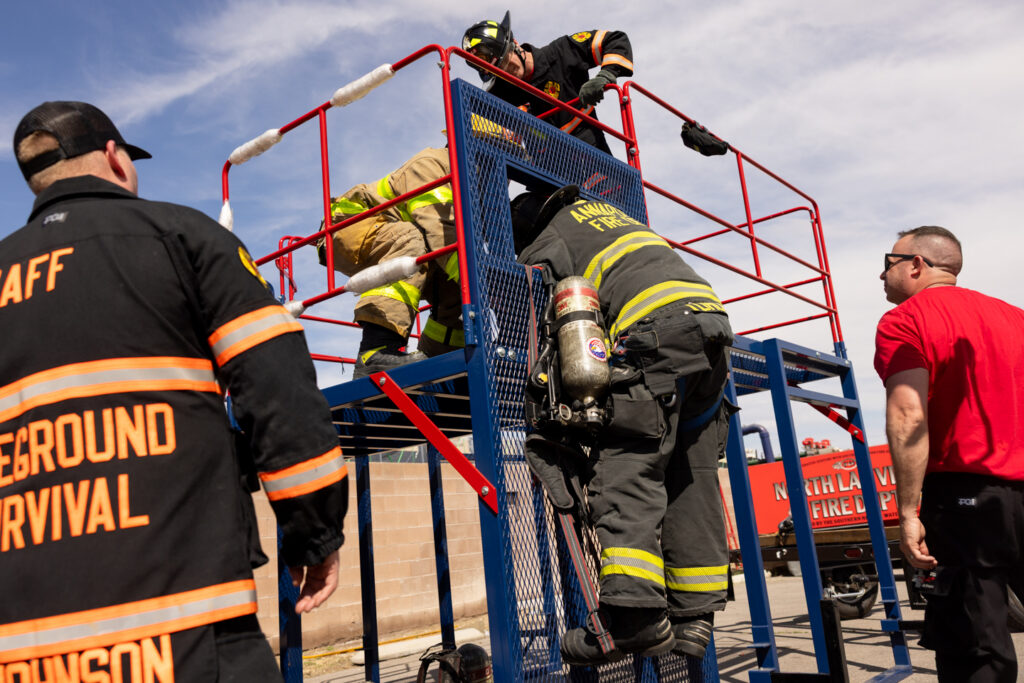
Over five days, nearly 2,000 rank-and-file members and Local leaders took part in hands-on fire ground training and courses designed to strengthen their Locals. It was the first IAFF event of that scale open to all members, whether or not they held union office.
Westminster, CO Local 2889 fire fighter/paramedic Alec Shogan was one of them. After seeing a notice from his Local, he signed up for Command Mindset and Big Box Fire Ground Operations.
“It’s good to see fellow rank-and-file members like me here,” Shogan said. “It’s a great experience.”
That mix reflected the full reach of the IAFF’s Training, Education, & Grants Division: technical instruction built for the realities of the job and education that prepares members to lead and advocate for their union.
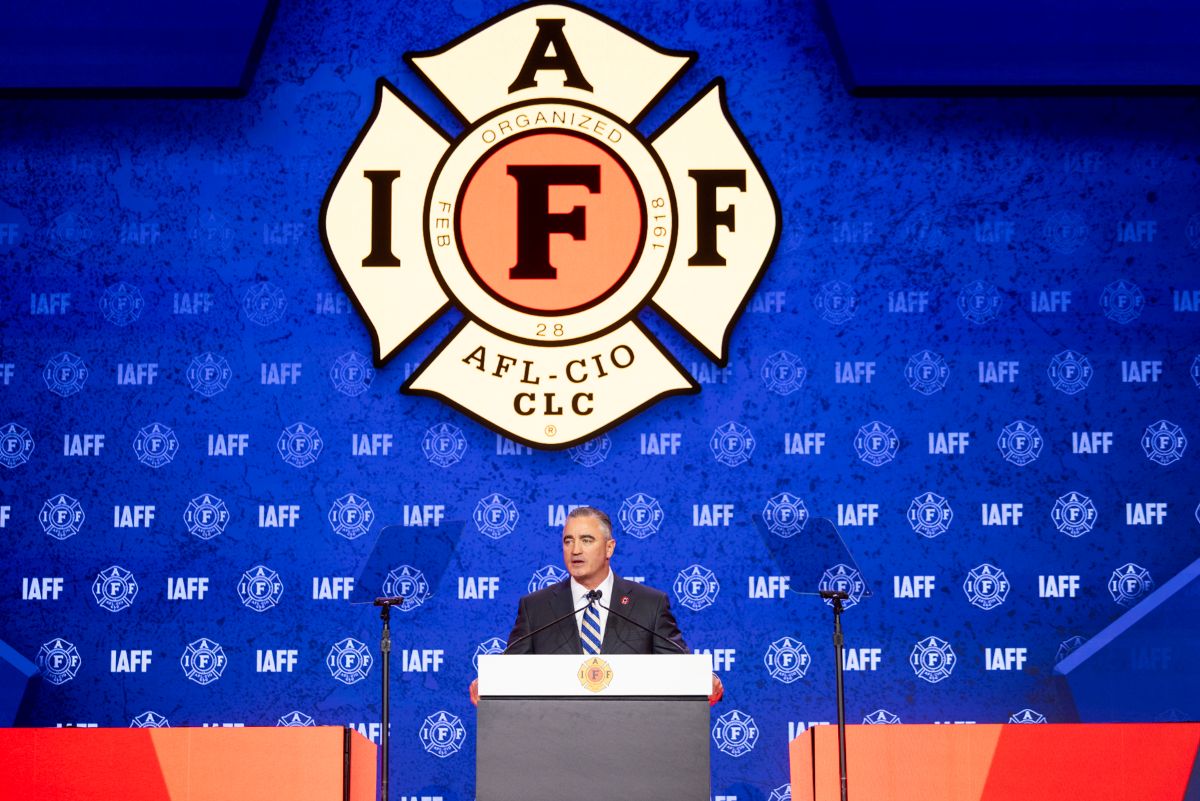
“Some things on this job will never change,” General President Edward Kelly told members at the summit. “But parts of this job do change, and the stakes are too high not to change with it.”
That balance – preserving what is fundamental while preparing members for what is changing – defines the IAFF’s approach to training.
Some things on this job will never change, but parts of this job do change, and the stakes are too high not to change with it.
general president edward kelly
Taking training to members
Strive brought the union’s educational offerings together in one place. But most IAFF training is delivered in departments and union halls across the United States and Canada, far from a Las Vegas convention hall.
Making those courses widely available requires more than developing curriculum. Training, Education, & Grants staff work to identify emerging needs in the fire service and secure outside funding that allows the IAFF to deliver specialized training directly to members.
“Every dollar we secure in Washington becomes a class delivered in a firehouse,” said Dr. Josh Smith, assistant to the general president for Training, Education, & Grants.
Four recent U.S. and Canadian grants totaling more than $18 million will help the IAFF expand specialized training across North America.
The largest – more than $8 million over five years from the National Institute of Environmental Health Sciences – will expand the IAFF’s hazardous materials and disaster preparedness training, including instruction on renewable energy emergencies and drone technology. A separate $7 million award from the U.S. Department of Energy will expand training for fire fighters responding to emergencies at or near nuclear facilities.
A $1.6 million award from the U.S. Department of Transportation will support additional rail-focused HazMat training, while $1.5 million from Public Safety Canada will fund at least 60 classes through 2029.
For members, the value is clear: The IAFF can provide courses and certifications without relying on per capita to fund the work.
“Training is one of the most direct ways we deliver for our members,” said Jamie Burgess, the IAFF’s director of Training and Grants Administration. “Our programs are designed to give them the knowledge and skills they need to make a dangerous job safer for themselves and the communities they protect.”
Courses are developed and taught by experienced fire fighters who know the realities of the job. Several IAFF technical programs are built around federal safety requirements and national fire service standards and carry Pro Board accreditation, allowing members to earn certifications recognized across jurisdictions.
To expand the number of qualified instructors capable of delivering new and existing courses, the IAFF also created a blended Fire Instructor I program. Participants complete online prerequisites before a three-day classroom session. The program is designed to meet NFPA 1020 requirements and carries Pro Board accreditation.
Turning lessons into training
IAFF training is often shaped by what happens on the fire ground.
Newark, New Jersey, fire fighters Augusto “Augie” Acabou and Wayne “Bear” Brooks Jr. were killed while battling a July 2023 cargo ship fire, investigators found that the department had little maritime firefighting training – despite having the largest port on the East Coast in its jurisdiction. The National Transportation Safety Board (NTSB) later determined that the lack of marine vessel training contributed to the ineffective response and the fire fighter casualties.
“The lack of sufficient training and experience can be the difference between life and death for our members,” said Sean DeCrane, assistant to the general president for Health & Safety. “And in Newark, we saw an example of a department with no program in place to adequately train its fire fighters for a known threat in its own jurisdiction.”
DeCrane helped coordinate the IAFF’s participation in the investigation and brought together marine firefighting experts as the NTSB developed a safety alert for land-based departments. The union then secured federal funding to develop an eight-hour awareness course and a 40-hour advanced shipboard firefighting program.
To develop the shipboard courses, DeCrane worked with experienced fire fighters, maritime specialists, and other subject-matter experts to translate the investigation’s findings into practical instruction. The same process guides every new IAFF course: Research, standards, and field experience are turned into curriculum, then beta-tested and refined with members before wider release. For operational training, that testing helps ensure the instruction reflects the conditions and decisions members will face on the job.
In the shipboard courses, members learn how vessel construction and terminology affect operations, how command challenges can complicate a response, and how conditions can change inside a ship. Virtual reality exercises and interactive scenarios allow participants to work through those decisions before confronting the risks during an emergency.
“Our members approached this training with heavy hearts, carrying the memory of our Newark brothers,” said Elizabeth, NJ Local 2040 President David Bialas after the IAFF’s first shipboard firefighting awareness class in New Jersey. “This IAFF program fills a critical void in specialized training, providing us with the real-world experience and professional standards necessary to operate safely in the most challenging environments.”
The February 2023 train derailment in East Palestine, Ohio, prompted a similar response. After a Norfolk Southern train released vinyl chloride and other hazardous materials, the IAFF participated as a party to the NTSB investigation and used the findings to develop a safety advisory on vent-and-burn decisions.
The union has continued working with federal agencies and the rail industry to improve the information and training available to responding crews.
“When a tragedy or a near miss exposes a gap, our responsibility is to learn from it and turn that knowledge into skills fire fighters can use on the fire ground,” Kelly said.
Training for a changing job
Technology is changing the fire service faster than at almost any point in history, and it’s cutting in two directions at once,” Burgess said. “Some technologies are new tools that help make our members safer. On the other hand, there are new hazards our members now face on the fire ground.”
The IAFF is developing training for both.
“We are constantly working to give fire fighters the new skills the job demands,” Smith said.
A new federally funded, first-of-its-kind drone program will train members to use unmanned aircraft for aerial size-up, thermal imaging, and reconnaissance while helping them prepare for the Federal Aviation Administration’s remote pilot certification exam. Drones will also be integrated into select IAFF HazMat training and the union’s disaster relief operations.
At the same time, emerging energy technologies are introducing hazards that were absent from the fire ground a generation ago. Lithium-ion batteries, electric vehicles, energy storage systems, and solar installations can change rapidly under fire conditions and require different tactical decisions.
The IAFF works with organizations, including UL Solutions and the U.S. Department of Energy, to ensure research translates into practical field guidance. Those findings are incorporated into IAFF courses and resources, including the IAFF Energy Hazard Guide available through the IAFF’s Online Learning Center.
The guide helps members understand emerging energy risks – including thermal runaway, gas and carbon monoxide monitoring, and photovoltaic rapid-shutdown strategies. The accompanying Responding to Battery and Energy Storage Emergencies course is available at no cost to members and provides critical tactics for today’s evolving fireground.
Members also have a formal role in evaluating how technology affects the job. Delegates to the 2024 IAFF Convention established the Emergency Operations Technology Committee (EOTC) to help the union examine how emerging technologies affect the safety of fire fighters and emergency medical workers.
Preparing members to lead
Strive for Excellence also made clear that education extends beyond technical training. A stronger fire service depends on members who understand how to lead their Locals and use the resources of their union.
Professional Wildland Fire Fighters Local I-96 member Michael Jackson came to the summit to learn what union leadership required. Halfway through an introductory leadership course, he said the experience had already changed his understanding of the IAFF.
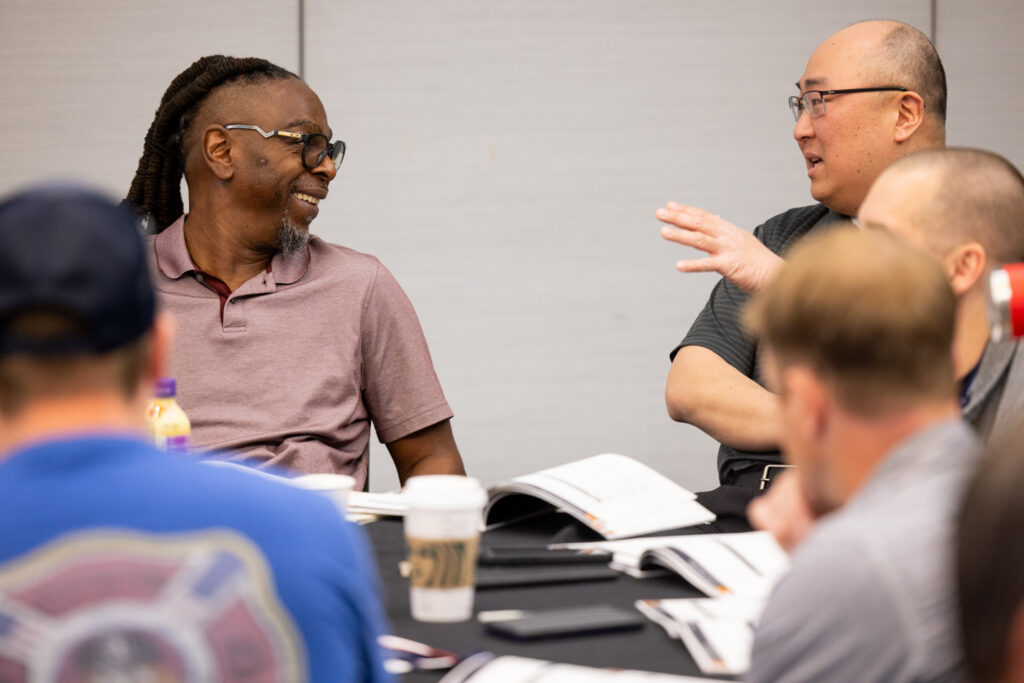
“I came to get knowledge about the union and all the ins and outs – the need-to-know things,” Jackson said. “I’ve already learned so much.”
The IAFF provides union education through programs including the Advanced Communications Training Academy, the A. Michael Mullane Political Training Academy, and the Partnership Education Program.
Members can also learn at their own pace through the IAFF Online Learning Center. Its catalog spans union administration, collective bargaining, health and safety, HazMat, and emergency response. Some courses stand alone, while others serve as prerequisites for instructor-led programs, allowing members to begin their training online before advancing to the classroom or training ground.
New and experienced Local officers can take courses on the responsibilities of union presidents and secretary-treasurers, fiduciary duties, and contract negotiation.
For Whitby, ON Local 2036 Vice President and EOTC member Josh Girard, the value of what the union offers lies in what members can carry home. “The IAFF’s training programs have provided our Local with practical knowledge, stronger leadership skills, and resources we can bring directly back to our members,” he said.
Nobody does training better than the IAFF. The talent in our ranks is second to none. Whether it’s wildfire, HazMat, shipboard firefighting, or new emerging threats, we set the standard.
general president edward kelly
Ready for the next call
In August, delegates at the IAFF’s 58th Convention adopted Resolution 11: “Establishing the IAFF as a Leader in Fire Service Training and Professional Development.” The resolution makes training leadership a formal strategic direction of the union and calls for a comprehensive assessment of fire service training needs across the United States and Canada.
The work will examine current training standards, gaps in delivery, and credentialing systems. Those findings will form the basis of a strategic plan to expand IAFF training and establish the union as a leading authority on fire service training and professional development.
The assessment and strategic plan will be presented to delegates at the 2028 IAFF Convention in Cleveland.
“Nobody does training better than the IAFF,” Kelly said. “The talent in our ranks is second to none. Whether it’s wildfire, HazMat, shipboard firefighting, or new emerging threats, we set the standard.”