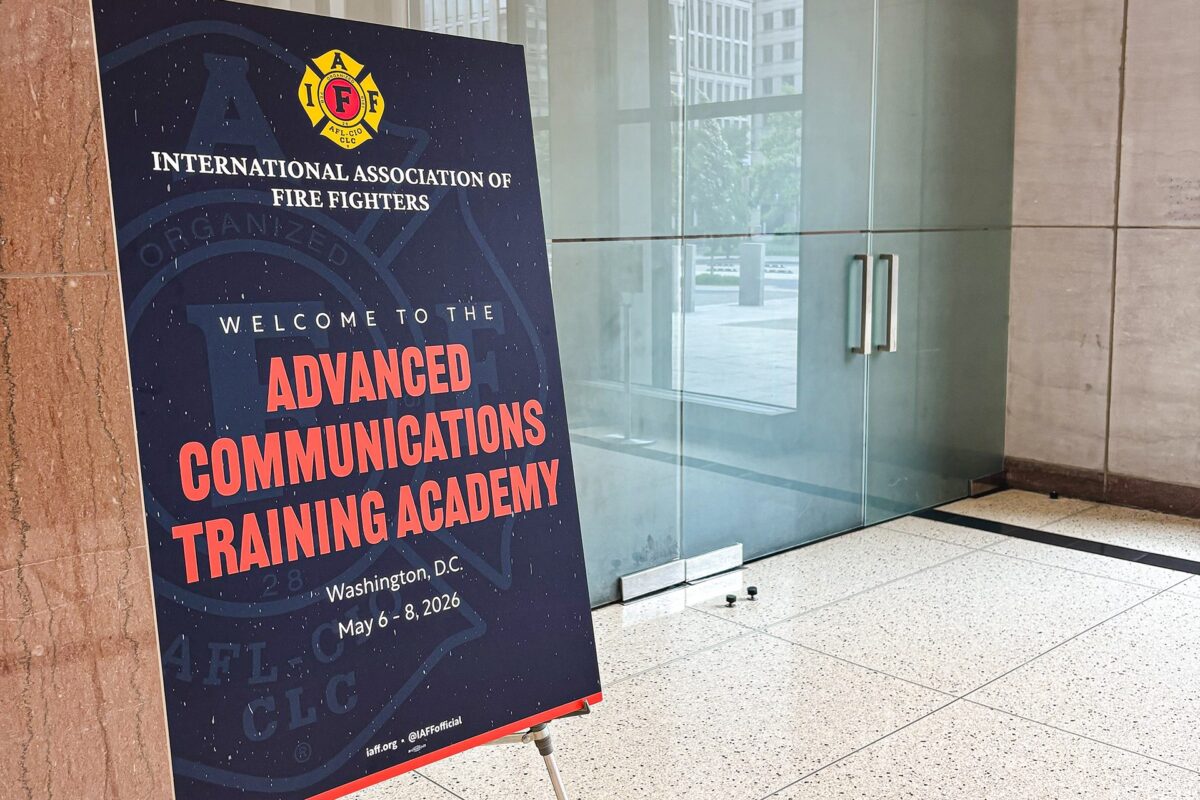
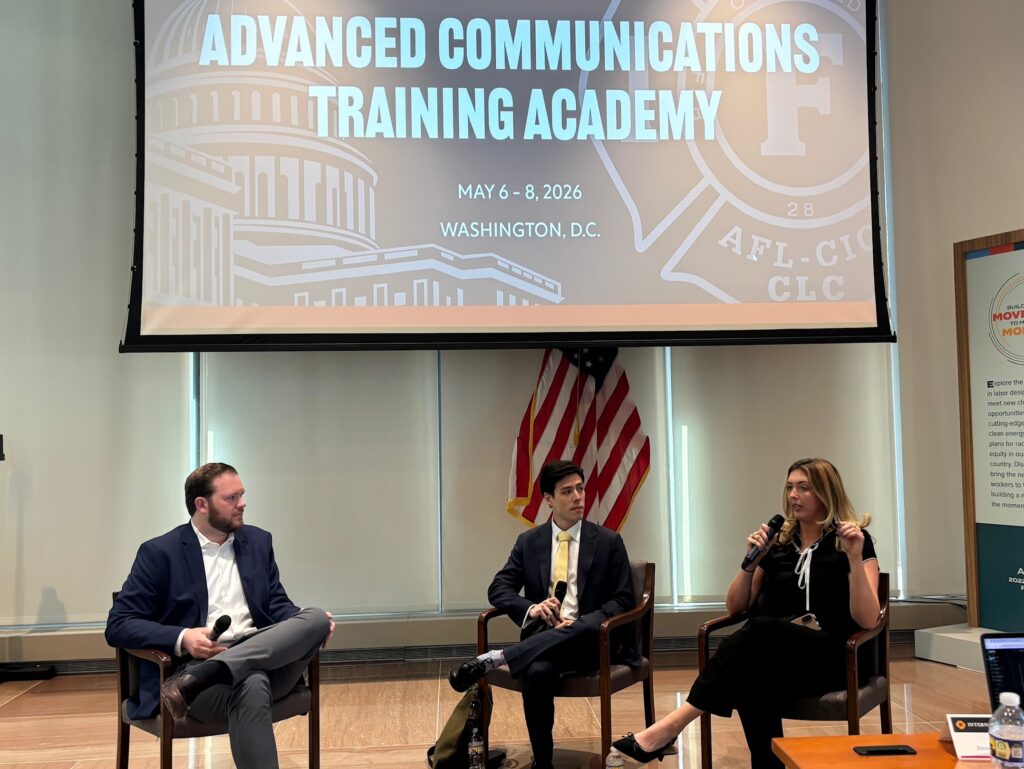
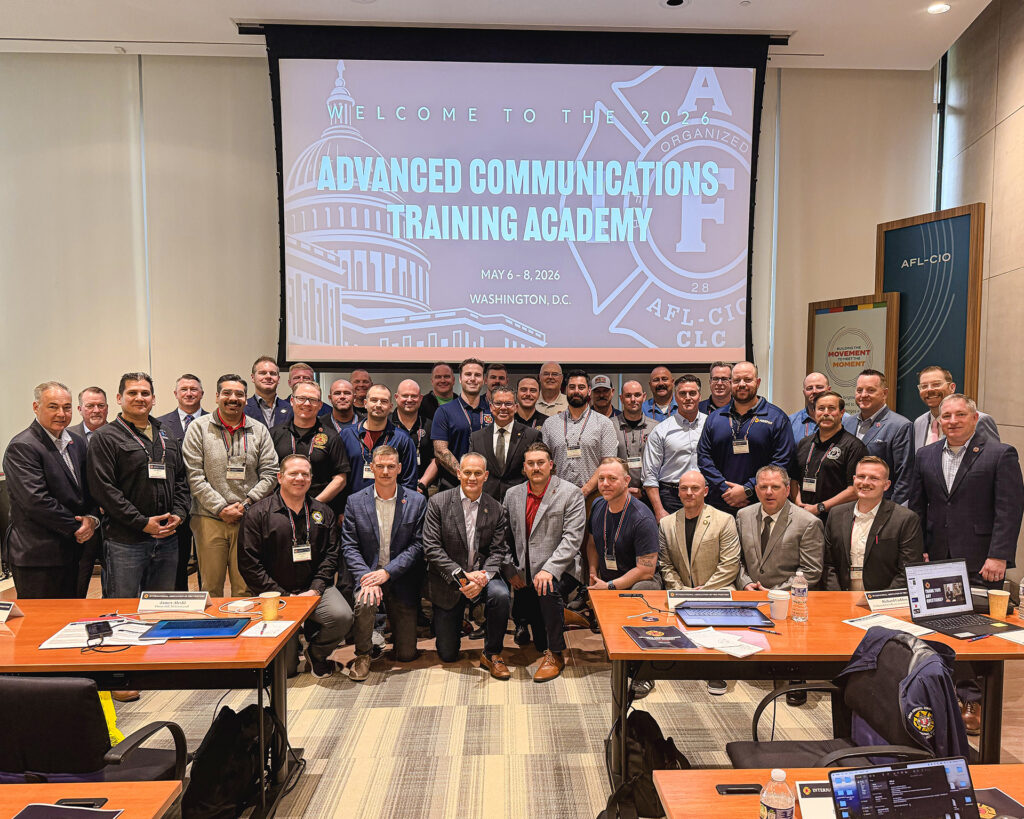
Thirty IAFF members from across the United States and Canada gathered at AFL-CIO Headquarters in Washington, D.C., for the inaugural Advanced Communications Training Academy (ACTA).
The program reflects a growing reality for union leaders: members consume information faster, across more platforms, and expect greater clarity, urgency, and authenticity from their Locals.
For today’s union leaders, communications extends beyond newsletters and membership meetings. Locals now navigate real-time social media conversations, public scrutiny during crises, online political fights, and the challenge of keeping members informed in an increasingly crowded digital environment.
Throughout the week, participants explored how those changes are reshaping the way unions organize, advocate, and communicate with both members and the public.
Preparing leaders for a changing communications environment
“I think the reason we’re here is that we all realize we’ve got areas we need to improve,” said Nick Kasper, president of the United Firefighters of Winnipeg Local 867.
Kasper said the ACTA offered practical tools his Local can begin applying immediately.
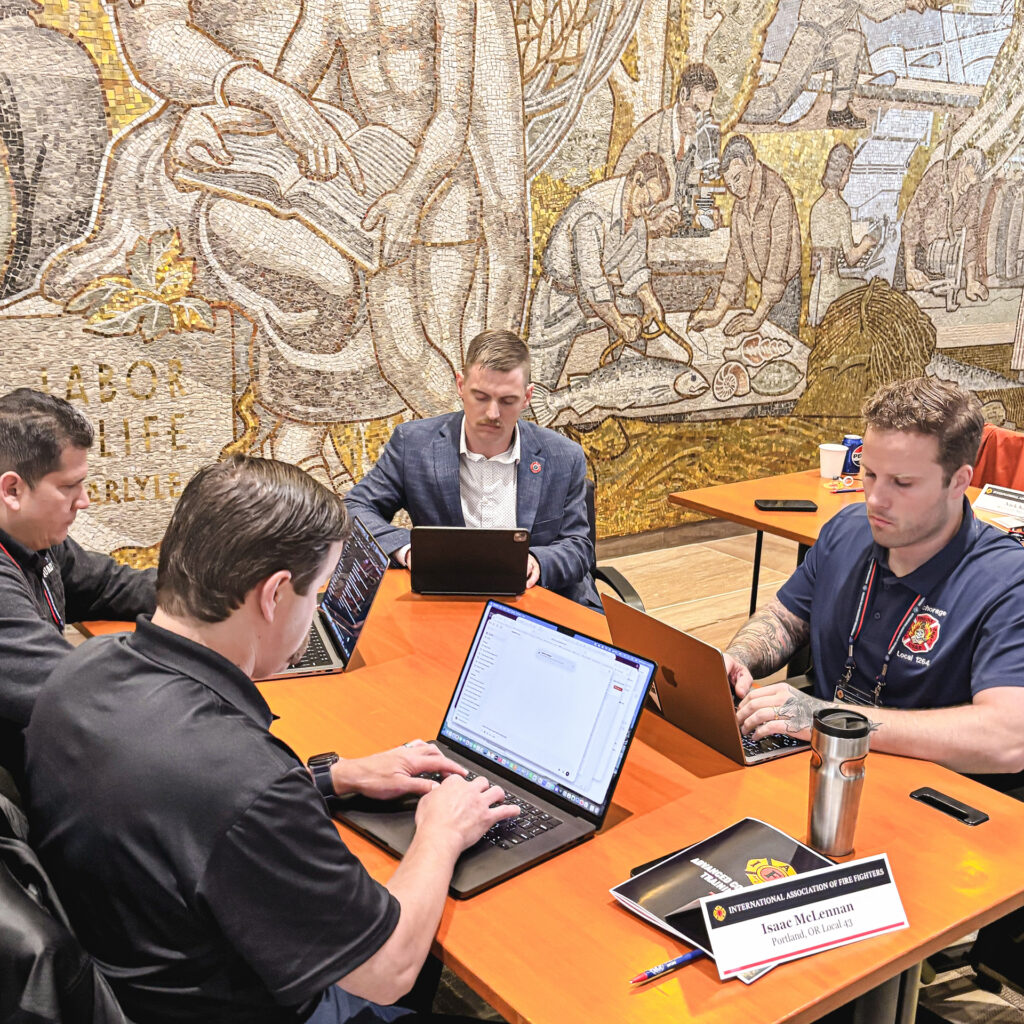
Participants worked through realistic scenarios facing Locals in today’s communications environment. In one workshop, attendees broke into groups to rebuild weak union messaging around stalled contract negotiations. Leaders identified where the messaging failed, then rewrote it for different audiences and platforms.
Another exercise session challenged participants to develop digital pressure campaigns around realistic scenarios and real-world situations, including proposed budget cuts that would close fire companies and increase response times. Participants mapped out campaign strategies and drafted public-facing messaging designed to pressure elected officials.
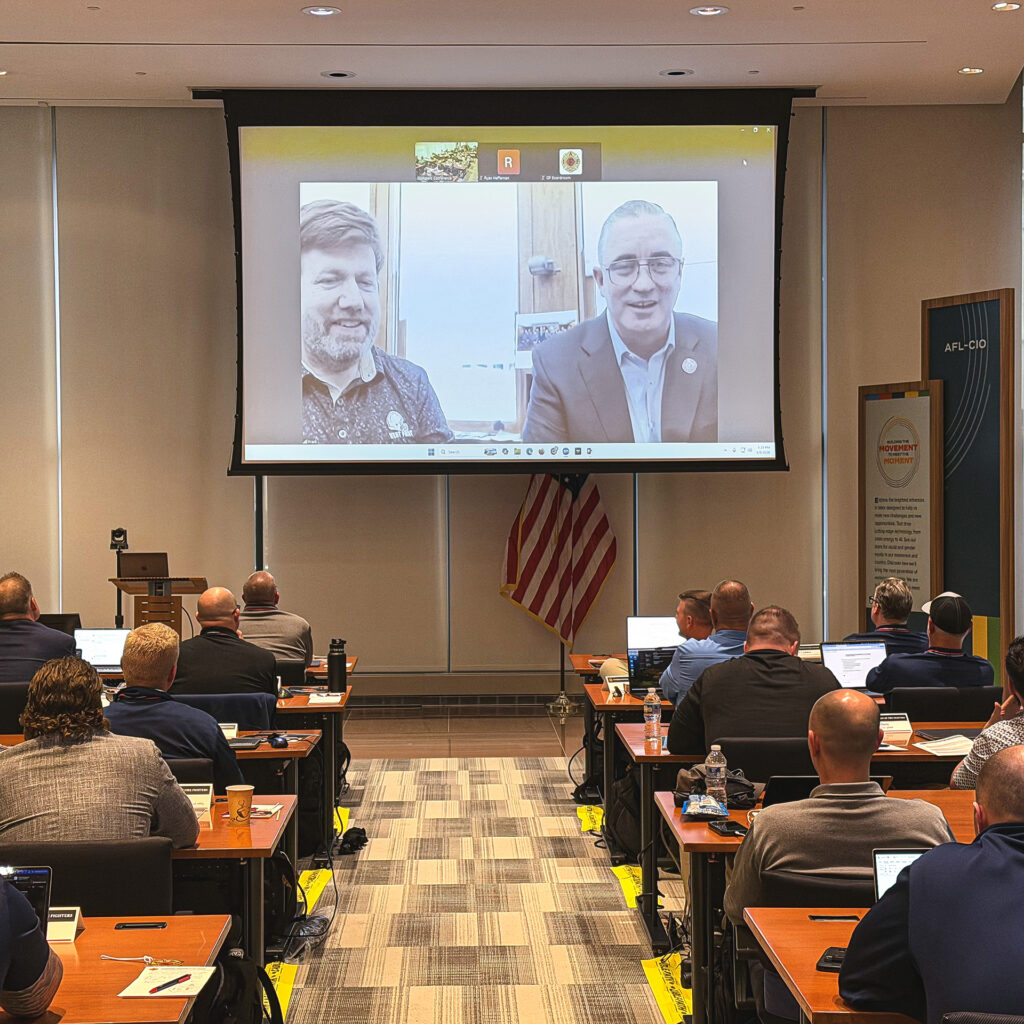
The training also exposed participants to perspectives outside the fire service. Subject matter experts walked through how people consume information online today, how algorithms shape engagement, and how AI and social media continue to change audience behavior.
Connor Marckstadt, a communications specialist with the Colorado Professional Fire Fighters, said the experience changed the way he thinks about his role.
“There’s a lot more to what I’m actually putting out,” he said.
More importantly, he said the training changed how he approaches communications as a whole.
“I feel like I was a little timid before, but I won’t hold back now,” Marckstadt said, “I won’t be afraid to put myself out there for the greater good of the membership.”
Telling the story
One of the central themes throughout ACTA was helping Locals better connect members to the union’s work on their behalf.
“They just think they’re just getting a T-shirt or that the department simply pays their paycheck,” Marckstadt said. “They don’t always know that the union has negotiated contracts for them.”
Throughout the week, participants worked through exercises focused on turning complicated labor issues into messaging that resonates with both members and the public.
Participants practiced taking issues such as understaffing and station closures and reframing them around community impact, including response times, staffing levels, and public safety.
For Isaac McLennan, president of Portland, OR Local 43, communications starts with making sure members understand what the union is doing on their behalf.
Our members are our clients. They’re the ones we should be listening to. They’re the ones we should be speaking with.
Portland, OR Local 43 president Isaac McLennan
“You think, ‘I’m dealing with a problem, I’m solving the problem,’ but did I tell the members that?” he said. “Our members are our clients. They’re the ones we should be listening to. They’re the ones we should be speaking with.”
Participants also explored how AI and digital tools can help Locals communicate more effectively across platforms while managing limited time and resources.
The ACTA emphasized the growing importance of video-driven communications and audience-specific messaging as people consume information on mobile devices and social media.
A single event or video can be adapted into multiple formats, including Facebook posts, Instagram Reels, TikTok videos, and YouTube Shorts, helping Locals maintain a presence across platforms while reaching different audiences more effectively.
Bringing those lessons back home
For many participants, the challenge is no longer whether Locals should prioritize communications, but how to adapt in an environment that continues to evolve rapidly.
“What worked 10 years ago doesn’t work today, and what works today may not work in the future,” Marckstadt said.
That reality is driving a broader shift in how IAFF leaders approach communications – treating it as part of daily union operations rather than an occasional responsibility.
Communications is at the root of everything. It’s the root of all conflict, it’s at the root of all negotiations, and it’s how we tell our membership and the public what’s important to us and frame the message people need to hear.
Winnipeg, MB Local 867 president Nick Kasper
“Communications is at the root of everything,” Kasper said. “It’s the root of all conflict, it’s at the root of all negotiations, and it’s how we tell our membership and the public what’s important to us and frame the message people need to hear.”
As participants return to their Locals, many said their focus not simply on producing more content, but on communicating more effectively – building trust with members, strengthening public support, and helping members better understand the union’s role.
As Kasper put it, “Stronger communications create a stronger Local, which creates a stronger IAFF.”