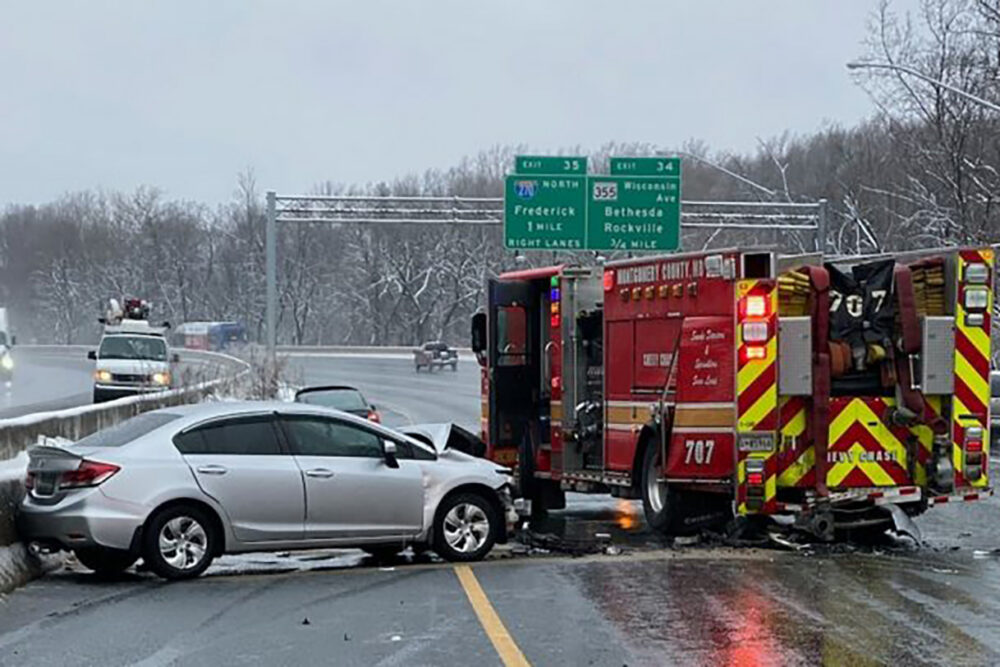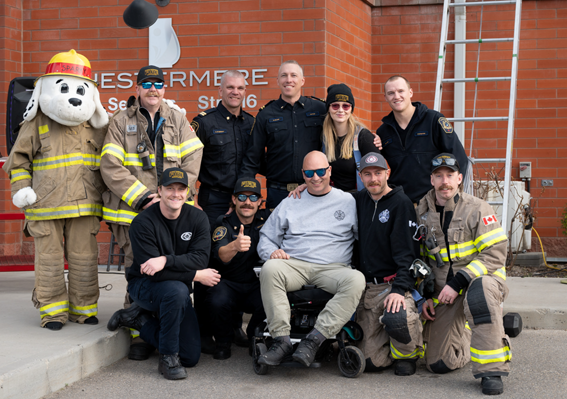
Brooks Gower was responding to a crash last year on an icy, fog-covered road in British Columbia when another vehicle lost control and struck him.
The Dawson Creek Local 2136 member suffered multiple fractures in both legs, a broken arm, nine broken ribs, and five broken vertebrae.
Gower survived, but his experience underscores one of the most dangerous aspects of firefighting: working alongside moving traffic, where even a routine emergency response can turn deadly.
“Car crashes are among the most dangerous emergencies we respond to. Drivers often don’t see us because we are on the other side of a hill, inside of a curve, or other inconspicuous location,” Dawson Creek, BC Local 2136 President Brad St. Germain said. “Injuries as serious as Brooks’ are rare, but we have close calls all the time.”
The National Fire Protection Association (NFPA) estimates that being hit by a vehicle causes 8% of annual fire fighter fatalities and over 700 nonfatal injuries each year.
With Crash Responder Safety Week approaching Nov. 2-6, the IAFF is reminding members that proper training, advance warning systems, and careful scene management can help prevent similar tragedies. The IAFF and NFPA have issued safety guidance, and OSHA has proposed an updated standard with requirements intended to protect emergency personnel, including fire fighters.
IAFF safety alert
After Gower’s serious injuries, the Dawson Creek fire chief and fire department administration issued new response guidelines with poor weather conditions in mind.
“We now give potential oncoming drivers an earlier warning that an incident is up ahead. Cones, apparatus, and personnel will now occupy a larger area,” St. Germain said. “The extra space will create a buffer that we hope will better protect everyone on scene.”
The IAFF’s Division of Health, Safety, and Medicine issued an updated safety advisory on the subject. The advisory also addresses the importance of advance warning, advising the use of multiple safeguards such as placing blocking apparatus further up the road from the crash, digital alerts to notify GPS apps, and strategic light configuration.
The advisory also cautions that fire fighters should stay on high alert from the time they arrive on scene until they leave.
“Responding to emergencies on roads and highways are always high-risk situations,” Assistant to the General President for Health & Safety Sean DeCrane said. “There is no way to predict passing motorists’ ability to navigate around the incident, so it is incumbent upon fire fighters and other first responders to stay vigilant throughout the emergency response to ensure the safety of everyone on scene. The IAFF’s safety advisory is an important guideline.”
NFPA recommendations
Some of the IAFF’s recommendations are derived from current NFPA standards, which include NFPA 1550, NFPA 1091, NFPA 1400, and NFPA 1900. Members should be familiar with the standards and their departments’ related procedures:
- NFPA 1550, Standard for Emergency Responder Health and Safety, has a chapter on traffic incident management. It mandates that fire departments provide related training, establish protocols for using fire apparatus for blocking roads and highways, and require fire fighters to wear high-visibility apparel.
- NFPA 1091, Standard for Traffic Incident Management Personnel Professional Qualifications, focuses on secondary crash prevention when responding to vehicle incidents. This includes the crash lane plus one rule, apparatus angling, and visual markers such as bright-colored cones.
- NFPA 1400, Standard on Fire Service Training, covers the development of training programs designed to ensure safe apparatus placement, driving practices, and crash avoidance.
- NFPA 1900, Standard for Aircraft Rescue and Firefighting Vehicles, Automotive Fire Apparatus, Wildland Fire Apparatus, and Automotive Ambulances, focuses on deploying visual markers such as reflective striping, rear chevron patterns, and emergency warning light packages to make blocking apparatus clearly visible to approaching motorists.
OSHA proposes updated safety requirements
The Occupational Safety and Health Administration is expected to reinforce these standards and provide additional guidance as part of its updated Emergency Response Standard.
The proposed standard covers a broad range of issues, including standard operating procedures, medical screenings, behavioral health, training, personal protective equipment guidelines, and other areas.
It will also include guidance to prevent struck-by incidents, including mandates about high-visibility apparel, training, standard operating procedures for scene safety, and defined roles for all emergency personnel on scene.
Move over and distracted driving laws
A driver who failed to slow down or move over crashed into a Canton Fire Department vehicle on the scene of a crash in October. Canton Local 249 member Christopher Burkhardt was inside the apparatus and sustained non-life-threatening injuries.
“Ohio has move over and distracted driver laws. While they do act as a deterrent, we know there are going to be times when these laws are not followed,” Canton Local 249 President Scott Winkhart said. “Nothing is 100 percent effective. That is why it is so important that we put up as many additional safeguards as we can.”
All 50 U.S. states and all 10 Canadian provinces have some form of move-over law. In the three Canadian territories, laws only give moving emergency vehicles the right-of-way over all other traffic and motorists are not allowed to block intersections; however, they are not required to switch lanes. Every state except Montana also has a statewide distracted driving law, although several Montana cities ban handheld phone use.
The specific requirements vary but move-over laws generally require drivers to slow down and move to another lane, when possible, when approaching emergency vehicles with flashing lights. Distracted-driving laws also vary: Most states ban texting while driving, and some also restrict handheld device use.
The success of these laws has been mixed in both the United States and Canada. Experts say clear requirements and significant penalties can help improve compliance.
But even when crews take precautions and move-over laws are in place, drivers may still put responders at risk
That was the case in a Ventura County, California, crash in late September [link to news story] that resulted in the driver being arrested on suspicion of DUI.
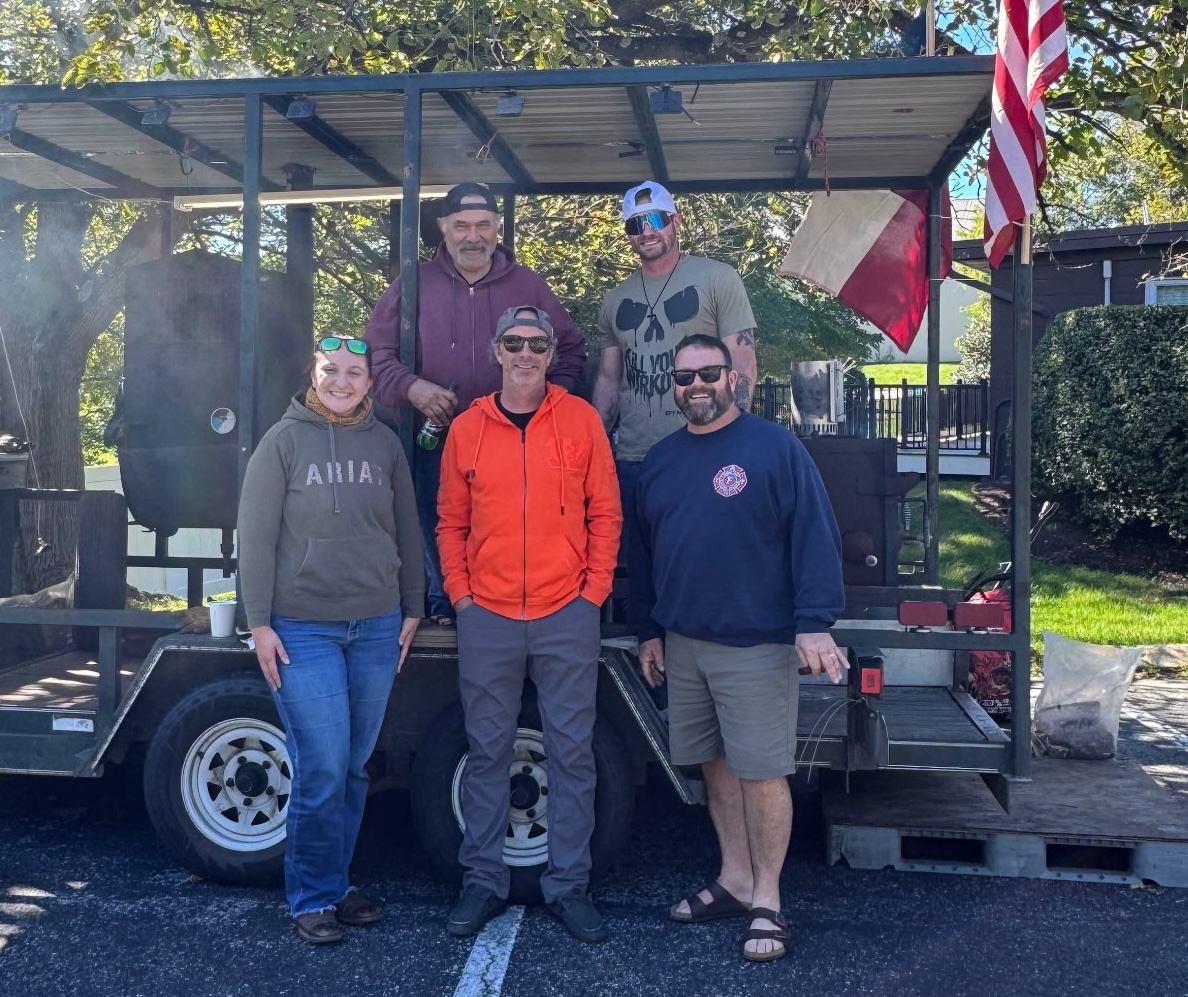
“Our members were packing up after responding to an accident on State Route 118 when a driver went around our flares and all the safeguards we had put up, hitting and injuring one of our members,” Ventura County, CA Local 1364 President Kevin Aguayo said.
“The crash is still under investigation. But the department will be looking at ways to improve safety during these roadway and highway responses,” he continued. “These changes may include more apparatus used as blockers and a wider blocked off area.”
Crash Responder Safety week is Nov. 2-6
The U.S. Department of Transportation’s Federal Highway Administration hosts Crash Responder Safety Week (CRSW) annually to raise public awareness about the dangers. This year, it will be held Nov. 2-6.
Participants, including IAFF members, are encouraged to remind road users to slow down and move over when approaching road and highway emergencies and encourage first responders to take advantage of free training [National Kickoff Webinar: Crash Responder Safety Week 2026 | National Operations Center of Excellence].
The IAFF is also offering resources and information here.