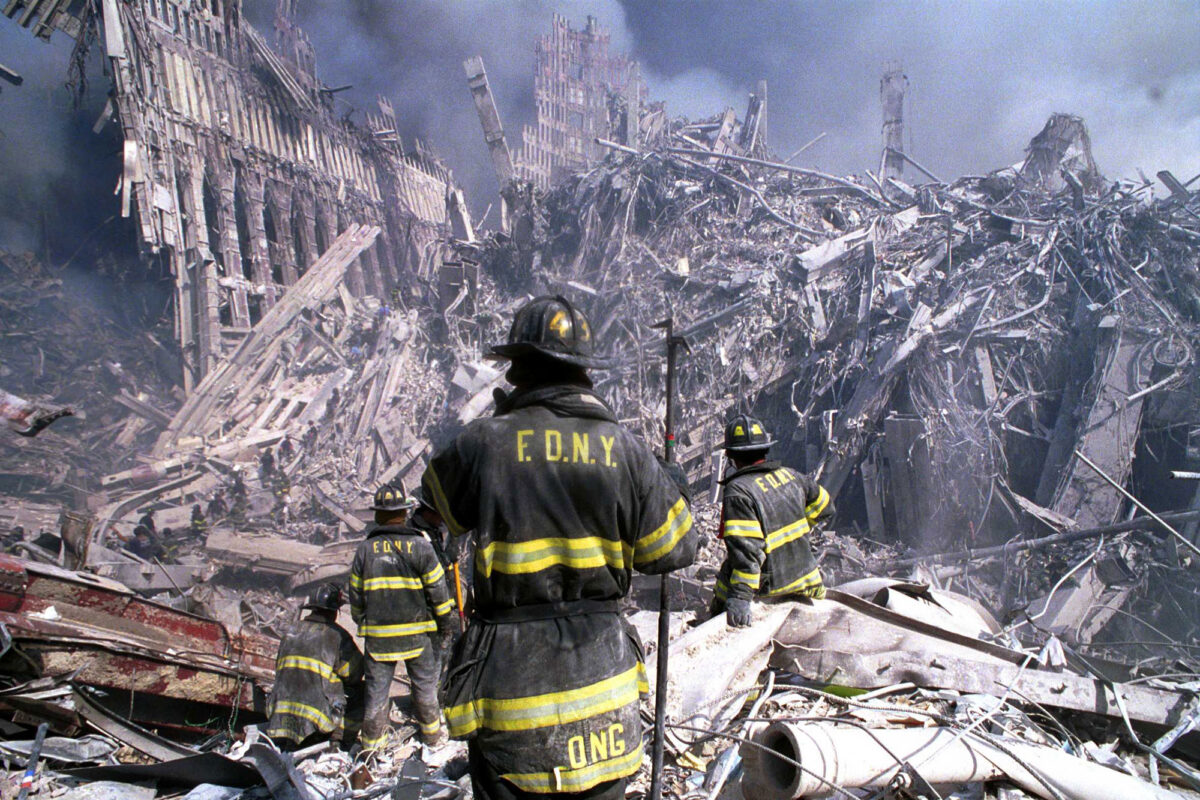
The Sept. 11 terrorist attacks confronted the fire service with an incident beyond anything it had prepared for.
The collapse of the World Trade Center towers killed 343 FDNY members and a New York Fire Patrolman. It also exposed major gaps across the fire service, especially incident command, communications, health protections, and behavioral health.
In the 25 years since, the IAFF has helped turn those lessons into changes that have reshaped how the fire service prepares for large-scale emergencies – and how it protects members during and after the response.
“The 9/11 Commission called it a failure of imagination,” General President Edward Kelly said of the country’s preparation for terrorist attacks. “And the lesson for the fire service was clear: We have to be ready for any emergency our communities might face, even ones we have never seen before.”
“The IAFF has worked to make sure fire fighters have the tools and training for those incidents,” he added. “It’s what we owe to our fallen.”
The 9/11 Commission called it a failure of imagination. And the lesson for the fire service was clear: We have to be ready for any emergency our communities might face, even ones we have never seen before. The IAFF has worked to make sure fire fighters have the tools and training for those incidents. It’s what we owe to our fallen.”
General President Edward Kelly
Moving toward one shared command structure
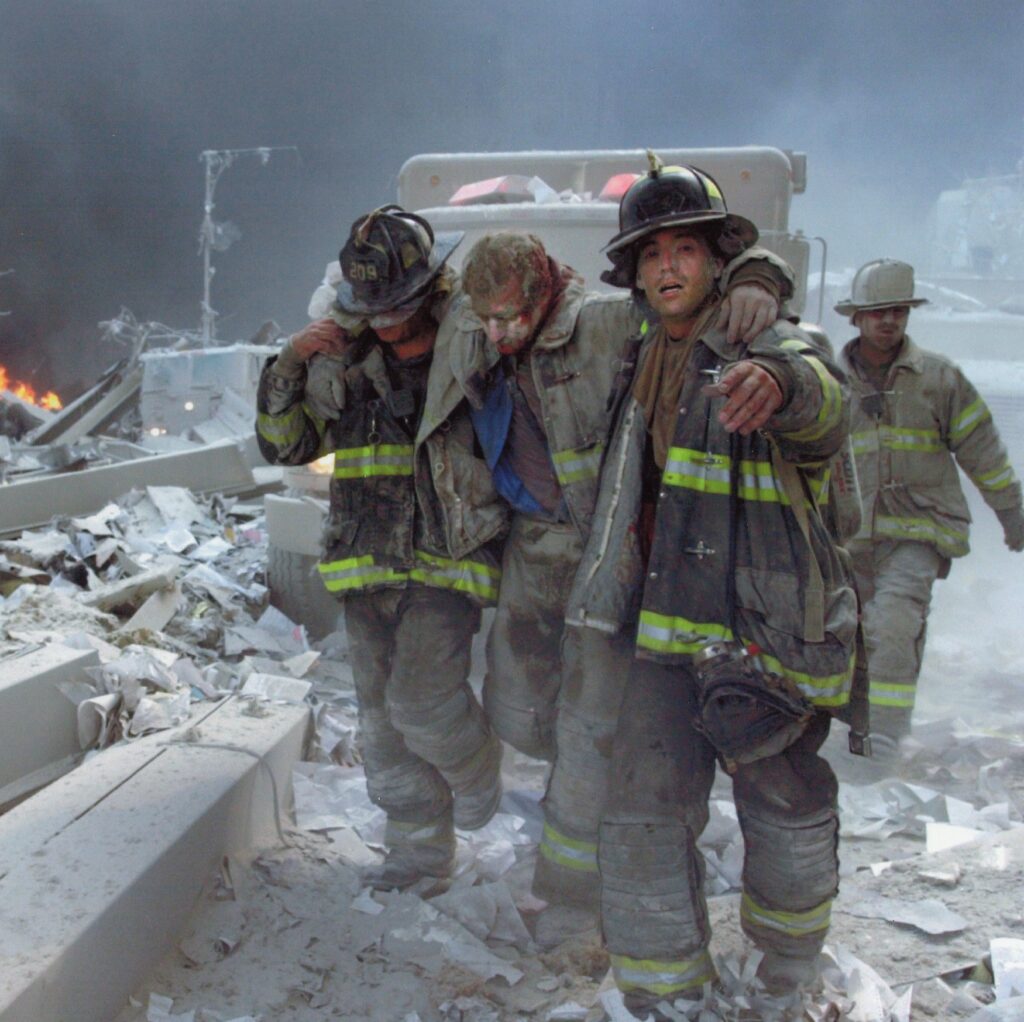
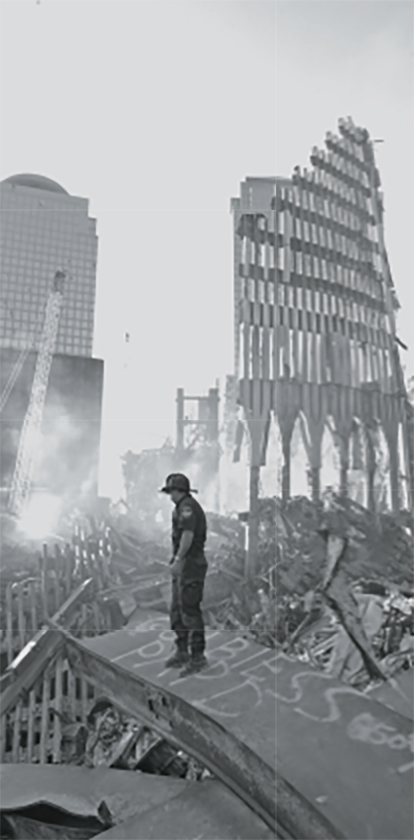
The scale of the response overwhelmed existing command structures in New York and around the Pentagon.
“The scene was so disrupted it was almost impossible to figure out what was happening on the other side of the scene,” said Uniformed Fire Officers Association Local 854 President Jim Brosi, a fire marshal at the time. “You could only manage the one section you were working.”
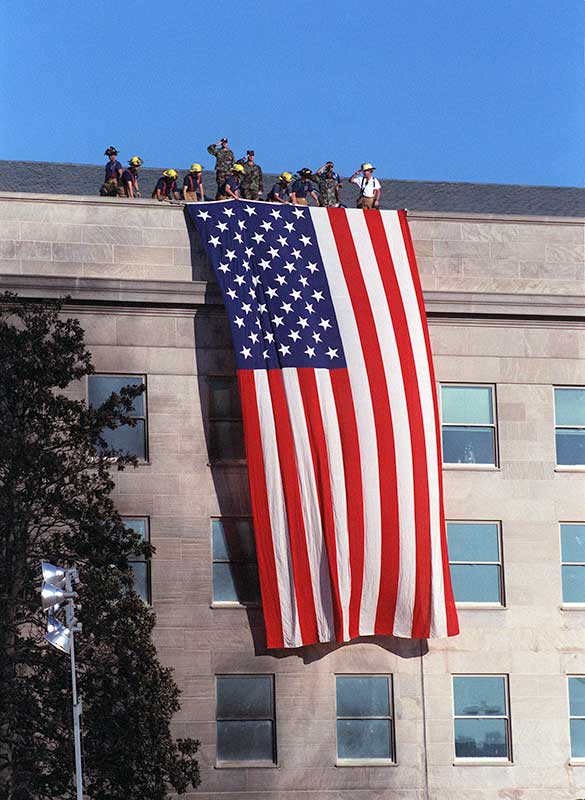
The scene around the Pentagon presented similar challenges.
“There was really no real playbook for responding to the attacks that unfolded on that day,” said 4th District Vice President Andrew Pantelis, who had been on the job for just two years when American Airlines Flight 77 hit the Pentagon.
The response underscored the need for agencies to train together and establish a common command system before a disaster occurs.
In 2004, the federal government adopted the National Incident Management System, creating a consistent framework for agencies responding to emergencies. Departments also began incorporating that structure into routine training and planned events.
The FDNY now develops incident action plans for events such as New Year’s Eve and the Macy’s Thanksgiving Day Parade. The plans identify the communications system, command post, medical facility, and other operational details.
“They have done a good job in threading the structure into routine responses so that when a tragic response occurs, they’ll be more inclined to have everyone follow it because they’ve seen it under a non-stressful environment,” Brosi said.
Pantelis said regular interagency operations and training have also strengthened coordination among departments in the Washington region.
“You see over the course of time the improvement in how we respond,” he said.
Accountability systems have also changed. Brosi said that after 9/11, officials had to visit individual firehouses and consult handwritten journals to determine which members were missing.
“We spent days on end going to each firehouse, just trying to figure out whose name was written in the book to determine who was missing,” he said. “Now everything is electronic. Somebody hits an emergency alert, and it comes across the electronic board. If there’s a catastrophic event, we’ll know exactly who was assigned in real time.”
Protecting fire fighters and their families
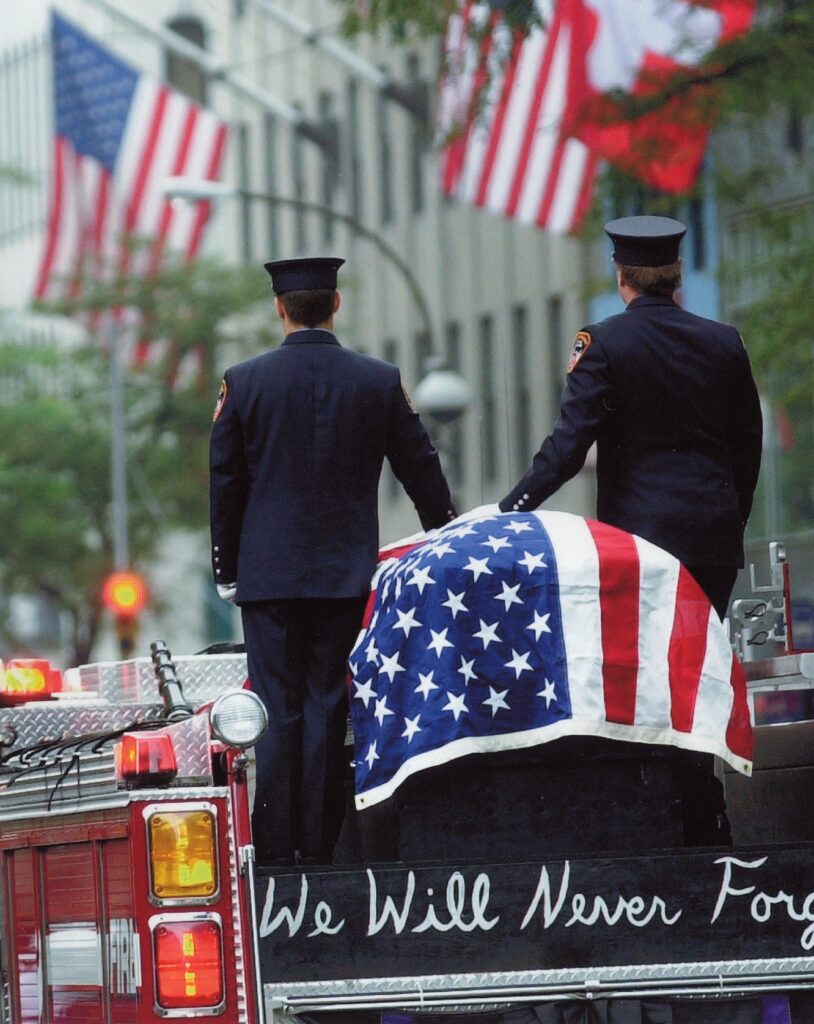
In the immediate aftermath, the IAFF raised more than $167 million for the families of fallen members and began pursuing federal protections for fire fighters and their families.
“We wanted to make sure those members did not die in vain,” former Assistant to the General President Kevin O’Connor said. “We did not want plaudits; we wanted legislation that would improve the fire service.”
Within weeks, the IAFF helped secure provisions increasing the Public Safety Officers’ Benefits (PSOB) death and disability benefit to $250,000 (retroactive to Jan. 1, 2001). Additionally, it expedited payment procedures for first responders.
The attacks also demonstrated that departments need enough fire fighters to respond when disaster strikes. The IAFF helped secure the Staffing for Adequate Fire and Emergency Response (SAFER) grant program in 2003, giving departments access to federal funding to hire fire fighters and improve staffing.
And in 2010, Congress passed the James Zadroga 9/11 Health and Compensation Act, establishing funding for medical monitoring and treatment for World Trade Center responders and others who became ill from Ground Zero toxins.
Confronting toxic exposures
General Secretary-Treasurer Frank Líma was among the IAFF members who worked at Ground Zero.
“We were hoping to make a difference, and we worked on the pile supporting UFA Local 94, UFOA Local 854 members, and other USAR teams,” Líma said. “Now, 25 years later, many of us are still looking to make a difference – whether it is fighting for more training or better PPE.”
We were hoping to make a difference, and we worked on the pile supporting UFA Local 94, UFOA Local 854 members, and other USAR teams. Now, 25 years later, many of us are still looking to make a difference – whether it is fighting for more training or better PPE.
General Secretary-Treasurer Frank Lima
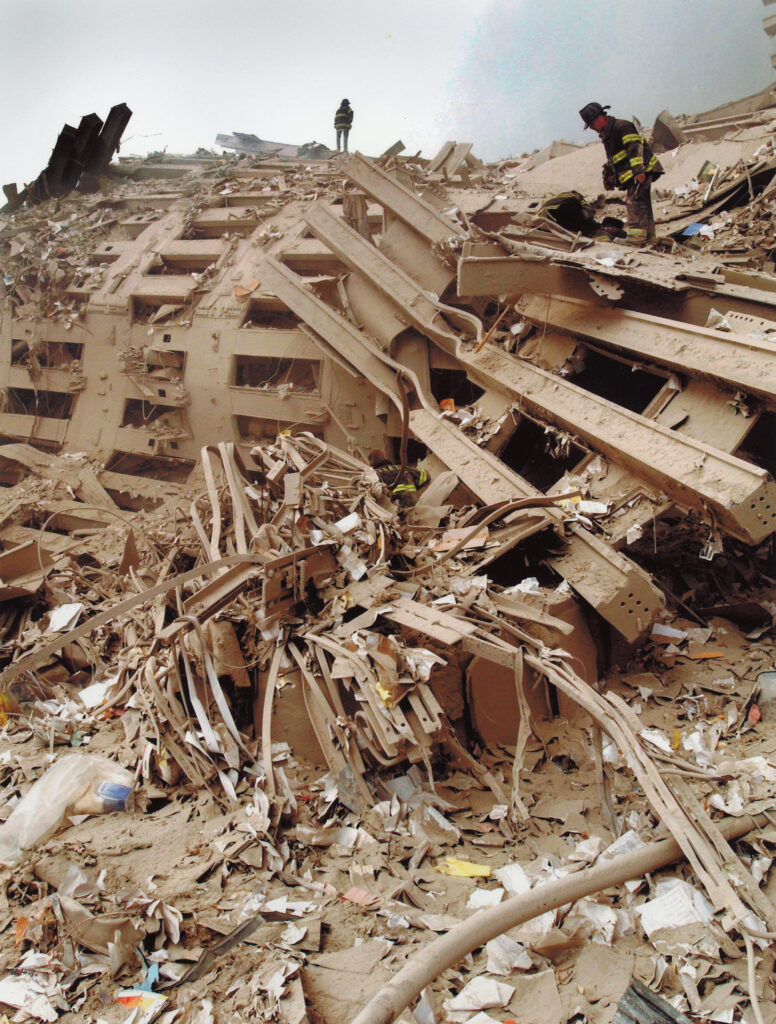
Responders worked for months amid dust, smoke, debris, and other hazards whose long-term health consequences were not yet understood. The illnesses that followed demonstrated the importance of documenting exposures, establishing health baselines, using respiratory protection, and monitoring responders after an incident ends.
Because the FDNY had established health baselines for each fire fighter, its medical experts could compare members’ health before and after their work at Ground Zero. That data helped researchers identify patterns of respiratory illness and, later, cancer among responders.
The response also exposed the danger of carrying contaminants away from a disaster site. Brosi said adequate respirators and decontamination facilities arrived too late during the prolonged operation.
“We were leaving the site and being hosed down with the rig. The rigs were being hosed down before you left the site just to eliminate the contamination going above Canal Street,” Brosi said. “The rigs remained contaminated for years after. The gear was being returned to firehouses all around the city, which was then contaminating the apparatus floor. And then the members were responding wearing that same gear in a small cab for weeks and months after that.”
“Personal protective equipment is there for a reason. But the longer people are there on site, the harder it is for them to comply,” said David Prezant, FDNY’s deputy chief medical officer. “And so we need to be more aware of that. We need to have more rotation in and out of the site.”
Those lessons informed later responses. After Hurricane Katrina, the IAFF conducted health evaluations to document potential exposures. At the Surfside condominium collapse, it worked with the University of Miami to establish environmental monitoring and secure additional respiratory protection.
Across the fire service, members are now taking their health and well-being more seriously.
“Our members are much more willing to send their gear out, to take a shower, to decon, because you just don’t know what you have come in contact with,” Uniformed Firefighters Association (UFA) of Greater New York Local 94 President Robert Eustace said. “When we give our pension seminar, I always say, ‘you’re either retired or dead, act accordingly.”
Improving interoperability: the birth of FirstNet
Responders in New York and around the Pentagon also encountered incompatible radio systems and overwhelmed cellular networks.
Acting on a recommendation of the 9/11 Commission, Congress created the First Responder Network Authority in 2012 and dedicated spectrum for a nationwide public safety broadband network. The IAFF joined other public safety organizations in pressing for its creation.
“It just took an incredible amount of pressure to move the ball along,” O’Connor said.
Facing behavioral health
The scale of loss after 9/11 overwhelmed the FDNY’s existing behavioral health program. The need continued long after the recovery ended, with demand for assistance peaking 18 to 20 months after Ground Zero was cleared.
Frank Leto, then an FDNY captain assigned to Ladder 20 and a UFA Local 94 member, helped lead the department’s peer support response. Patrick Morrison, then a Fairfax County, Virginia Local 2068 fire fighter and wellness coordinator, came to New York through the IAFF to support that work.
Early efforts showed that clinicians unfamiliar with the fire service could not reach members without the involvement of trusted peers.
“It became really clear that peer support was the way we needed to lead,” Leto said. “Not to eliminate clinicians, to walk hand in hand with them.”
“The most powerful thing you can do in any organization is to have a peer teach another peer because there’s mutual respect there,” Morrison said.
That model became the foundation for the IAFF Peer Support program, which has trained more than 15,000 members to help fire fighters process workplace trauma and connect them with additional care when needed.
Preparing for what comes next
No plan can eliminate every danger fire fighters would face in another attack or disaster on the scale of 9/11. But the lessons of that day have produced better systems for coordinating large responses, communicating across jurisdictions, limiting toxic exposures, and supporting members after the call.
“I’d like to think if, God forbid, a 9/11 type event happened again, we’re not losing 343 fire fighters because of the advances that have been made in all areas of response,” said 1st District Vice President James Slevin, who was assigned to FDNY’s Ladder 7 on 9/11. “We plan better and train better. We have come a long way, but more needs to be done.”