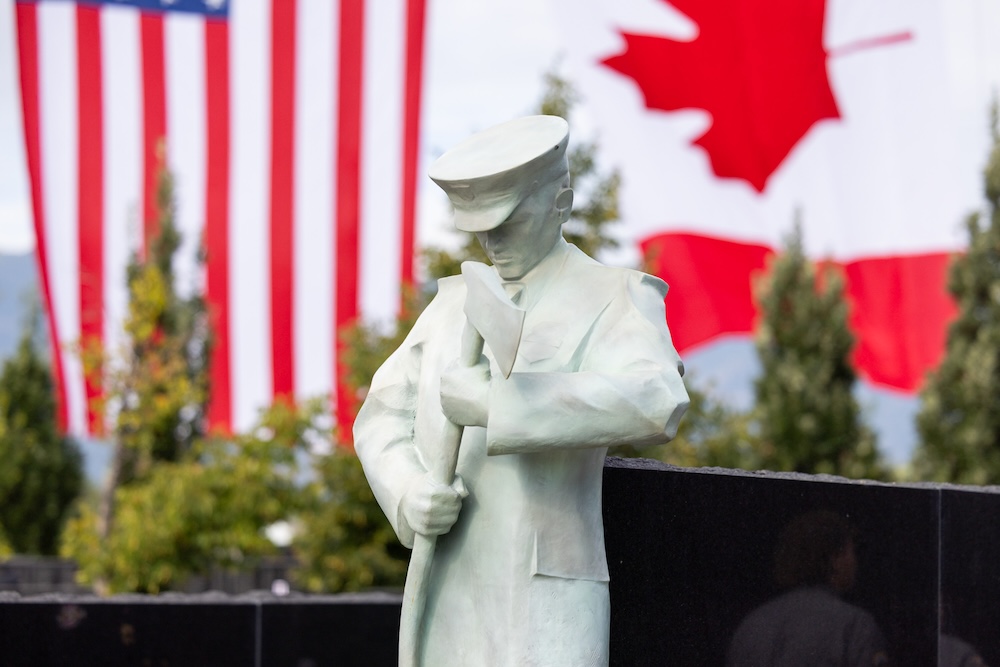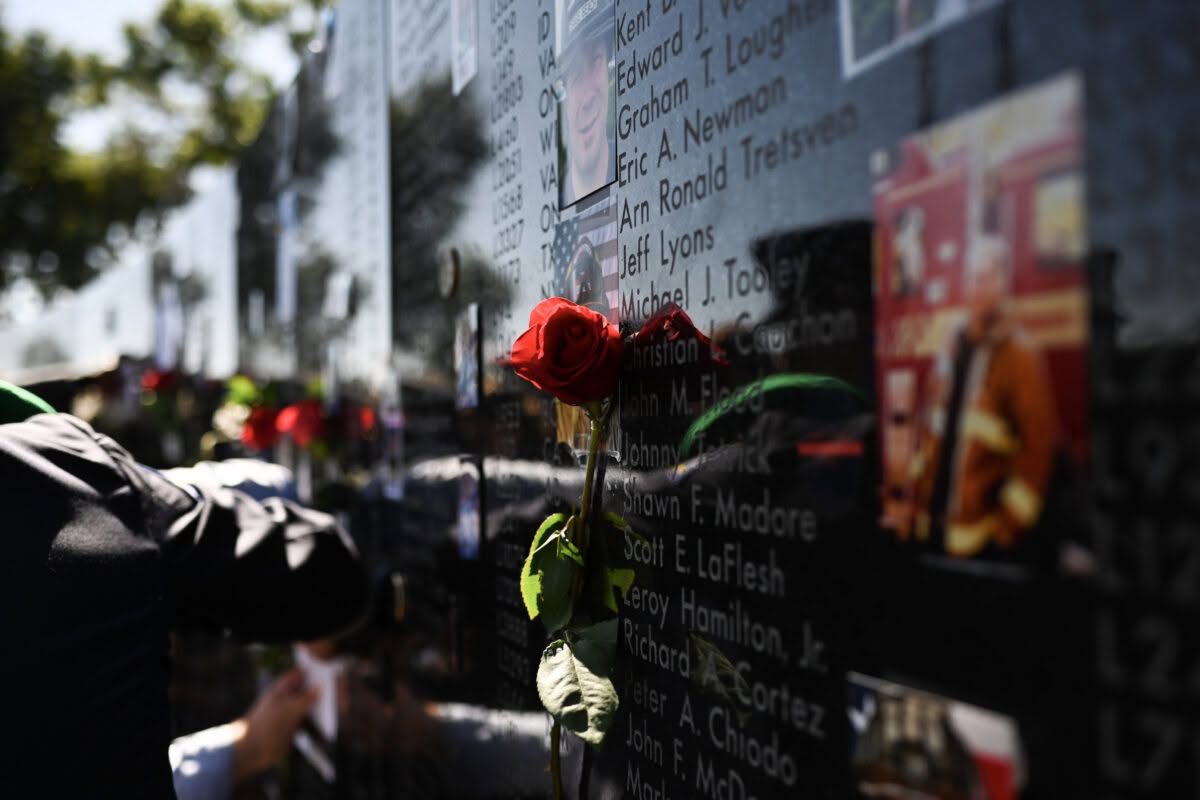
This weekend, families and fire fighters will gather in Colorado Springs to honor 288 fallen members whose names will be added to the IAFF Fallen Fire Fighter Memorial. Each name represents a loss that continues to be felt by those who knew and loved them.
Grief can take many forms, and IAFF peer support instructor Dan DeGryse knows how difficult it can be to navigate alone.
“When I lost my friend, I was sad for a while and then I started blaming myself, isolating, and not wanting to talk to anyone. I wasn’t handling it well at all,” said DeGryse, an IAFF Peer Support Instructor and retired member of Chicago Local 2. “What finally did help was talking to someone. That’s why I always say that while it is possible to go through the grieving process alone, don’t.”
There is no single way to grieve. Acknowledging the loss, allowing time to process it, and seeking support can help fire fighters navigate the days and months that follow.
Grief is normal, but complicated
Grief is a natural response to loss that can affect emotions, thoughts, and physical well-being. For fire fighters, losing a colleague can also mean losing someone they consider family.
“When we lose one of our own, whether it is a line-of-duty death or an occupational illness, the impact reaches far beyond the individual fire fighter,” said Brian Nee, Boston Employee Assistance Program coordinator, IAFF Peer Support instructor, and Boston, MA Local 718 member. “We lose a member of our firehouse family, and that loss can affect everyone differently.”
When we lose one of our own, whether it is a line-of-duty death or an occupational illness, the impact reaches far beyond the individual fire fighter. We lose a member of our firehouse family, and that loss can affect everyone differently.
Boston, MA Local 718 member Brian Nee
Nee stressed it is important to give yourself permission to feel and process these emotions rather than suppressing them. Other ways to navigate the grieving process include establishing a routine, eating well, staying physically active, and avoiding the use of alcohol or other substances to cope.
And, it is important to note, that grief can be cumulative, meaning it can go beyond the loss of one individual.
IAFF Behavioral Health Specialist Lindsay Longo explains that because fire fighters spend so much time together, they become more than just coworkers. They become mentors, friends, and extended family members.
“Ever since I became a fire fighter, I went to as many memorial services as I could to honor the memory of the fallen. But when my best friend, who is also a fire fighter, died in the line of duty, the loss had the cumulative effect of the loss of a coworker and friend,” said Longo, a former Baltimore County, MD Local 1311 member. “It made for a very complex grieving process”
And the weight of a multiple line of duty death sits very heavy.
Uniformed Firefighters Association of New York Local 94 member Frank Leto, who retired from the FDNY in 2021, wrote in an article about September 11 that, “I never saw it as a list of 343 names. I saw one fire fighter. One family who loved him. One firehouse that missed him. One future that would never be lived. 343 times.”
Take additional leave if you need it
The nature of the job can make it difficult to step away after a loss. Fire fighters may be responsible for completing work connected to the incident while also confronting reminders of the colleague who died. Depending on department policy, they may not automatically receive time away from work to begin processing the loss.
Many departments have policies or mutual aid agreements that make it possible for fire fighters to be able to attend a fellow fire fighter’s funeral. Members who need more time before returning to shift should speak with their Local about leave options available to them.
Peer support and employee assistance programs
“Support shouldn’t end after the funeral; grief takes time,” Nee said. “That’s what the EAP and the peer support network are for, checking on members and making sure they know that asking for help is a sign of strength, not weakness.”
Peer support services are typically offered in the first hours after a line-of-duty death. If fire fighters aren’t ready to use those services immediately or need to continue services, information is still available.
For DeGryse, reaching out meant picking up the phone and calling a peer after recognizing he was struggling with his friend’s suicide. Hearing that someone else shared his feelings helped him feel less alone.
He made “a simple statement that changed my emotions,” DeGryse said. “He said, ‘I’m mad at [him] too.’ From there, the guilt faded, and the isolation was gone in one simple conversation. I knew I wasn’t the only one feeling the way I felt. That made a difference to me.”
He made a simple statement that changed my emotions. He said, ‘I’m mad at [him] too.’ From there, the guilt faded, and the isolation was gone in one simple conversation. I knew I wasn’t the only one feeling the way I felt. That made a difference to me.
chicago Local 2 retired member Dan DeGryse
When a fellow fire fighter needs more support
Fellow fire fighters are often the first to recognize when someone needs help. The time they spend together on the job means they know each other well enough to notice when something is wrong.
Fire fighters may not always recognize or want to recognize that they need additional help.
Behavioral health specialists say they there is no single threshold for seeking additional support. Persistent irritability, difficulty sleeping, changes in appetite, neglecting basic needs (bathing, etc), or appearing emotionally detached can all be signs that someone is struggling.
Fire fighters should approach a colleague with empathy and speak directly about what they have noticed. They might say, “I miss [the fallen fire fighter] too’”or “I’ve noticed you haven’t been eating and I’m worried about you.”
When appropriate, fire fighters can also offer to help find a clinician who can provide additional support.
Honor the fallen
For some, finding a meaningful way to honor a fallen fire fighter can be part of the grieving process.
Each year, the IAFF holds its Fallen Fire Fighter Memorial in Colorado Springs, Colorado. And many states, provinces, and municipalities also hold services to remember those who died in the line of duty.
Families and fellow members may also establish scholarships or charitable funds in a fire fighter’s name. For example, the IAFF’s Howie McClennan Scholarship honors the memory of the former IAFF General President by providing educational scholarships to children of fire fighters who die in the line of duty.
And, finally, if a fire fighter dies due to a safety issue, fire fighters might choose to advocate for safety initiatives within the department, such as improved equipment or updated training protocols, to help prevent future tragedies.
More resources are available
Losing a brother or sister fire fighter is hard, and healing can take time. Fire fighters seeking additional assistance should consider the following options:
Contact [email protected] for referral to a clinician in your area who can help you work through the grief.
Attend an online meeting. The meetings are peer-led and participants may remain anonymous.
Call the IAFF Center of Excellence (COE) at 855-900-8437 or email [email protected]. The COE maintains a vetted list of therapists who are familiar with the unique demands of the fire service.