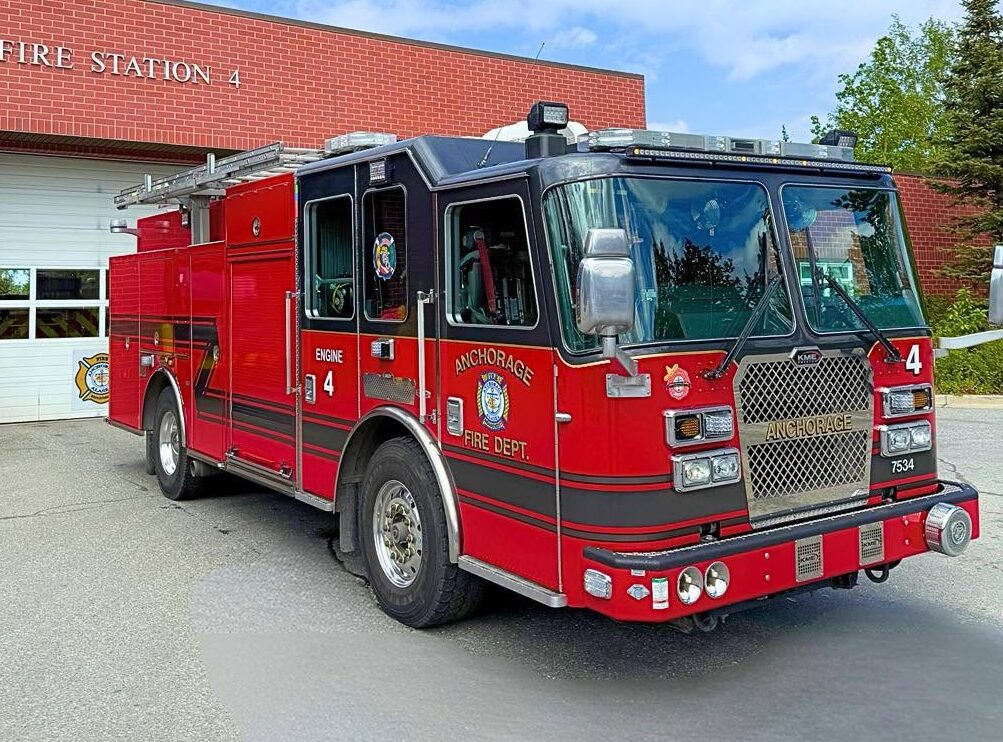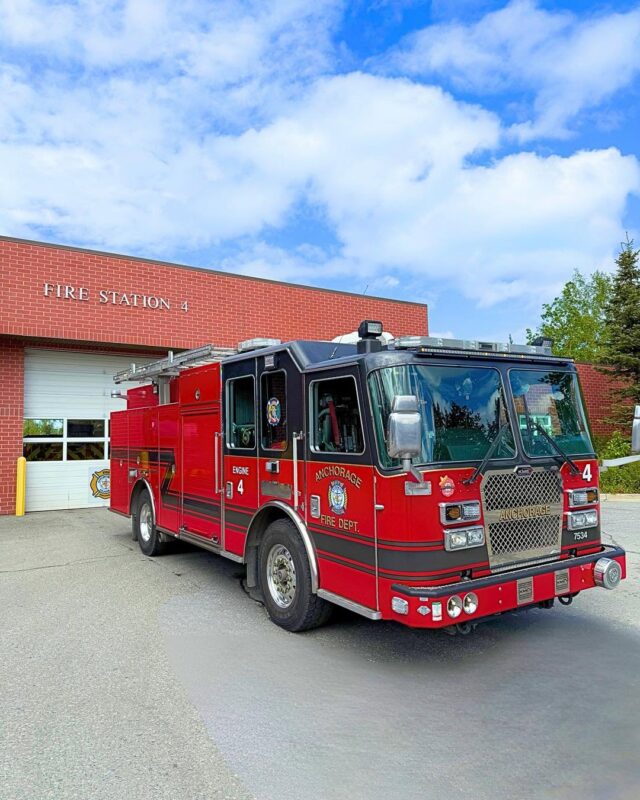
When Evan Kressly joined the Anchorage Fire Department in 2019, the department handled roughly 36,000 calls for service annually. By 2025, that number had climbed to over 50,000.
“That’s without adding any additional daily staffing, such as fire fighters, EMTs, paramedics, captains, and so on,” Kressly said.
The increase in calls, including a “revolving door” of drug overdose calls, highlights a growing challenge facing Anchorage, AK Local 1264.
Members say their schedules already require considerably more time than a typical 40-hour workweek.
“Right now, I work at a 56-hour work week, and that’s around 16 additional hours per week from the average 40-hour employee,” Local 1264’s Tyler Belk said. “That’s 16 additional hours that I don’t have with family or being able to serve my community outside of the fire department. That equates to around 832 hours per year, or over 20,000 additional hours in a career. Fire stations handle tens of thousands of calls per year on a 56-hour workweek, leading to notable mental and physical exhaustion.”
In the past decade, Anchorage Fire Department 911 calls have more than doubled.
“In the last 10 years, daily staffing has remained flat while our call volume has gone up 60% in that same time period, and so we’re really struggling to keep up,” Local 1264 President Justin Mack told reporters.
Rising call volumes, strained staffing
As call volume continues to rise, staffing has struggled to keep pace.
“A staffing study was done on the Anchorage Fire Department in 2023, and what it showed was staggering,” Kressly said. “Just to meet the daily staffing, without relying solely on overtime, the department would need to hire 30 to 60 additional fire fighters. To be able to meet the NFPA National Standard of four fire fighters on every engine or truck company, we would need to hire 133 additional fire fighters.”
The staffing shortage has consequences beyond response capacity. Members say long shifts and increased call volumes are contributing to burnout and making it harder for fire fighters to remain physically and mentally prepared to serve their community.
“Our work schedule leads to increased sleep deprivation, mental and physical wellness challenges, and a struggle to remain operationally ready for our community,” Belk said.
Pension concerns threaten recruitment and retention
Staffing and call volume are only part of the challenge.
Members say the State of Alaska’s lack of a defined benefit pension is also making it harder to recruit and retain fire fighters. Alaska moved away from a defined-benefit pension system for most new public employees hired after 2006.
“When that happened, we were all worried, concerned, and fought hard against it. We’re one of only two states without a defined-benefit pension system for our public safety employees. The thought was, and the worry was, that we were going to lose people to outside departments and to different opportunities, which we’ve seen come to fruition,” Local 1264’s Adam Peterson said.
In June, a historic bill that would have reestablished a defined-benefit pension system for the state’s fire fighters, police officers, teachers, and other public employees was vetoed by Gov. Mike Dunleavy (R-AK) after passing both chambers of the Alaska Legislature.
“People are leaving in record numbers and going to different departments that offer a defined benefit. They’re leaving to pursue other careers, so we’re spending a lot of money to train and recruit people, only for them to come here for sometimes five years or less before they move on to someplace different,” Peterson said.
For Peterson, who was hired under the defined-benefit system, retirement security is personal.
“What it means to my family and me is safety and security in retirement. Having defined-benefit coverage for my family and me gives us peace of mind and the assurance that this job will take care of us after I leave,” he said.
Anchorage fire fighters push for safe staffing solutions
The Anchorage Assembly has commissioned a new study to examine the department’s staffing needs and recommend solutions. Local 1264 has also enlisted IAFF resources to provide technical support with municipal budget analysis and GIS mapping.
But turning those recommendations into action remains an ongoing challenge. “While the union remains engaged, we continue to deal with budget issues and prioritization concerns from the city,” Mack said.
Local 1264 is pushing for long-term strategic planning, with stakeholders and the community, to address rising call volumes and longer workweeks, while the Local and state associations continue advocating for solutions ahead of the next legislative session in Juneau.