Lightning strikes, and a wildfire begins a steady march across the land, fed by high winds and an unlimited fuel supply. It eventually reaches the outskirts of a town, and suddenly structures are at risk.
Fire fighters spring into action. But do they have the specialized training needed to safely and effectively defend structures in the wildland-urban interface (WUI) area?
Across Canada, the answer is increasingly yes. Since 2023, more than 1,000 fire fighters have received Responding to the Interface (RTI) training, a program developed by IAFF members with firsthand experience responding to devastating wildfires in Alberta, Hawaii, California, and Colorado.
RTI training addresses the differences in environment and tactics between regular structural firefighting and protecting structures from a fire approaching from the exterior.
As interface fires become more frequent due to climate change and urban sprawl, demand for training continues to grow.
RTI: A vital resource for preparing fire fighters
Joe Ten Eyck, director of Wildland/Urban-Interface Programs at the IAFF, said that as interface fires grow in frequency and intensity, IAFF RTI training stands as a vital resource for preparing fire fighters to meet the resulting challenges.
“With proven methods, strong partnerships, and ongoing updates, the IAFF is ensuring that fire fighters have the tools and training for safe, competent response, enabling them to protect families and communities, economies, and critical resource values during wildfire/urban interface fire events,” Ten Eyck said.
Ten Eyck said the IAFF aims to establish standards for wildfire/urban interface fire operations to ensure that fire fighters across all jurisdictions use common tactics and terminology.
“Application of consistent, standardized training is the key to eliminating fatalities and reducing injuries. This unified standard will improve results on this battlefield.”
IAFF training has expanded across Canada since 2023
RTI training was introduced in Canada in 2023 after IAFF advocacy secured $400,000 from Natural Resources Canada – the federal government agency responsible for wildfire management. The funding allowed 350 fire fighters in British Columbia to receive RTI training at no cost to their municipal fire departments.
Since then, federal funding has been expanded twice, allowing the program to reach fire fighters in British Columbia, Alberta, Saskatchewan, Ontario, Quebec and Atlantic Canada. To date, 1,174 fire fighters have completed RTI training, including 160 who received Train-the-trainer instruction and can now share those skills in their own departments.
Application of consistent, standardized training is the key to eliminating fatalities and reducing injuries. This unified standard will improve results on this battlefield.
iaff director of wildland\urban interface programs joe ten eyck
Modeled after the IAFF’s successful Canadian Haz-Mat & CBRNE Training Initiative, which has trained more than 10,000 fire fighters and other first responders since 2009, RTI training is delivered directly in participants’ communities by IAFF instructors. Courses are open to IAFF members and to paid-on-call fire fighters from surrounding departments.
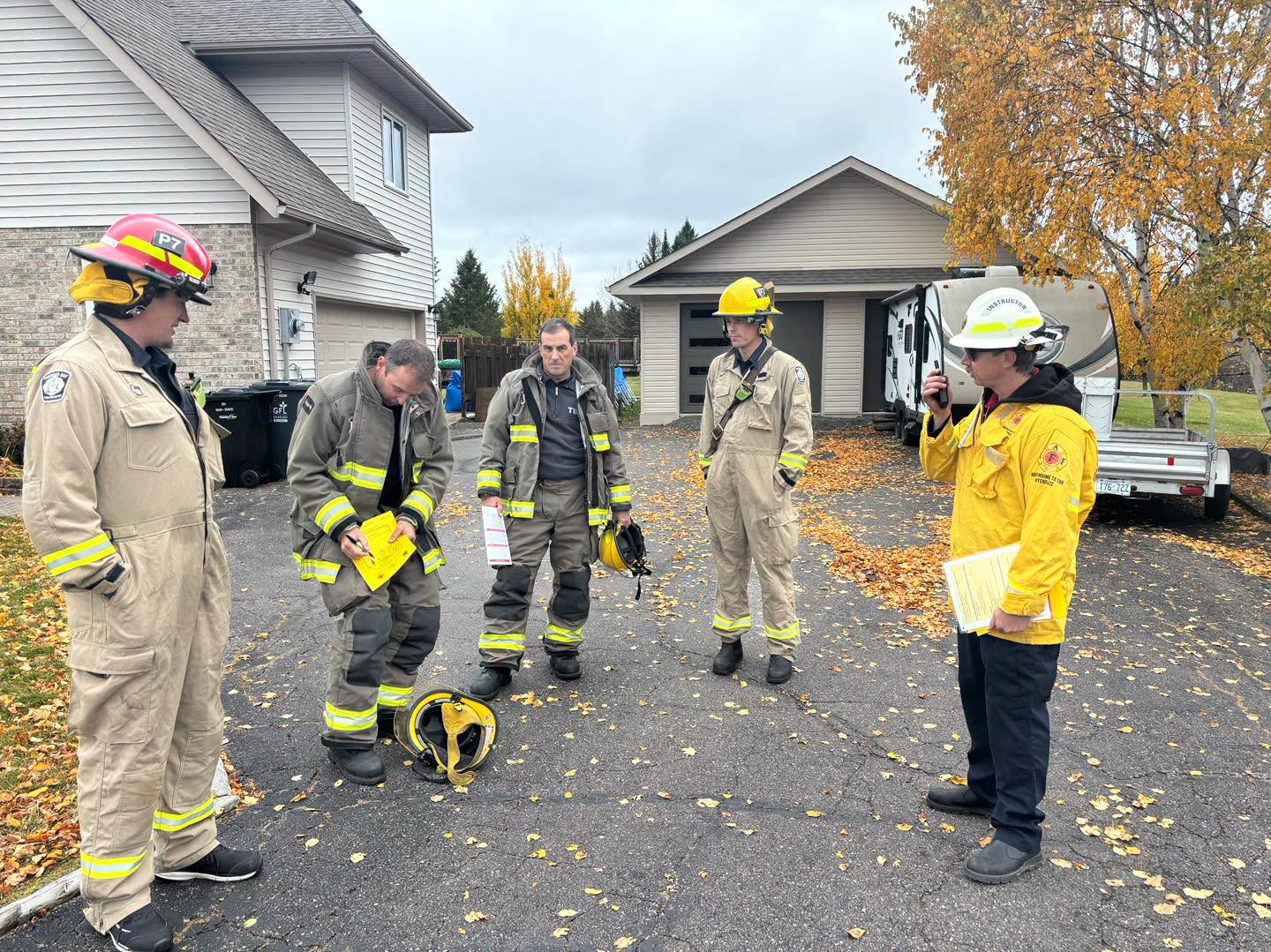
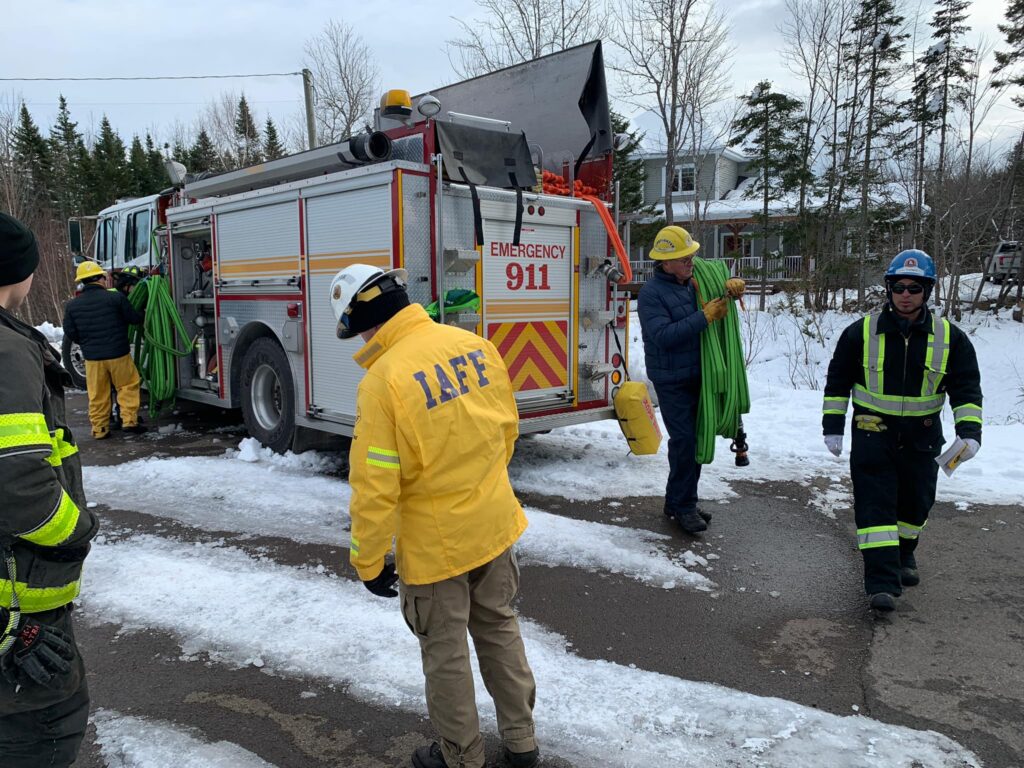
The two-day RTI Operations course combines online learning, classroom instruction, and hands-on field exercises. Participants learn structure triage, hose deployment, risk assessment, operational decision-making, and resource management when multiple structures are threatened.
The subsequent hands-on field training, also eight hours, is conducted in neighbourhoods throughout the host jurisdiction. A final evaluation features an operational readiness exercise in applying interface tactics, structure triage and tactical decision-making in realistic field scenarios.
The program is delivered by 40 Master Instructors, including 10 Canadians.
A more intensive four-day Train-the-trainer course provides 32 hours of instruction for fire fighters who have completed RTI Operations.
The program is currently funded through March 2027, and the IAFF is seeking continued support from the Government of Canada to expand training opportunities nationwide.
RTI is also a key element of the IAFF’s proposed https://www.iaff.org/news/iaff-calls-for-national-program-to-enhance-canadas-emergency-response-capabilities/Enhanced Emergency Management Plan (EEMP), presented to the Canadian government in 2025. The proposal calls for a collaborative partnership designed to equip fire fighters and other emergency responders with the training and tools required to strengthen preparedness and response capabilities across all hazards, including fires, tornadoes, earthquakes, floods, ice storms, aviation and rail disasters, and high-wind events.
“Every fire fighter needs this kind of training”
Mark Brise, secretary of Kamloops, BC Local 913 is an RTI Master Instructor and the IAFF’s RTI Coordinator for Canada. He agrees that as the risk of interface fires increases, so does the need for RTI training.
“When we get these interface fires, the community that’s affected calls in for additional resources, and those come from all kinds of departments. Every fire fighter needs this kind of training to ensure they’re safe when they respond,” he said
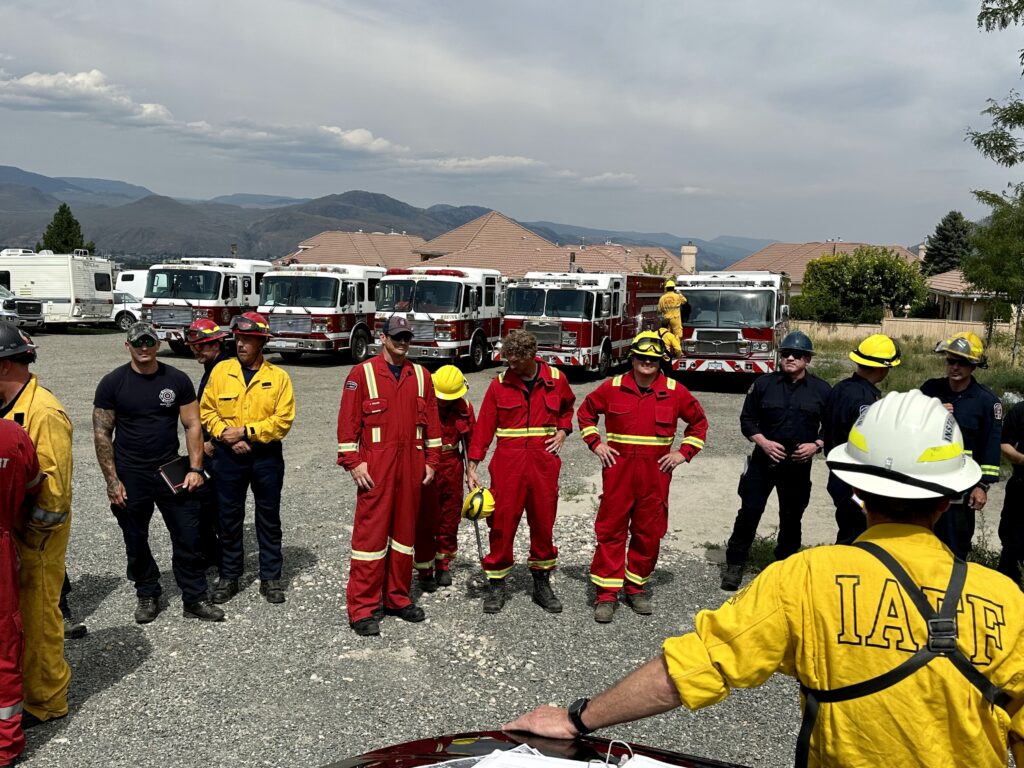
He also noted that training neighboring departments together builds interoperability. Feedback from students and municipal officials has been consistently positive, according to Brise, with many saying they wish they’d received the training years ago. While the first courses were held in western Canada, fire fighters from Ontario, Quebec and New Brunswick have now received training.
“We’re starting to hit every province, and we’ve been training both IAFF and non-IAFF departments.”
RTI training fills a critical gap in wildfire response
Before he became a full-time municipal fire fighter with Vaughan, ON Local 1595 and then Ottawa, ON Local 162, Shawn Landry spent six years as a wildland fire fighter with Ontario’s Ministry of Natural Resources.
Landry attended an RTI course in Strathcona County, Alta., where he immediately recognized its value.
“The RTI to me was the missing piece in responding to a WUI incident,” Landry said. “Typically, it’s wildland or it’s structural, but there’s that area where they meet at the fenceline. I know that many others felt the same way as I did. They wanted to know more; they wanted to know how to be more effective.”
Today, Landry uses his expertise to teach other fire fighters how to safely respond safely and effectively to interface fires. He says when a course is taking place, he consistently sees both students and municipal officials quickly realize its benefits.
“Overall, the reaction from the students is extremely positive. The classroom modules become very interactive and the students’ knowledge base grows as we begin to tie the curriculum into their own realities.”
Participant reviews frequently describe RTI as filling a gap in existing training.
The RTI to me was the missing piece in responding to a WUI incident.
RTI master instructor shawn landry
Landry said municipal officials who observe the training often come away with a new understanding of the resources and preparation required for interface fires.
“You see their eyes really opening up and really respecting the magnitude of these incidents,” he said.
As wildfires threaten communities in areas once considered relatively safe, Landry believes more departments are recognizing the need to prepare before an emergency occurs.
“The general concern has become a lot greater, so the need for this training is becoming understood. People are starting to analyze their own backyard. Officials are understanding that by providing RTI training for their fire fighters they will be given the tools to operate safely and better positioned for success.”
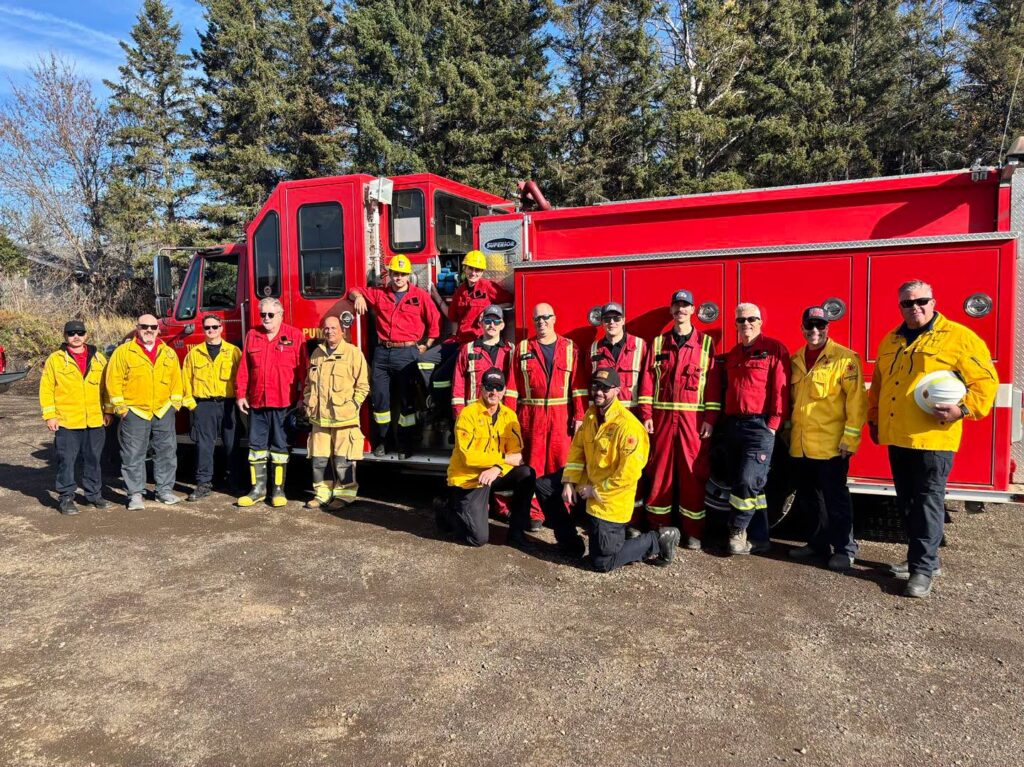
IAFF 6th District Vice President Mike Carter said that with the federal government’s support, the RTI program has made a significant impact on communities and fire fighter safety.
“We look forward to maintaining that program in the future and training more fire fighters to ensure we do our best to keep those communities safe and have the best response possible.”
For more information about IAFF RTI training, visit iaff.org/wildfire or email [email protected].