Eight days after two devastating earthquakes leveled entire neighborhoods in Venezuela, a security guard buried beneath tons of concrete was still alive.
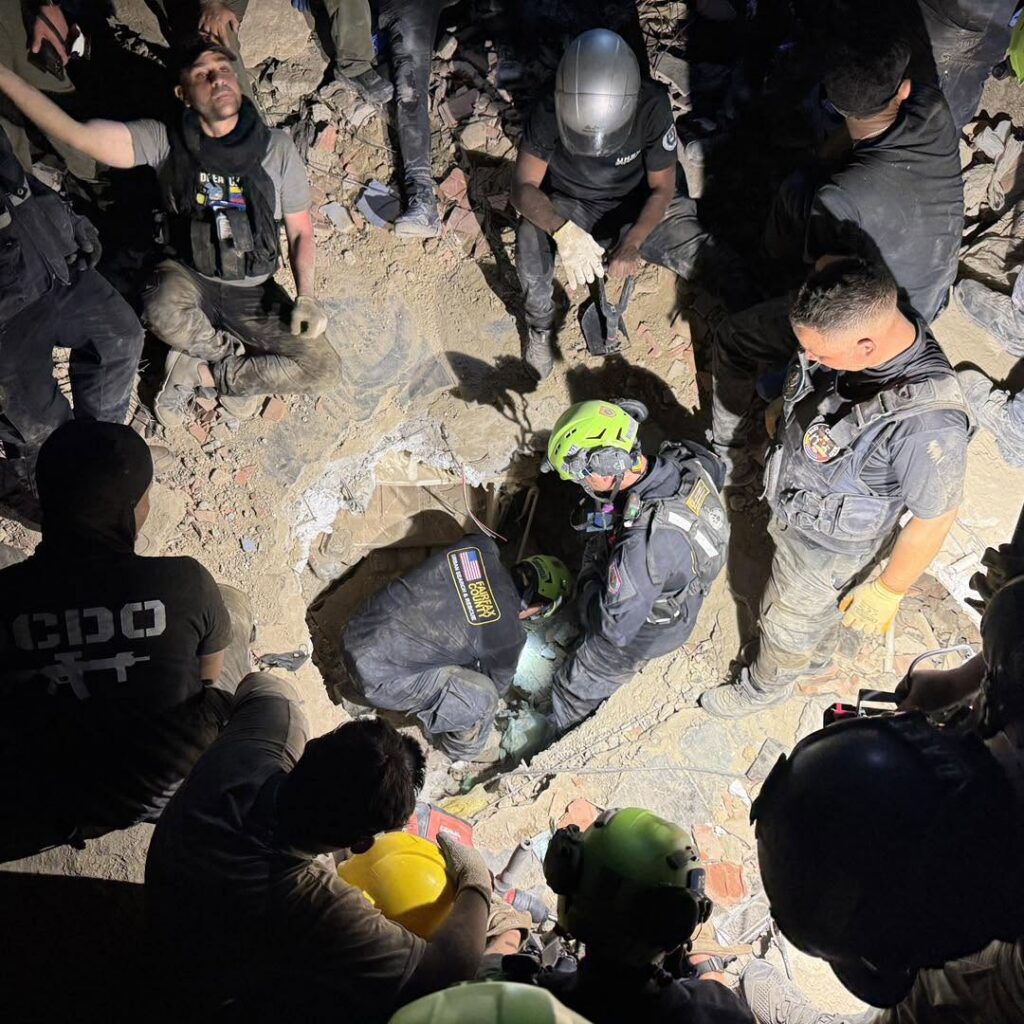
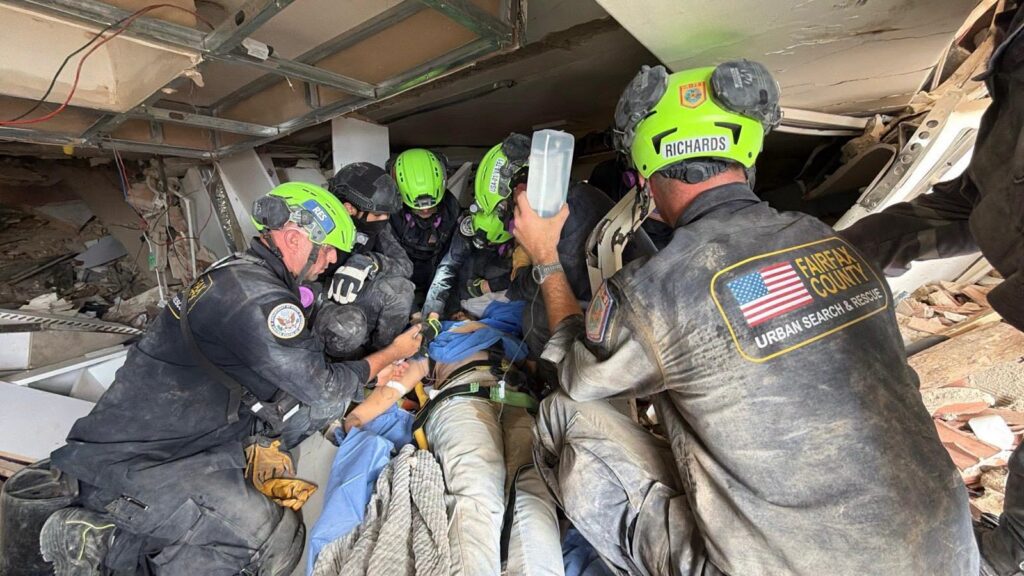
Working around the clock, the Chilean USAR team, all four American USAR teams, and others searched relentlessly before pulling him to safety after 53 hours of continuous rescue operations.
It was one of the most dramatic rescues carried out by urban search and rescue (USAR) teams that included IAFF members from across the United States.
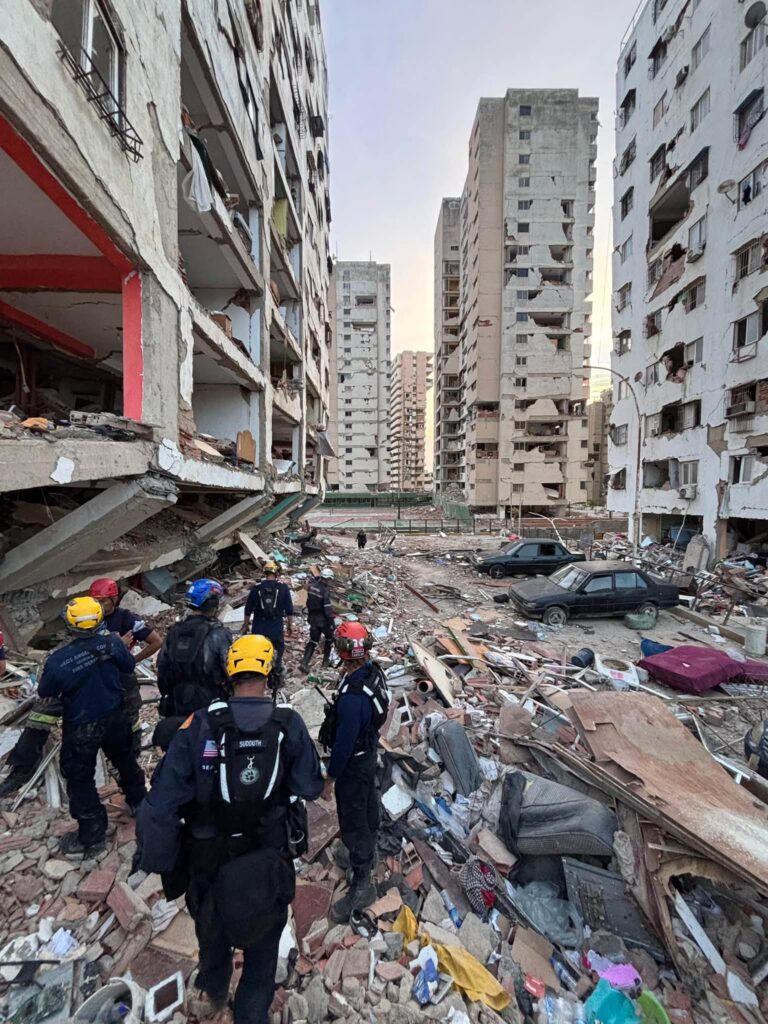
The 7.2- and 7.5-magnitude earthquakes struck northwestern and central Venezuela just 39 seconds apart on June 24. More than 1,200 aftershocks followed. Nearly 200 buildings collapsed, at least 4,800 people were killed, and thousands more were reported missing.
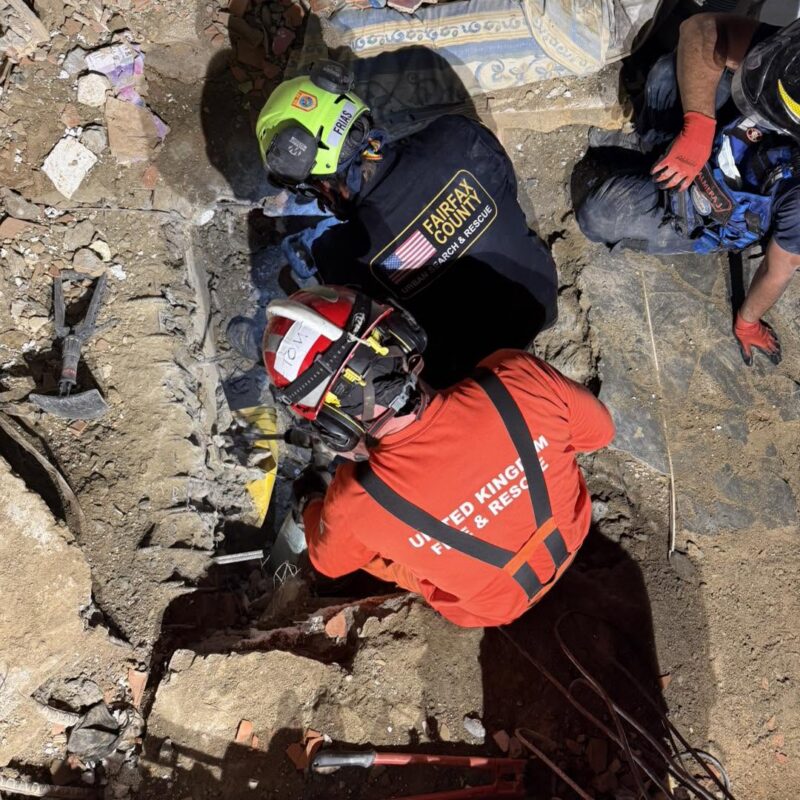
The U.S. State Department quickly deployed international USAR teams from Virginia, designated USA-01, and California, designated USA-02, to search collapsed buildings for survivors. The teams included IAFF members from Fairfax County, VA Local 2068 and Los Angeles County, CA Local 1014.
Florida Task Forces 1 and 2 followed, bringing members of Metro-Dade Fire Fighters Local 1403, Miami Local 587 and other IAFF Locals across Florida.
The four American teams joined dozens of international search teams to respond. Their combined efforts resulted in truly life-saving work before they returned to the States July 6.
“Fire fighters train for these complex, high-risk incidents when lives depend on what we do next,” General President Edward Kelly said. “In Venezuela, our members put those skills to work under incredibly challenging conditions. Every IAFF member can take pride in how they served and the lives they helped save.”
Fire fighters train for these complex, high-risk incidents when lives depend on what we do next. In Venezuela, our members put those skills to work under incredibly challenging conditions. Every IAFF member can take pride in how they served and the lives they helped save.
General president Edward kelly
In addition to the improbable rescue of the security guard, the USAR team out of Virginia (USA-01) was credited with saving 14 people, including a mother and her nine-month-old baby as well as a father and son.
Los Angeles County Local 1014 member Mike Carolan, a 14-year USAR team veteran, served as a search team manager with USA-02.
“You are up against a short time window as soon as you arrive, so there is no time to waste. It was my job to push my team through long, punishing hours,” Carolan said. “And I also had to make some tough calls. If we weren’t hearing any voices, noises that might indicate life, or the dogs weren’t barking, the best thing to do was often to move on to the next search area.”
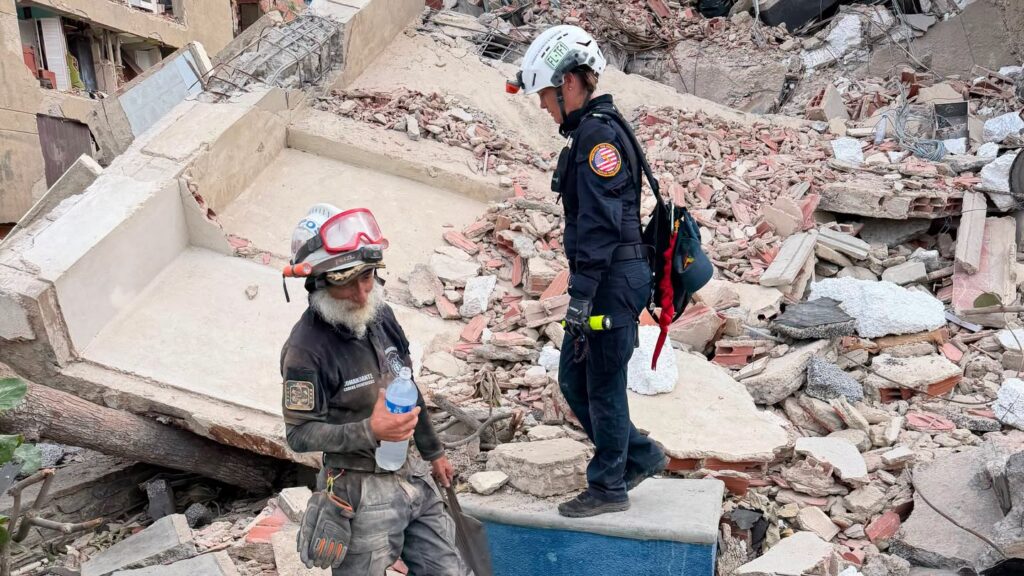
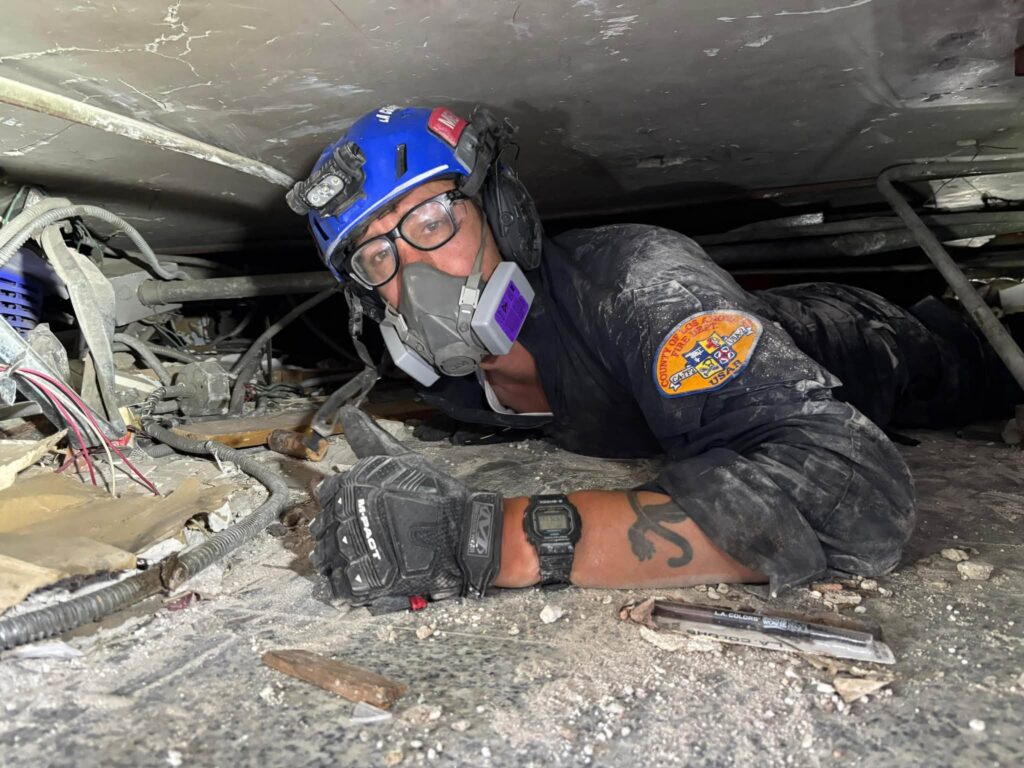
Recon teams typically include eight people with experts in technical search, canine operations, HazMat, structure integrity, and a medic.
Canine units lead the way
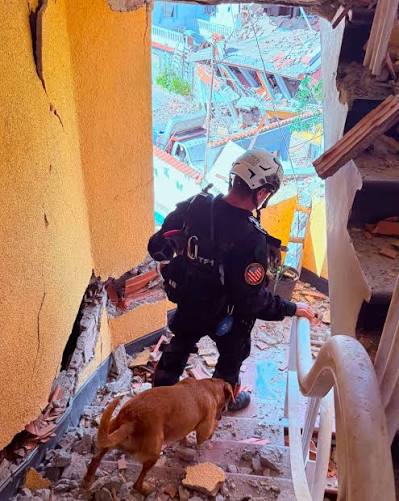
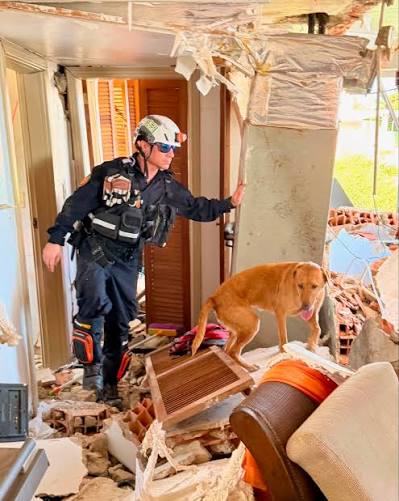
Searches most often start with trained canines and their handlers.
Lisa Bullard, a FL-1 USAR team member for 20 years, has worn many hats on the team, including heavy rigging expert. Now she works closely with two search dogs, Phish and Chips.
“Our dogs are a critical piece of our operation. Through their sense of smell, they can tell if there is someone alive inside or not,” said Bullard, who also serves as Metro Dade County Local 1403 2nd vice president. “They narrow down the search area significantly so that we can use our assets smartly and find survivors faster.”
Earthquake rescues are a team effort
Search dogs help narrow the area, but information from residents and family members can also lead teams to survivors.
“We found one of our trapped survivors thanks to reports from the locals. They heard the woman’s voice from the outside, so we pinpointed her location and started to work through the debris,” Fairfax County Local 2068 member Kevin Nishiyama said. “We were also very grateful to the locals for helping us carry out some of the debris. It cut down the rescue efforts to 13 hours.”
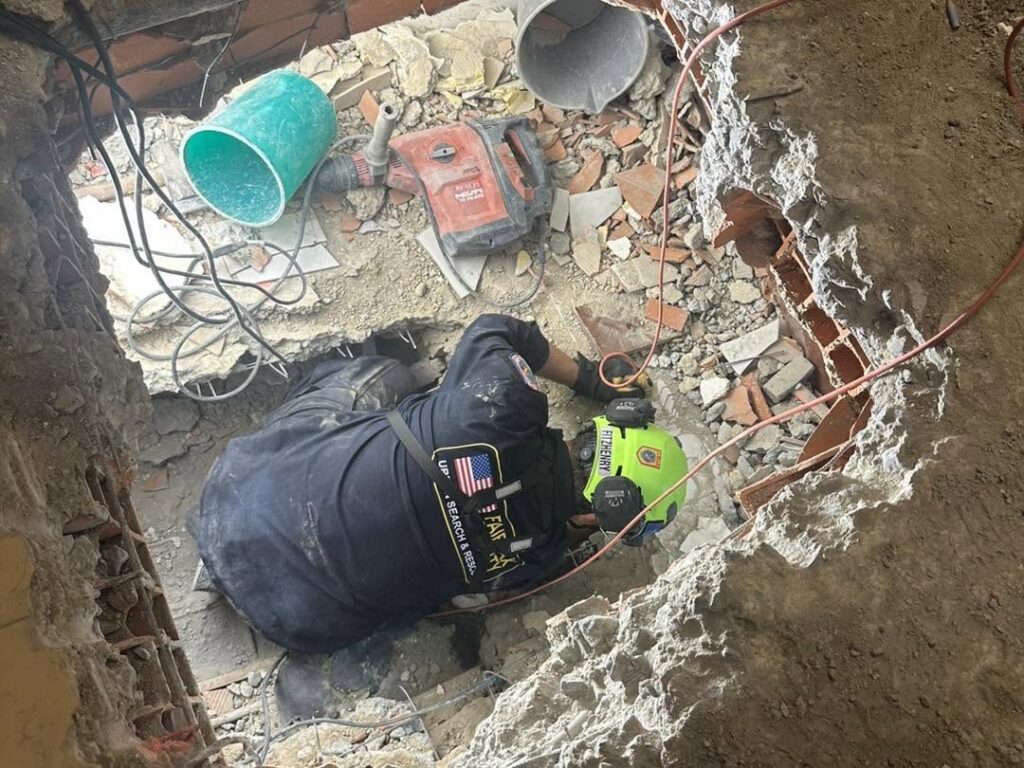
Once dogs signal that a survivor may be present, technical search specialists use listening devices, search cameras, and precision equipment to narrow the search even further.
The work also requires teams to decide when continuing a search is no longer likely to save a life.
“We had some great success, even pulling one survivor to safety,” Carolan said. “But there were times when the signs of life went dark, and I had to make the very difficult decision to move on.”
Local 1403 member Obed Fromata said his team’s connection to Venezuela helped members navigate those difficult conversations.
“Southern Florida has the highest population of Venezuelans outside of Venezuela, so we understand the language and the culture. When we had the difficult task of explaining to them why it was necessary to move on, we were able to speak to them without interpreters,” Fromata said. “I think that put them more at ease, even though the situation was stressful.”
He continued, “I truly believe that having people there who understood them at that level left them with some hope and appreciation that we were there for them and doing our best.”
Local 1014 member Matt Arledge, who was deployed as a heavy lift operator, agreed.
“We had one family tell us after we were unable to find their person, ‘You dug for our family like they were your family,’ and that is true,” Arledge said. “We want to find as many survivors as possible. It’s heartbreaking when we have exhausted every option and find nothing, or it becomes a recovery effort.”
Medical care starts in the rubble
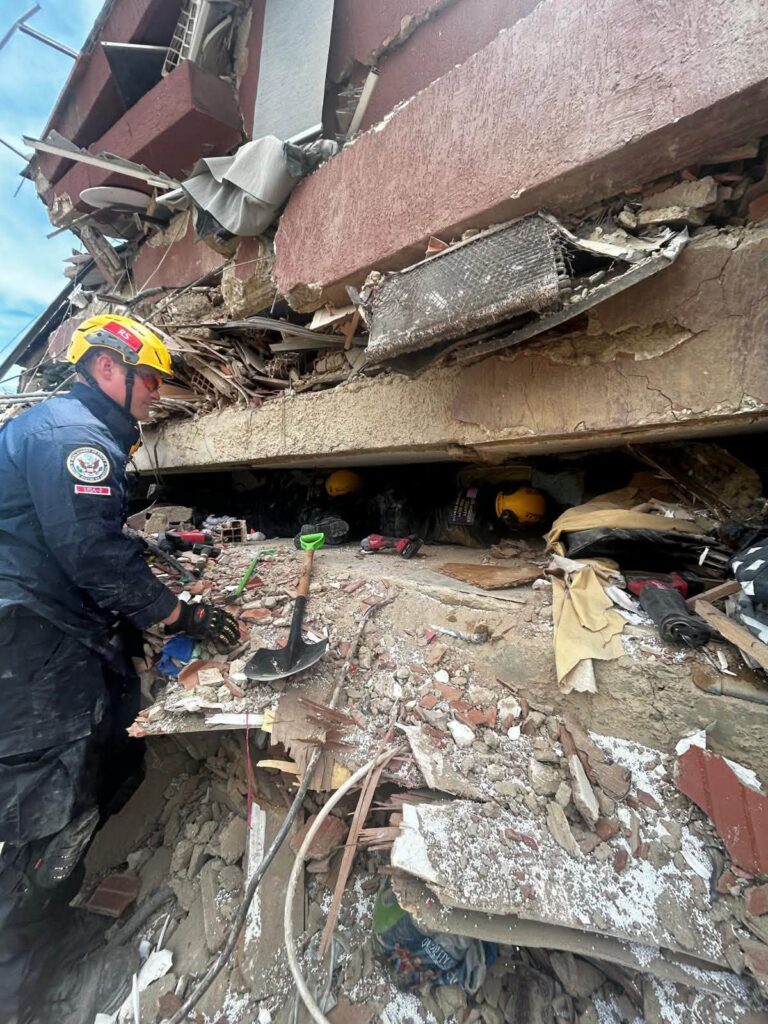
Teams work around the clock; it’s dangerous and exhausting. That makes it critical to have nationally registered paramedics like Fairfax County Local 2068 member Kelly Johnston on site to assist survivors and medically monitor and treat USAR team members.
“If it’s a hurricane, you are treating a lot of bug-related and foot-related issues due to wide searches. But with earthquakes and building collapses, there is a lot of potential for puncture wounds,” Johnston said.
Medical specialists are also trained to administer medical care in tight spaces. As rescuers pull away rubble, a medic might be setting up an IV – sometimes reaching through a very small opening or hanging into the hole upside down. Medical treatment as soon as possible, even before the patient has been fully extricated.
“Many of the trapped survivors need to be treated for crush syndrome because one or more of their limbs have been compressed for hours, even days,” Johnston said. “That included the father and son we pulled out during this trip.”
Training is critical
The success of any USAR response to earthquakes and other large-scale disasters comes down to training, team members said.
“In a disaster, the time for figuring out roles and logistics is over, it needs to be second nature,” said Local 2068 Vice President Ty Corbin, who also responded to Venezuela. “USA-01 and USA-02 had just completed a full-scale exercise together in early May.”
Each team member receives specialized training throughout the year, built past field experience and potentially difficult scenarios, so they are ready for anything.
Arledge, who is also trainer, explained that training is intentionally made as difficult as possible so that anything they see in the field seems less challenging.
“We drill everything for these high-risk, low-frequency situations,” he said. “So, when we are faced with these challenges in real life, we can lean on our training.”
Learn more about the USAR teams and their life-saving efforts on the FEMA website.