Thinking about a career in emergency medical services? Whether you’re finishing high school, changing careers, or answering a call to serve, becoming a professional EMT or paramedic takes skill, dedication, and a commitment to helping others.
The IAFF represents more than 360,000 professional fire fighters and emergency medical workers across North America. IAFF members are on the front lines of public safety, and many are also helping mentor the next generation.
Here’s a step-by-step guide to starting your journey, with advice from EMS professionals who’ve been there.
Step 1: Meet the Basic Requirements
For EMT/Primary Care Paramedic:
- Be at least 18 years old
- Hold a high school diploma or GED
- Have a valid driver’s license
- Pass a criminal background check and medical clearance
- Healthcare Provider CPR & AED Certified (prerequisite for most EMT programs in the United States)
- Basic skills assessment (optional by state or province)
- Valid emergency medical responder (EMR) license or pass EMR-level medical knowledge test (optional by province)
Once you meet these requirements, you can enroll in a certified EMT training course. In some U.S. states, including Kansas, becoming a paramedic requires completing a formal education program.
“EMT certified typically requires completing an 8-to 16-week course. Most members of my department are paramedics, which involves additional, more extensive education,” said Johnson County, KS Local 4885 President Clay Smith.
For Paramedic/Advanced Care Paramedic:
- Be at least 18 years old (U.S.) or 21 years old (Canada; varies by province and program)
- Have a valid driver’s license
- Pass a criminal background check and medical clearance
- Basic skills assessment (optional by state or province)
- EMT or primary care paramedic certified
Step 2: Enroll in a Training Program
For EMT/Primary Care Paramedic:
In both the U.S. and Canada, EMS programs combine classroom and hands-on training in:
- Scene safety and size up
- Patient assessment
- Airway and respiratory management
- Trauma and medical emergencies
- CPR and AED use
- Lifting, moving, and transporting patients
For Paramedic/Advanced Care Paramedic:
In both the U.S. and Canada, paramedic programs include didactic and clinical hours, typically lasting 18-24 months. Training covers:
- Scene safety and size up
- Anatomy and Physiology
- Pharmacology
- Patient assessment
- Advanced airway and respiratory management
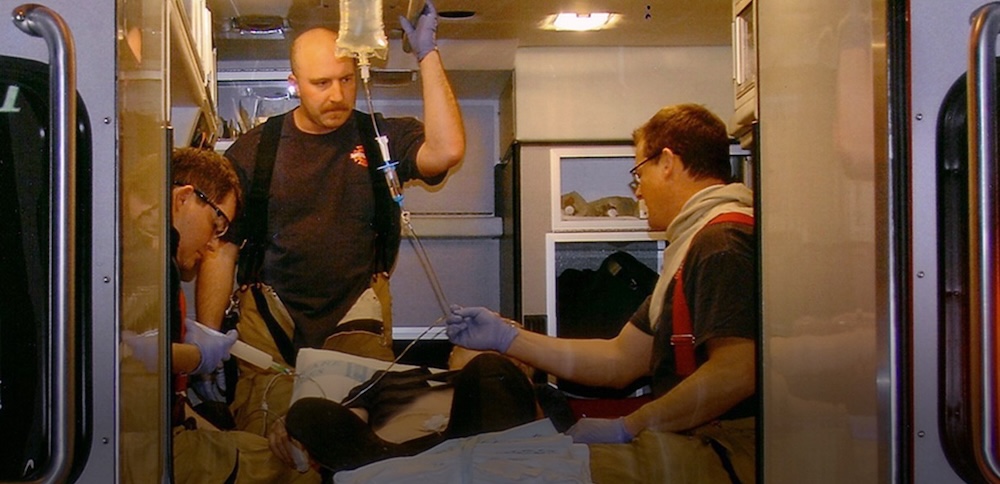
- IV access and medication administration
- Cardiac monitoring/defibrillation/pacing
- Trauma and medical emergencies
In the U.S., state-approved EMT and paramedic programs are available at community colleges, technical schools, and private institutions.
In Canada the pathway generally includes training, passing the Canadian Organization of Paramedic Regulators (COPR) exam, and then obtaining provincial registration/certification.
In Alberta, Canada, candidates must complete an accredited primary care paramedic (PCP) or advanced care paramedic (ACP) program. After training, candidates must pass the COPR exam and register with the Alberta College of Paramedics.
Central Alberta, AB Local 5482 President Erin Houghton said, “If possible, seek out opportunities to volunteer or observe EMS crews to get a better sense of the job. Maintaining physical fitness, emotional resilience, and strong communication skills is essential for success.”
Step 3: Pass the Certification Exam
Before practicing, you must pass a certification exam:
- In the U.S.: The National Registry of Emergency Medical Technicians (NREMT) written and skills exam, required in nearly every state.
- In Canada: The Canadian Organization of Paramedic Regulators (COPR) exam.
For many EMS professionals, passing this exam is a defining milestone.
“Back when I started in EMS, the process was a bit different. The provincial exam was administered by the Alberta College of Paramedics before COPR existed. It marked the official start of my career, and after all the studying and clinical hours, it was an incredibly rewarding milestone. That sense of accomplishment and readiness to serve my community was unforgettable,” said Houghton.
Smith recommends supplementing your education with extra classes like pathophysiology and cardiology.
“These classes taught me more about illness and diagnostics than I would have otherwise learned in paramedic school. There’s just not enough time to teach everything, so soaking up as much info as you can is important,” said Smith.
Step 4: Begin your career
Once you’re certified and licensed, you’re ready to take the next step by applying for jobs in the field.
To learn more about current opportunities in the fire service, visit the IAFF website.