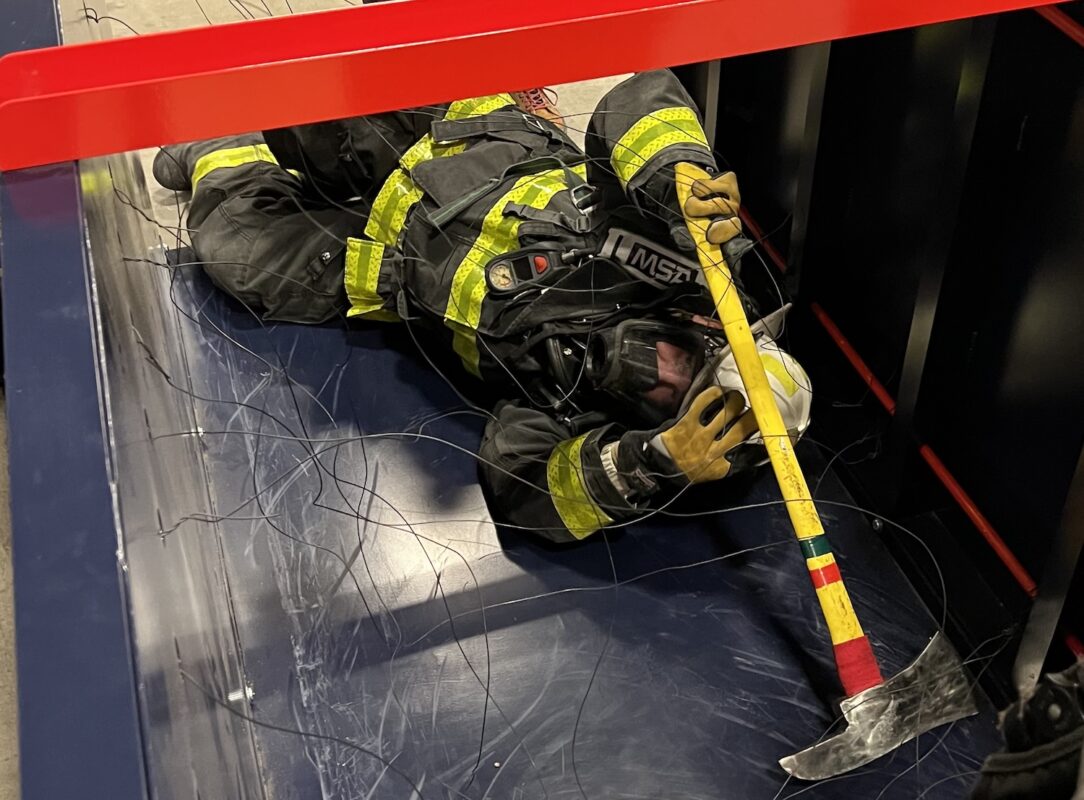
Fire Ground Survival (FGS) & Fire Fighter Rescue Training
The purpose of the IAFF Fire Ground Survival (FGS) & Fire Fighter Rescue program is to ensure that training for Mayday prevention and Mayday operations are consistent between all fire fighters, company officers, and chief officers. Fire fighters must be trained to perform potentially life-saving actions if they become lost, disoriented, injured, low on air, or trapped.
Real Incidents, Proven Survival Techniques, IAFF-Certified Instructors.
The IAFF Fire Ground Survival (FGS) & Fire Fighter Rescue program is the most comprehensive survival skills and Mayday prevention program currently available within the fire service. Incorporating federal regulations, proven incident management best practices and survival techniques from leaders in the field, and real case studies from experienced fire fighters, the FGS program aims to educate all fire fighters to be prepared if the unfortunate happens.
There is no other call more challenging to fire ground operations than a Mayday call – the unthinkable moment when a fire fighter’s personal safety is in imminent danger. Fire fighter fatality data compiled by the United States Fire Administration have shown that fire fighters “becoming trapped and disoriented represent the largest portion of structural fire ground fatalities.” The incidents in which fire fighters have lost their lives, or lived to tell about it, have a consistent theme – inadequate situational awareness put them at risk.
Fire fighters don’t plan to be lost, disoriented, injured, or trapped during a structure fire or emergency incident. But fires are unpredictable, volatile, and ruthless – and they will not go according to your plans. What a fire fighter knows about a fire before entering a blazing building may radically change within minutes once inside the structure. Smoke, low visibility, lack of oxygen, structural instability, and an unpredictable fire ground can cause even the most seasoned fire fighter to be overwhelmed in an instant. It’s not a matter of IF a Mayday happens, it’s WHEN.
The guiding fire service philosophy for decades has been training for success – we teach how to put the fire out or mitigate other hazards and hope everyone goes home. What we have failed to consistently do is drill for when failure does occur; and without such training, fire fighters do not have the practiced skills to rely on IF and WHEN they get into trouble.
Funded by the IAFF and assisted by a grant from the U.S. Department of Homeland Security (DHS) through the Assistance to Firefighters (FIRE Act) grant program, our comprehensive FGS training program applies the lessons learned from fire fighter fatality investigations conducted by the National Institute for Occupational Safety and Health (NIOSH) and has been developed by a committee of subject matter experts from the IAFF, the International Association of Fire Chiefs (IAFC), and NIOSH.
PROGRAM HISTORY
The IAFF began developing the Fire Ground Survival training program in December 2007 to ensure that training for Mayday prevention and Mayday operations are consistent between all fire fighters, company officers and chief officers. Fire fighters must be trained to perform potentially life-saving actions if they become lost, disoriented, injured, low on air, or trapped. These training exercises must be consistent throughout the fire service.
Funded by the IAFF and assisted by a grant from the U.S. Department of Homeland Security (DHS) through the Assistance to Firefighters (FIRE Act) grant program, this comprehensive Fire Ground Survival training program applies the lessons learned from fire fighter fatality investigations conducted by the National Institute for Occupational Safety and Health (NIOSH) and was developed by a committee of subject matter experts from the IAFF, the International Association of Fire chiefs and NIOSH.
This initiative relies on the experiences that IAFF members have faced on the fire ground so fire fighters in similar situations will be able to perform standard, potentially life-saving actions if they become lost, disoriented, injured, low on air or trapped.
By February 2008, the IAFF had completed most of the program content and began working on an outline for video production to support the course materials. In May of 2008, the IAFF began video production to support this program at the Warner Brothers Studios in California. Over the next several months, video segments were edited and the student and facilitator manuals were created.
In September 2008, the FGS Committee began conducting beta classes to test and evaluate the curriculum and the delivery methods. To date, beta tests of the class have been conducted in New York, Los Angeles County, Austin, Tucson and Frederick County, Maryland. These classes included members from more than 30 IAFF affiliates.
Feedback from these beta classes was used to update the curriculum and enhance the quality of the program. The program was also highlighted at the IAFF’s 2009 John P. Redmond Symposium and the 2010 Fire Department Instructors Conference (FDIC).
The next step in the development of this program was to determine the best delivery method to provide the greatest access while maintaining the quality of instruction and, most importantly, providing the highest degree of safety. The IAFF evaluated various methods of providing the classroom portion as an online or distant learning module where members could progress through the curriculum at their own pace.
The final challenge was the hands-on or practical evolutions. To provide the proper supervision and safety requires a significant instructor-to-student ratio. Accordingly, the IAFF developed procedures and course instructions to make the program available to all members with minimal costs and without compromising quality and safety. The IAFF tested these procedures with the assistance of the Prince George’s County Fire and Emergency Medical Services Department and IAFF Local 1619 in May 2010.
In 2019, the IAFF received additional FEMA-AFG funding to add fire fighter rescue skills. The original concept considered a Rapid Intervention Team (RIT) course but was changed to embrace the comprehensive data from Dr. Don Abbott’s “Project Mayday” studies.
These studies show that fire fighters who experience Maydays save themselves first. This is the reason the original IAFF FGS program was created. The next highest statistical group that rescues fire fighters encountering a Mayday is the fire fighters’ crew or a crew operating close by.
Skills include below-grade escape, attic escape, fire fighter removal from upper floor, moving a downed fire fighter up and down stairs, personal protective equipment (PPE) removal, and CPR on a downed fire fighter.
One of the primary goals for these skills is the ability to perform them utilizing no additional equipment to allow crew members to rescue a fire fighter in the immediate aftermath of the Mayday call.
The skills were beta tested with the St. Petersburg (Florida) Fire Department/Local 747 in December 2021 and at the New Hampshire State Fire Academy with members of the Manchester Fire Department/Local 856 in May 2022.
After extensive evaluations and review of student and master instructor feedback, a decision was made to create a separate IAFF Fire Ground Survival & Fire Fighter Rescue Instructor Update course, scheduled for launch in mid-2026.
This intensive update course is designed for FGS instructors who took the IAFF FGS TtT course and/or current agency FGS instructors as determined by the Authority Having Jurisdiction. The program focuses on the latest techniques, safety protocols, and best practices essential for effective teaching and practical application in the field. The original FGS program will continue in its original format, and the Fire Fighter Rescue curriculum will be taught in this separate, three-day course.
Beta Classes
New York, NY/IAFF Locals 94/854 Beta Class
- Bridgeport, CT/IAFF Local 834
- Hackensack, NJ/IAFF Local 2081
- Mt. Vernon, NY/IAFF Local 107
- New Rochelle, NY/IAFF Local 273
- Yonkers, NY/IAFF Local 628
Los Angeles County CA/IAFF Local 1014 Beta Class
- Avalon, CA/IAFF Local 2295
- Burbank, CA/IAFF Local 778
- Costa Mesa, CA/IAFF Local 1465
- Kern County, CA/IAFF Local 1301
- Los Angeles City, CA/IAFF Local 112
- Oxnard, CA/IAFF Local 1684
Tucson, AZ/IAFF Local 0479 Beta Class
- Drexel, AZ
- Golden Ranch, AZ
- Grass Valley, AZ
- Phoenix, AZ/IAFF Local 493
- Sierra Vista, AZ/IAFF Local 4492
Austin, TX/IAFF Local 975 Beta Class
- Cedar Park, TX/IAFF Local 4233
- Georgetown, TX/IAFF Local 3991
- Lake Travis, TX/IAFF Local 4117
- Oak Hill/TX/IAFF Local 4253
- Pflugerville, TX/IAFF Local 4137
- San Antonio, TX/IAFF Local 624
- Travis County, TX/IAFF Local 4583
Frederick County, MD/IAFF Local 3666 Beta Class
- Baltimore City, MD/IAFF Local 734
- Baltimore County, MD/IAFF Local 1311
- Burleson, TX/IAFF Local 4025
- Prince George’s County, MD/IAFF Local 1619
- Seattle, WA/IAFF Local 27
- Washington, DC/IAFF Local 36
St. Petersburg, FL Fire Department/IAFF Local 747 Beta Class
Manchester, NH Fire Department/IAFF Local 856 Beta Class
Orange County Fire Authority, CA/IAFF Local 3631
Scituate, MA/IAFF Local 1464
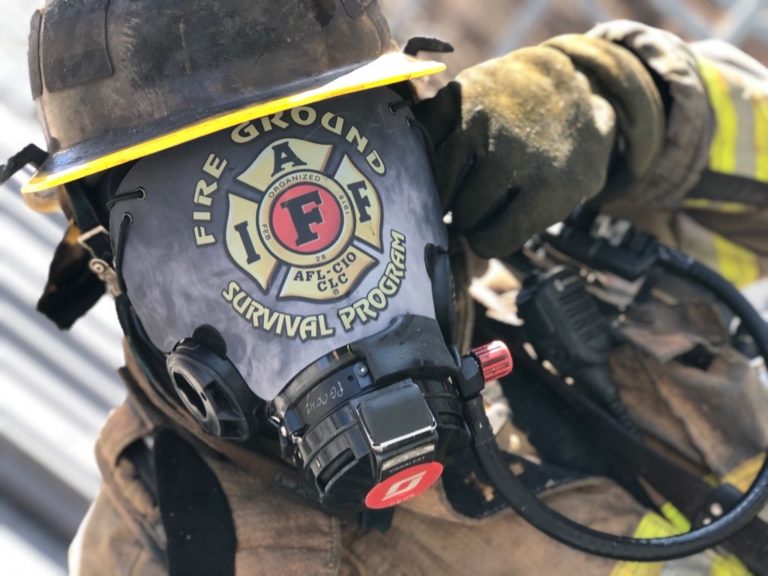
IAFF Fire Ground Survival Master Instructors will provide participating fire departments with the skills they need to improve situational awareness and prevent a Mayday.
From the first-in recruit to the experienced commanding officer, the FGS program provides all levels of staff the step-by-step tools to use whether they are caught in the Mayday or leading the rescue. Through the use of mnemonics, case studies, personal experiences, and real-time communications, personnel throughout the ranks will learn the life-saving techniques they need to know to facilitate a successful Mayday rescue.
- Preventing the Mayday: situational awareness, planning, size up, air management, fitness for survival, defensive operations.
- Being Ready for the Mayday: personal safety equipment, communications, accountability systems.
- Self-Survival Procedures: avoiding panic, mnemonic learning aid “GRAB LIVES” – actions a fire fighter must take to improve survivability, emergency breathing.
- Self-Survival Skills: SCBA familiarization, emergency procedures, disentanglement, upper-floor escape techniques.
- Managing a Mayday: command-level Mayday training, pre-Mayday, Mayday and rescue, post-rescue, expanding the incident command system, communications.
Courses
The IAFF is the only entity that provides the training program necessary to become a certified IAFF FGS trainer and thus should be considered as “Sole Source”. Sole source letters available upon request.
Fire Ground Survival Awareness Course
Fire Ground Survival Train-the-Trainer Course
IAFF Fire Ground Survival & Fire Fighter Rescue Instructor Update
Resources
-
View
FGS Trailers
July 2024
Lists the specific International Association of Fire Fighters (IAFF) local departments currently equipped with Fire Fighter Ghost/Survival (FGS) training trailers.
-
View
Mayday Checklist
March 2025
Provides a standardized fire fighter MAYDAY checklist outlining incident command response procedures, transmission protocols, and critical communications tracking steps.
-
View
Grab Lives Chart
March 2025
Outlines the essential IAFF Fire Ground Survival emergency protocols and critical checklist steps designed to protect fire fighters during hazardous situations.
Suggested FGS Equipment Cache
Fire Departments planning to receive the FGS train the trainer course to certify instructors should consider purchasing the suggested equipment shown here to enable the trainers to safely teach the FGS Operations skills.
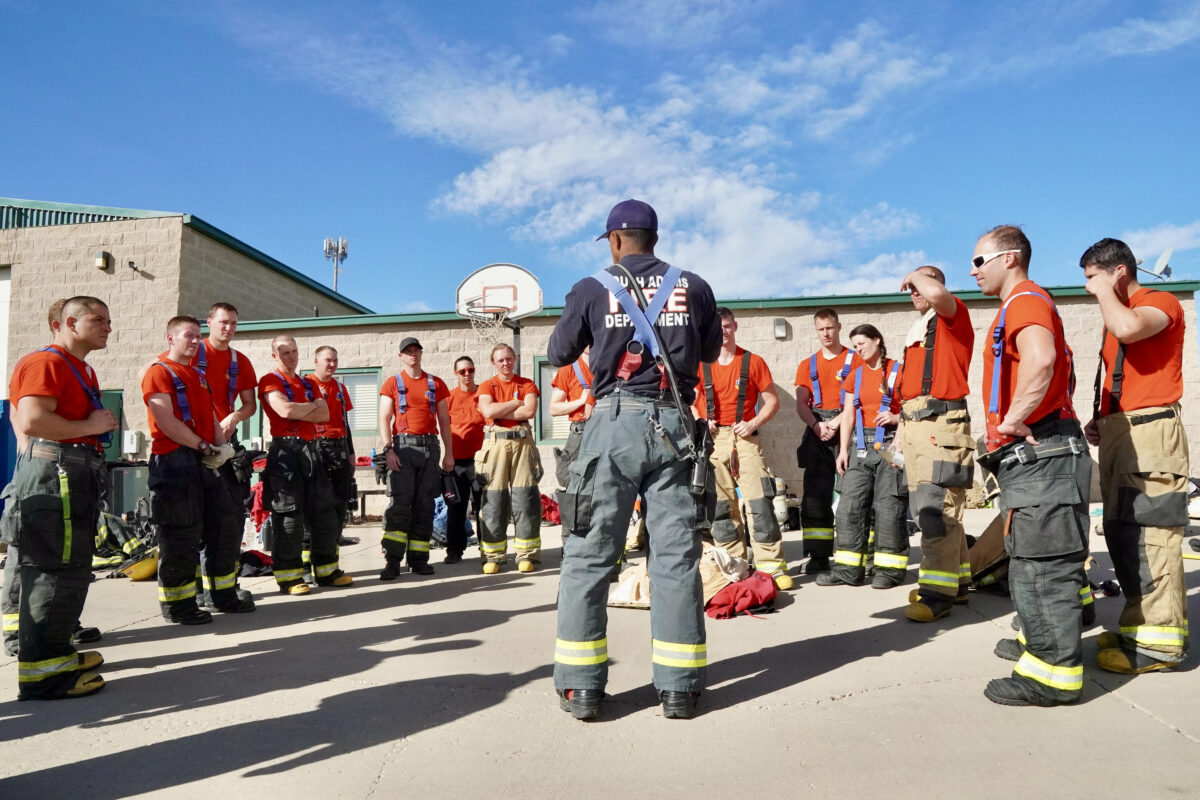
Prospective applicants must attend the specific course related to the cadre they are applying to and be familiar with IAFF programs and the interactive facilitation style.