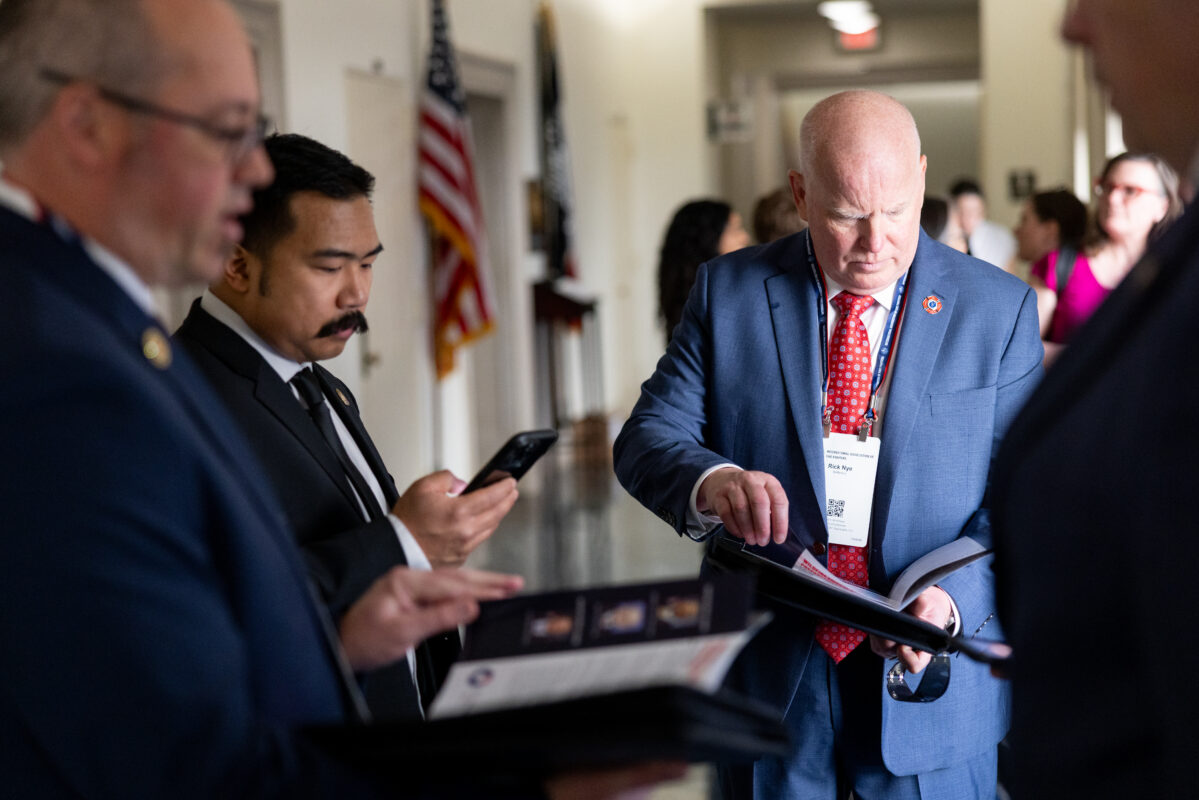
Over 700 IAFF members gathered in Washington, D.C. for the union’s annual Legislative Conference last week, pushing priorities like cancer prevention and PFAS protections. But as members return home, leaders say the real impact happens next.
“Our Legislative Conference is critical to the IAFF’s advocacy efforts, giving members a unique opportunity to educate lawmakers on the issues impacting America’s fire fighters and emergency medical workers,” said General President Edward Kelly.
“But change doesn’t happen after a single meeting. Fighting for the issues that matter most is a 24/7, 365-day effort. The IAFF will continue supporting our affiliates as they work to improve fire fighter and public safety back home.”
Turning meetings into momentum
Leg Con is a starting point, not the end.
“When our members see IAFF priorities going forward in D.C., they recognize that back home, we need to do the same thing,” said Dominic Lozano, President of the Alaska Professional Fire Fighters. “Everything we ask for is decided by an elected official.”
This is how members move the needle back home:
- Following up: Meet with lawmakers in their home states and districts to reinforce conversations from D.C.
- Stay visible: Attend local government meetings and invite elected officials to fire houses
- Tell your story: Share firsthand experiences on staffing, cancer risk, workload, and other key issues facing fire fighters
- Engage year-round: Track legislation and maintain regular communication with policymakers
Your voice matters: “A lot of people think, ‘There’s nothing I can do to impact change in Washington.’ That couldn’t be further from the truth. Our voice matters, our brand matters, our leadership matters, and showing up for our communities and our members is one of the most important things we can do,” said Steve Stein, Columbus, OH Local 67 president.
The takeaway: Leg Con opens the door, but consistent advocacy back home is what drives change.
The big picture
Advocacy is a full-time commitment.
Putting in the work: IAFF leaders, including New Mexico Professional Fire Fighters President Miguel Tittmann, view advocacy as an ongoing effort. With support from the IAFF, the NMPFFA successfully leveraged the Honoring Our Fallen Heroes Act to secure passage of better presumptive cancer legislation in the state.
“We need to engage not only here in D.C., but every single local race in New Mexico,” said Tittmann. “It’s important to engage, to let them know about our unique and specific job – whether it’s scheduling and sleep deprivation, or various traumas we see daily, we have to let them know how that impacts fire fighters and families and keep that open line of communication.”
For federal fire fighters, priorities like the bipartisan Federal Firefighters Families First Act remain important – both in Washington and across the country.
Federal members will continue their advocacy by inviting lawmakers to federal facilities and showing lawmakers and their staff the challenges faced firsthand.
What federal fire fighters are saying: “Federal fire fighters – fire fighters – we all have the same issues. Not just our Local – it’s every federal Local in the country. For instance, we have a 72-hour work week, and this is where we try to make big changes,” said William Silva of Joint Base Lewis-McChord Local F-283.
The bottom line
Decisions made by elected officials shape the job and the career.
Takeaways:
- “If we are not politically active, we would be on the menu,” added Karl Koenig, Oregon State Fire Fighters Council president.
- “Politicians have an impact on every part of our job, from when we start to long after retirement, our pensions. It’s important to advocate on a consistent basis,” said Kurt Detrick, Portsmouth, VA Local 539 president.
- “We have to show up to the table, so we can make our issues heard and understood, and give our members the tools to do a dangerous job and get home safely,” added Stein.
From workplace safety to long-term benefits, IAFF priorities require consistent advocacy across all levels of government.
“Remaining politically active – at the state, local, and federal level – is how you get things done. As long as politicians are involved in firefighting, fire fighters have to be involved in politics,” said Mitch Nason, president of Prince William, VA Local 2598.
IAFF members will continue showing up – at the Capitol, in their communities, and everywhere decisions are made.