Rhett Avant was on his way to work in California about a year ago when his motorcycle collided with a semi-truck. The accident severely injured his left leg, and Avant knew right away he might lose it.
“I knew it was bad. And I knew I was in a rural area, so I might be waiting awhile for paramedics, so I put a tourniquet on my own leg as I waited,” Avant, a member of Merced City Local 1479, said. “I was still hoping surgeons could save my foot.”
Surgeons had no choice but to amputate Avant’s leg six inches below the knee.
What was once considered a career-ending injury no longer has to be. For today’s fire fighters, advances in prosthetics, rehabilitation, and standards like NFPA 1580 – along with strong union and peer support – have created a clear path back to the job.
In fact, it’s one Avant and other IAFF members have taken.
“I didn’t know if I was being realistic or not, but I knew I wanted to go back to the job,” Avant said. “Thankfully, I was able to speak to some other fire fighter amputees. They really inspired me and convinced me I could do it.”
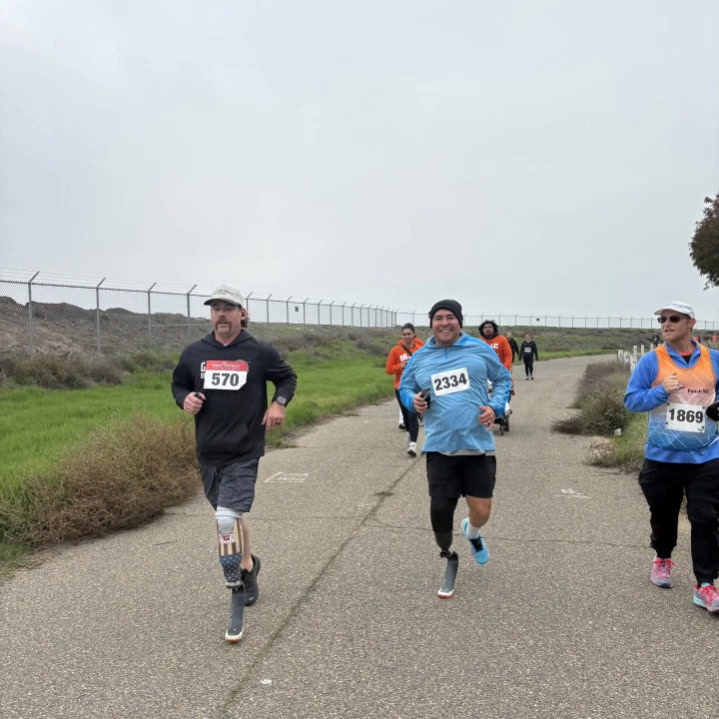
The 10-year veteran fire fighter found a gym in Modesto, near his home, that offered a specialized program for amputees. He trained there five days a week, learning to adapt to his new leg. Pretty soon, he felt strong enough to run a 5K, and then, return to work.
The only thing Avant’s department required was a standard Fit for Duty test, which he passed. He’s been back on full duty since February 2026.
Know the standard that can get you back on the job
Fire fighters preparing to go back to work after traumatic injuries should familiarize themselves with NFPA 1580, Standard for Emergency Responder Occupational Health and Wellness. The standard includes a list of 15 essential job tasks for physicians to consider as they decide whether a fire fighter can return to work after a serious injury (including amputation).
The standard gives doctors and departments a clear, objective way to determine whether a fire fighter can safely return to duty. It reflects the physical, physiological, intellectual, and psychological demands of the job.
This standard is especially important if fire fighters are met with skepticism as they move through the process of returning to work.
William “Billy” Wright, a member of Broward County, FL Local 4321, lost his hand in July 2022 to a fireworks accident. After getting fit for a prosthetic, completing a drivers’ training course as part of his rehabilitation, and training with another fire fighter amputee, Wright felt ready to return to the job full-time. But the physician who initially reviewed his case refused to clear him.
“That’s where my Local and the IAFF’s Chief Medical Officer, Dr. Danny Whu, came in,” Wright said. “They were able to get a 90-day extension so that Dr. Whu would have the opportunity to re-evaluate me. I am very thankful that they did because now I am back on the job.”
Whu took Wright through all 15 of the tasks outlined in the standard.
“Billy had done all the work. He had gotten the prosthetic and understood fully how to adapt his movements to complete all the tasks he needed to do to return to his position as a driver,” Whu said. “I ran him through everything NFPA 1580 requires, and he could do it all.”
Under the standard, fire departments are ultimately “responsible for making decisions about hiring, disqualifying, restricting, and determining reasonable accommodations.”
Grady Valencis, the IAFF Deputy Director of Health and Safety, said Locals should work with department administrators to agree on policy or collective bargaining agreement language that supports fire fighters returning to duty. This may include an initial period of light duty.
In those cases, Valencis said, the IAFF recommends language stating, “Where possible; the fire department shall provide an alternate duty position to members when the fire department physician recommends temporary work restrictions.”
Cases like Wright’s show the role the IAFF plays in helping members get back to work – connecting them with medical expertise, advocating through the process, and ensuring decisions are based on clear standards, not assumptions.
With the proper prosthetics, fire fighters can do anything
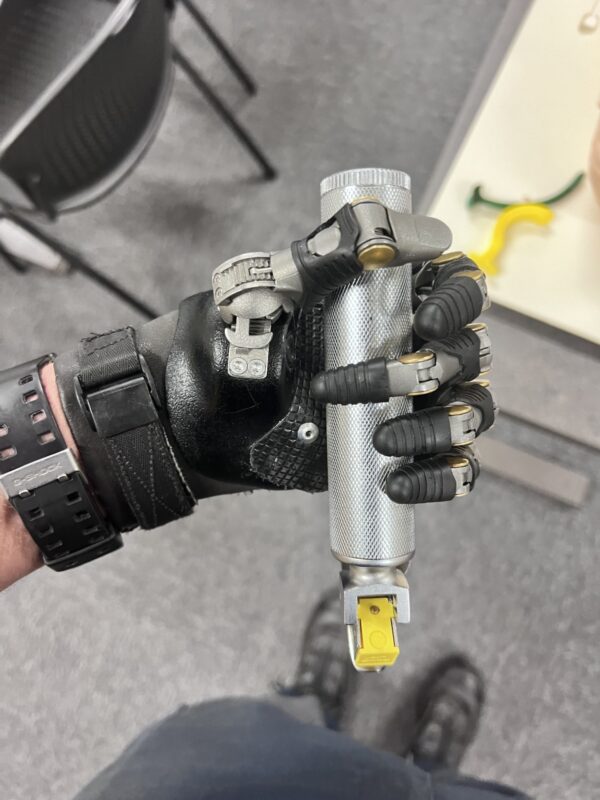
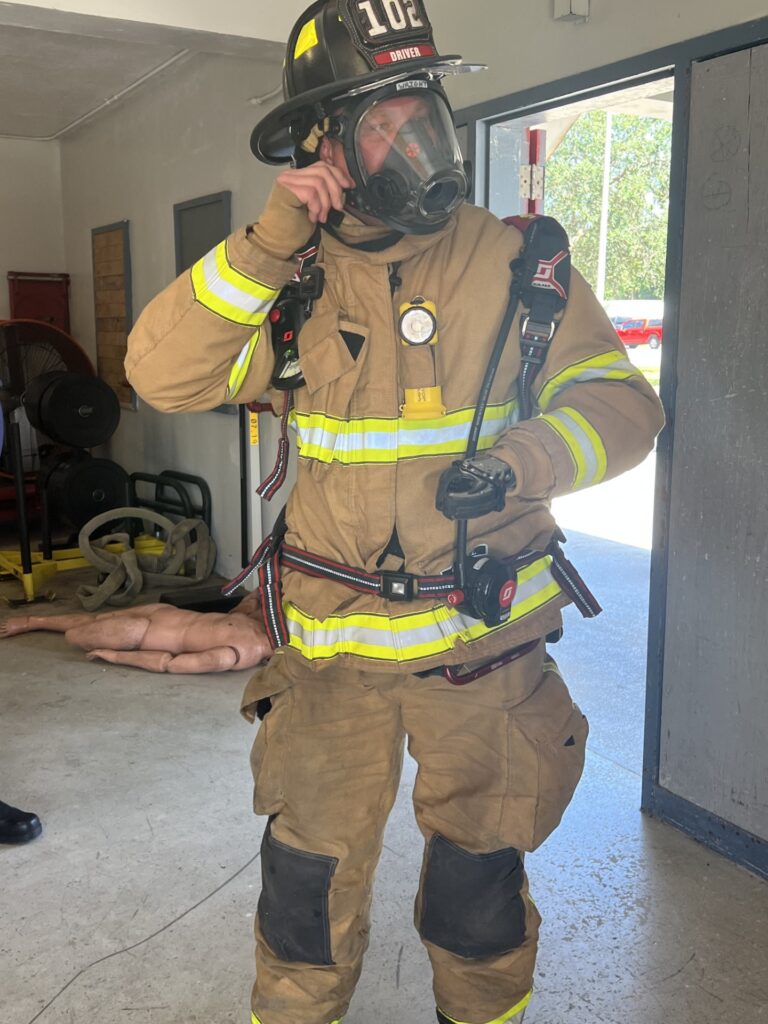
Prosthetics allow amputee fire fighters to perform critical tasks, including climbing, wearing heavy gear, and navigating debris. These prosthetics can withstand weights of up to 500 pounds and are not altered by heat.
Fire fighters with a lower-body amputation often use a socket that allows them to switch from a daily prosthetic to one that stays inside their turnout boot.
“I have a socket. So, all I have to do is turn it until it locks in place,” Avant said. “It also has a quick release, so making a quick switch when a call comes in is fast and easy.”
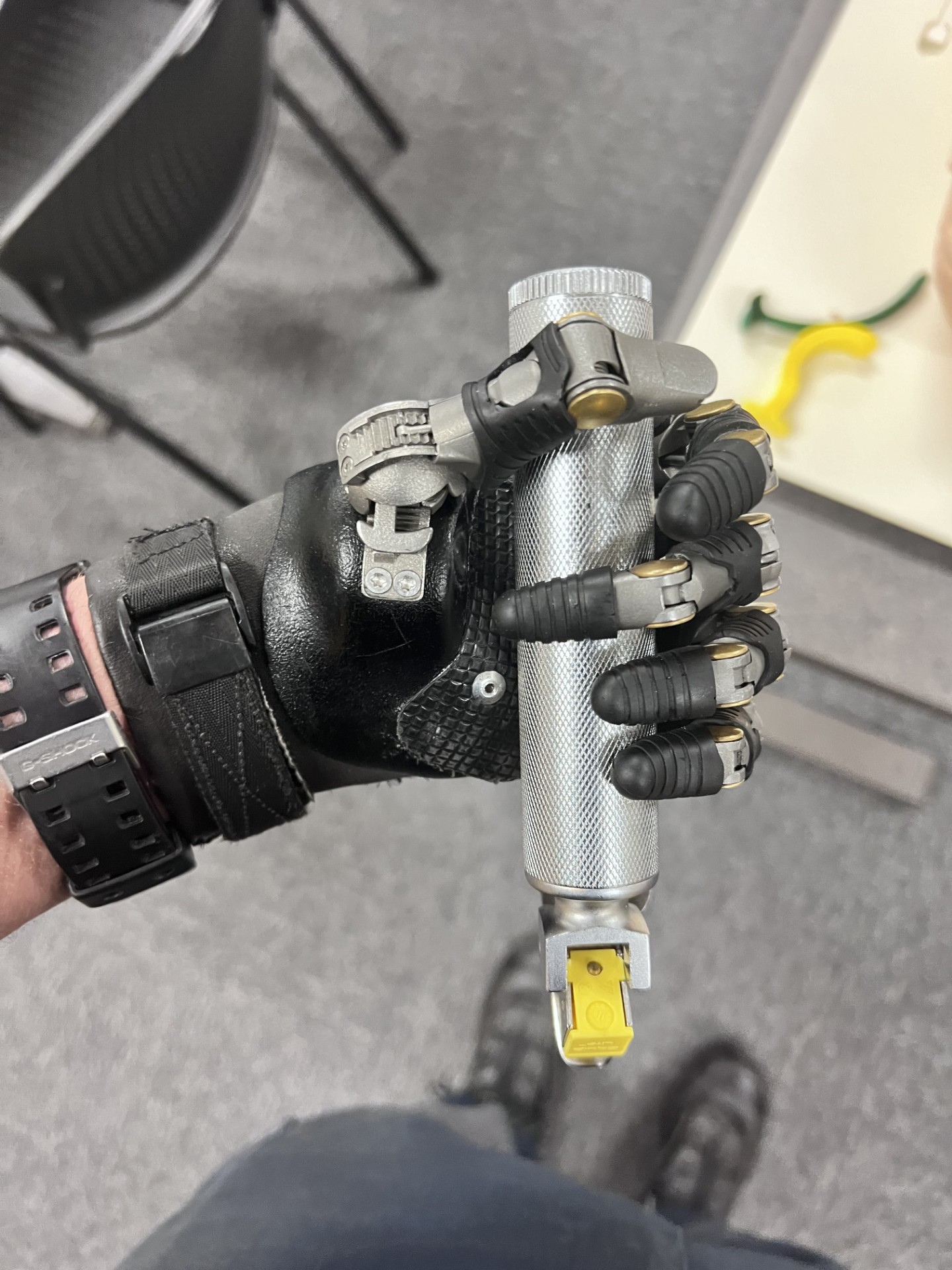
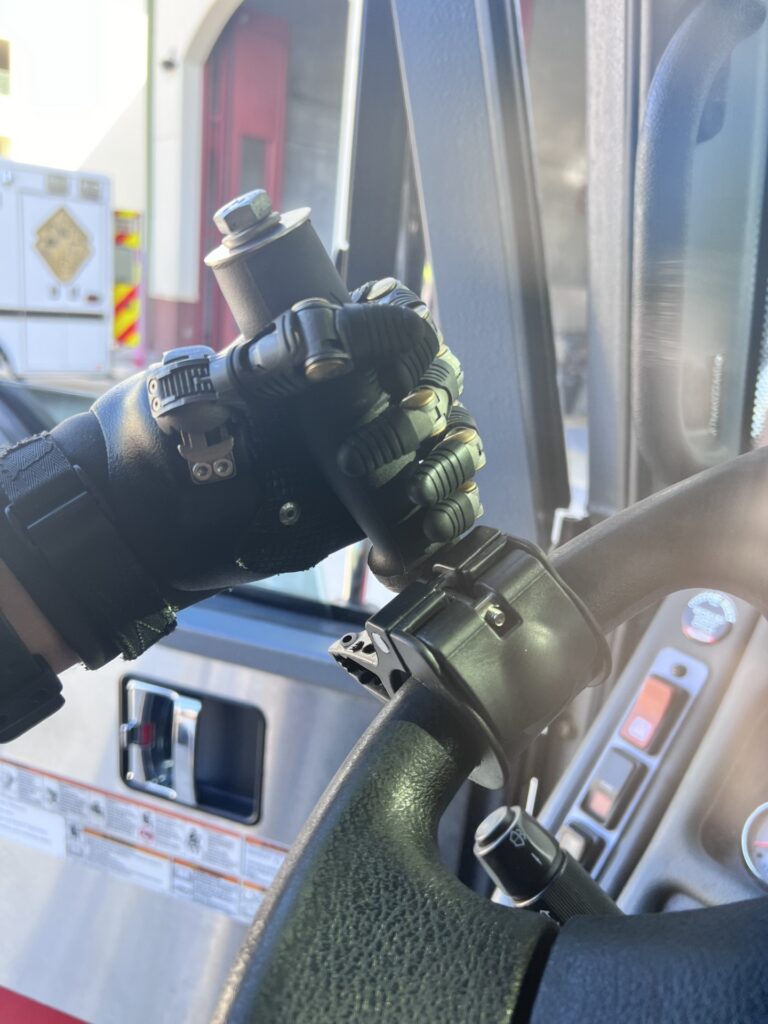
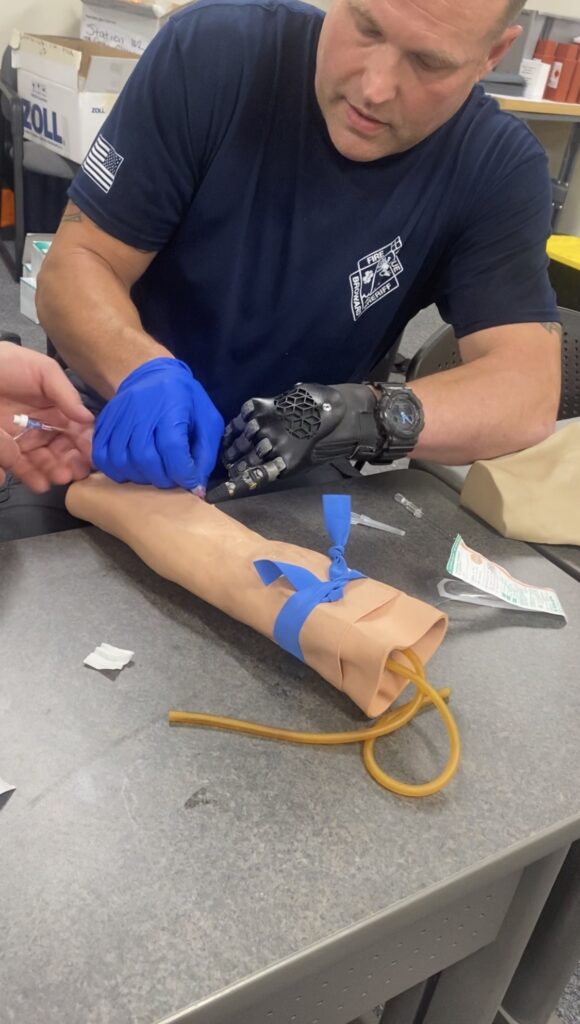
Fire fighters with arm or hand amputations have other considerations, including grip capabilities.
“Unfortunately, I did not have a positive experience with the first company I tried, but I heard about the Hanger clinic through some friends,” Wright said. “The staff there was able to hook me up with one that worked well with minimal complications. I also got a wheel attachment so that I could steer as well as I did before I lost my hand.”
The road back: recovery, rehab, and return to duty
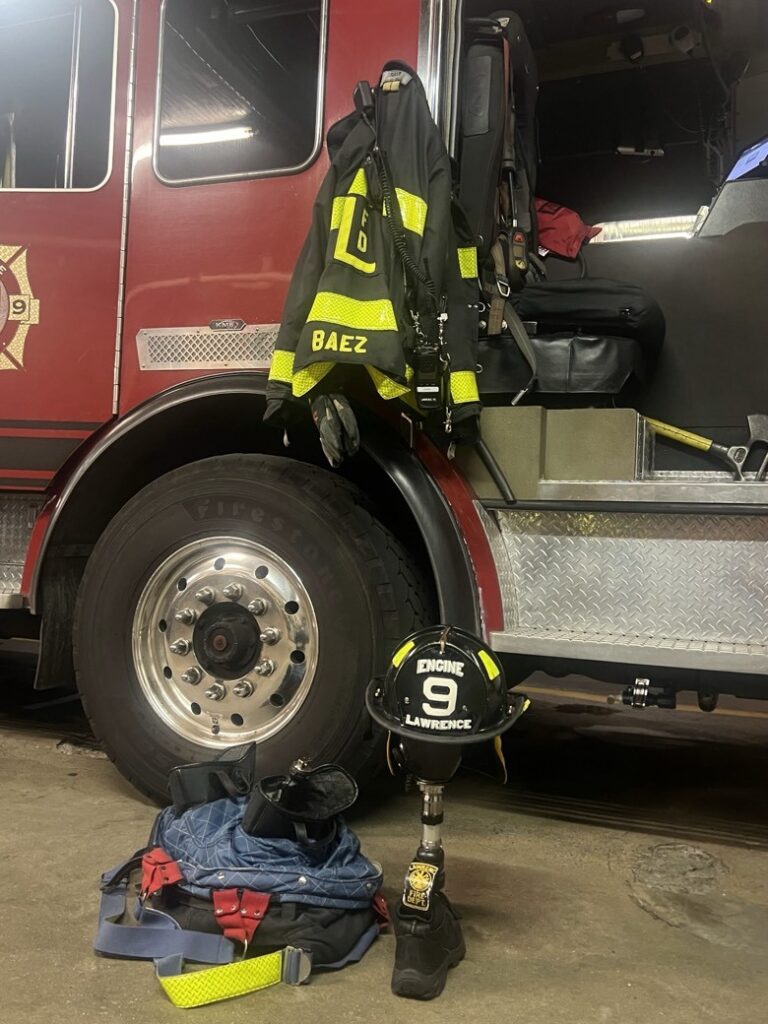
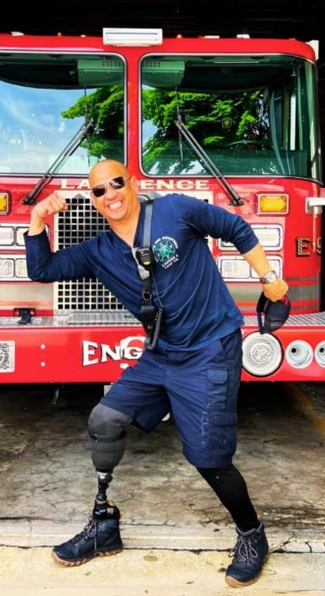
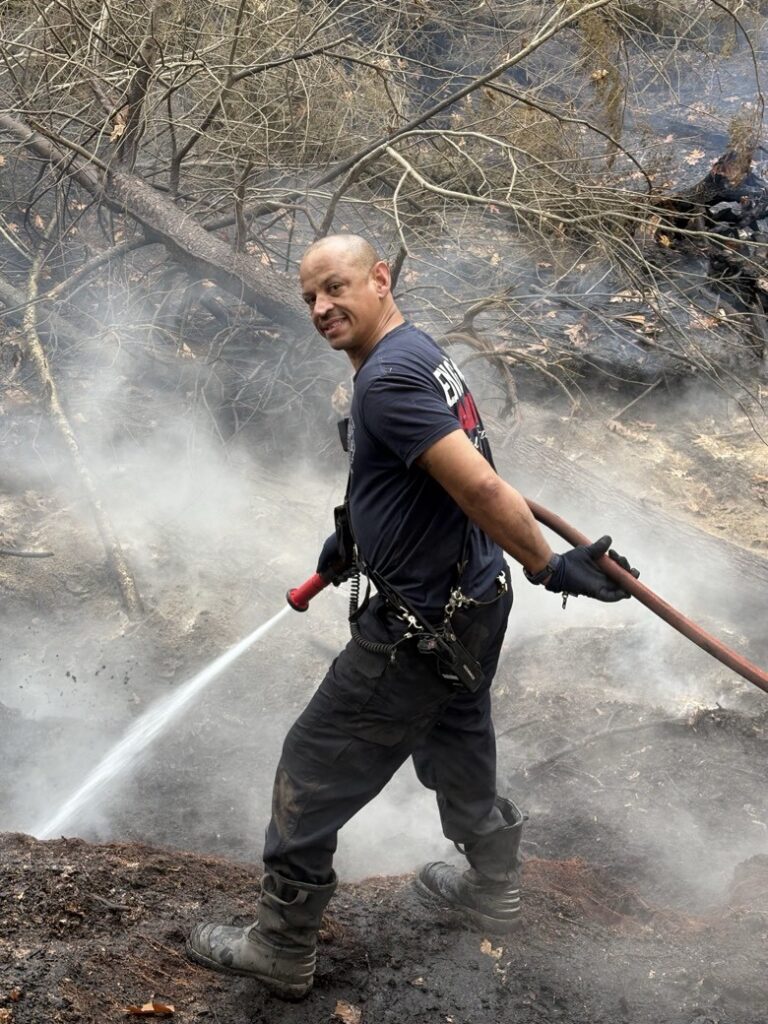
Miguel Baez, a member of Lawrence, MA Local 146, made a recovery and return to the job that some might call miraculous.
Baez was riding his motorcycle in August 2021 when he lost control and struck a rock,ejecting hime into nearby trees. The impact caused severe injuries, including several broken ribs, damage to his pancreas and kidneys, a collapsed lung, and the loss of the lower portion of his right leg.
“I lost a lot of blood, stayed in a coma for three weeks, and coded six times while I was in the coma. The doctors weren’t sure I would make it, but I did,” Baez said. “In fact, my accident turned out to be a blessing.”
Doctors found a blood clot near his heart that they believe was not related to the accident. If it had gone unnoticed, Baez could have suffered a fatal cardiac event.
Once stabilized, he was transferred to a rehabilitation hospital, where he was fitted for a prosthetic and worked through exercises that would help him return to fire fighter duties. Baez progressed quickly, especially considering the extent of his injuries.
“I attribute my recovery to my faith in God and a positive attitude. From the beginning, I decided to trust the process and do the work I needed to do to get back to the job,” he said. “I also received great support from other amputees. And now I’m the one giving support to others.”
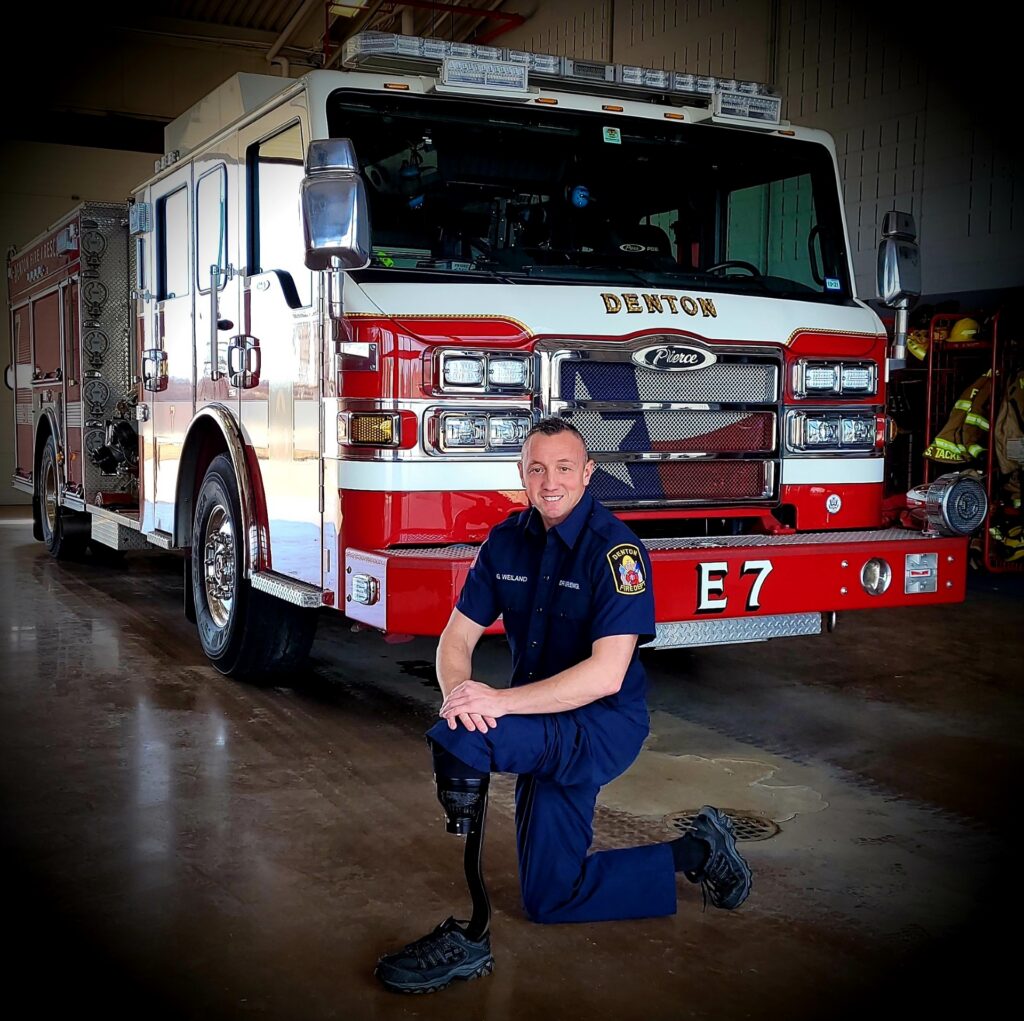
Denton, TX Local 1291 member Gary Weiland also said he understands the power of positive thinking.
“As soon as I saw the worry in my kids’ faces, I made the decision right then and there to not let the amputation define me. I was determined to get back to being on the job and being a good dad,” Weiland said. “I gave myself a mantra, ‘adapt and overcome,’ and I never lost sight of it.”
Weiland lost the lower half of his left leg in 2018 due to complications from routine knee surgery.
After the amputation, Weiland said he became laser-focused on his recovery. In just 10 months, he progressed through the city’s multi-step process for returning to work. This included rigorous rehabilitation that Weiland says he went above and beyond to complete because he “wanted to make sure the guys could see that I could be depended on during a call.”
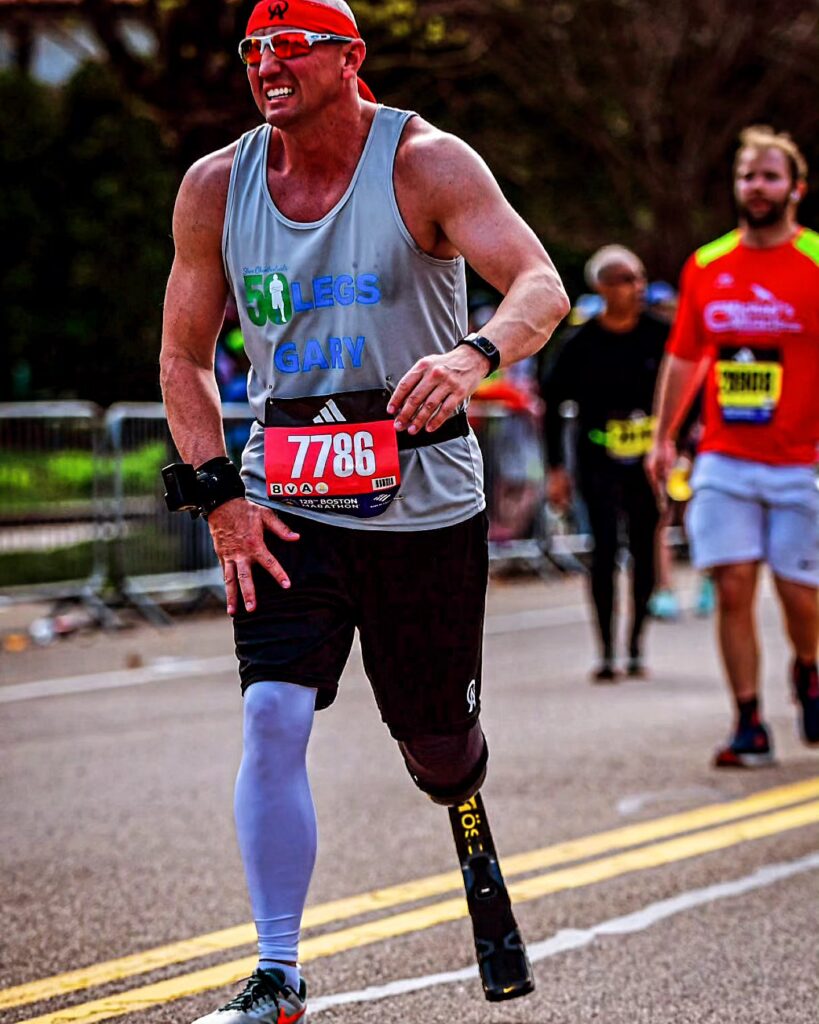
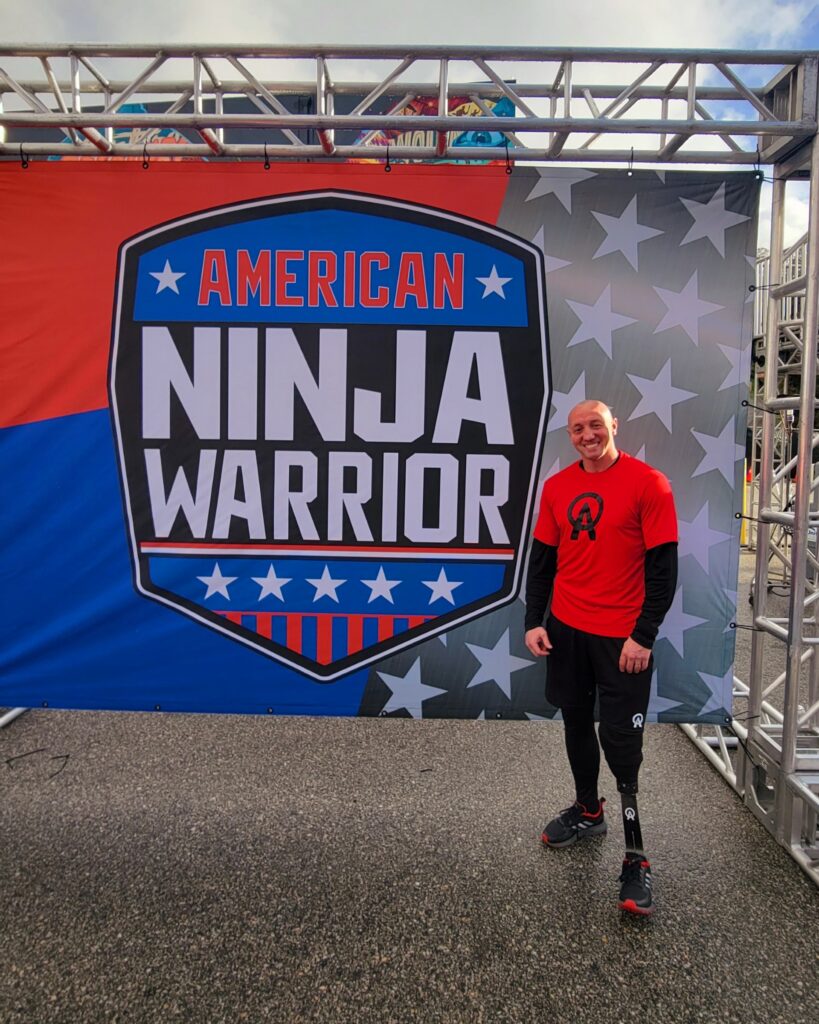
With the support of his local and then president Jason Ballard, he returned to full duty and was ready for more challenges. Weiland has been a contestant on American Ninja Warrior five times, became the U.S. Para Bobsled Push Division National Champion in 2023, and completed the 2024 Boston Marathon.
“When I’m not on the job, I give back as much as I can. I am always available to lend an ear to other amputees, and I try to speak at schools as often as I can,” he said.
“My message is always, ‘We can do this.’”
Stories like these are reshaping what recovery looks like in the fire service – and proving that, with the right support, the job doesn’t have to end when an unthinkable injury happens.