Just weeks ago, the future of integrated fire-based emergency medical services in Alberta was in jeopardy.
In March, the provincial government announced a sweeping plan to overhaul funding for fire department emergency services in seven municipalities – a plan that would have cut millions from local budgets, eliminated hundreds of jobs, opened the door to privatized EMS response, and drastically reduced the quality of prehospital care for Albertans.
The proposal drew immediate criticism, as it was announced without consulting municipalities, stakeholders, fire fighters and paramedics, or the residents it would affect. But fire fighters didn’t sit back and accept the decision. They organized, and they fought back.
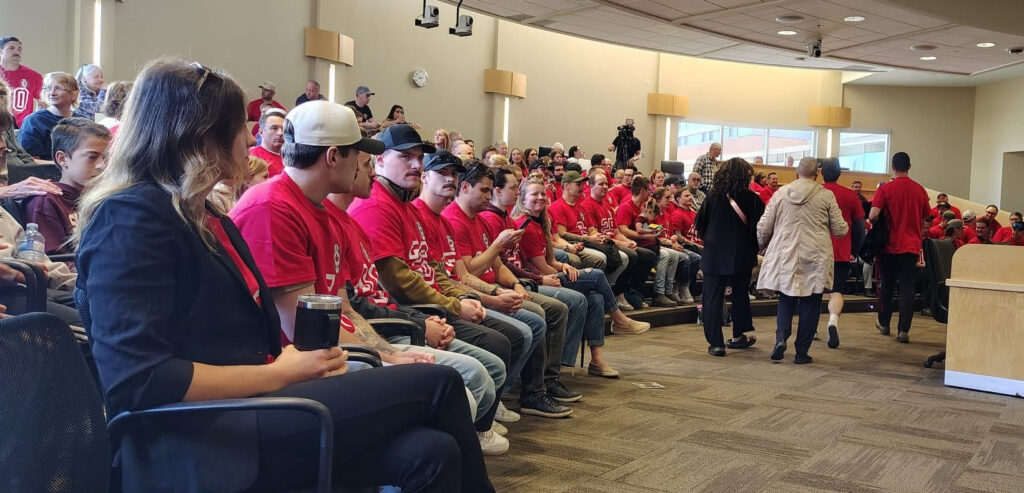
Affiliates – with support from the IAFF and Alberta Professional Fire Fighters and Paramedics Association (APFFPA) – packed local council meetings anytime the issue was discussed or voted on, rallied residents through social and traditional media, and made clear to elected officials that the public wanted their fire fighters involved in Alberta’s emergency services.
The pressure worked.
On June 22, Alberta Health Minister Adriana LaGrange announced the province would halt its plan to restructure fire-based EMS, stating the province would work with affected communities and have a new strategy in place by 2029.
If it wasn’t for the IAFF, for the APFFPA, and our locals contributing the funds and the collaboration, I sincerely believe we would have lost up to 250 IAFF jobs.
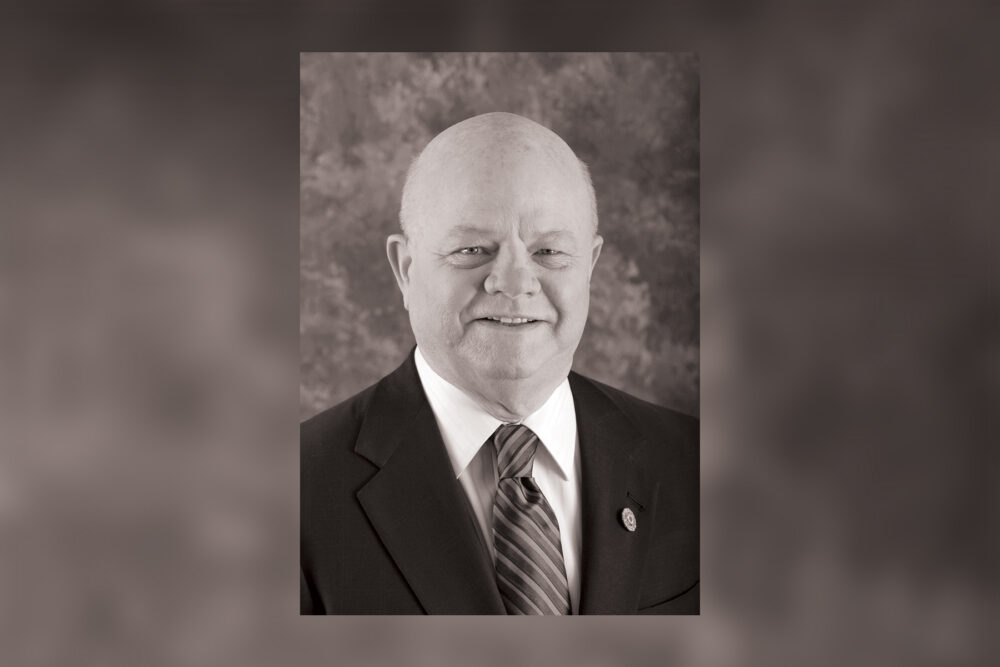
Alberta Professional Fire Fighters and Paramedics Association President EllioTt Davis
For Elliott Davis, president of APFFPA and a Strathcona County Local 2461 fire fighter-paramedic, the announcement was a textbook example of the strength of union action.
“Our Locals that were involved created an enormous groundswell as they made the case to stakeholders, mayors, councillors, and their local media,” Davis said, adding the locals were up against “layers of health bureaucracy” that wanted to see fire fighters out of EMS.
“If it wasn’t for the IAFF, for the APFFPA, and our locals contributing the funds and the collaboration, I sincerely believe we would have lost up to 250 IAFF jobs.”
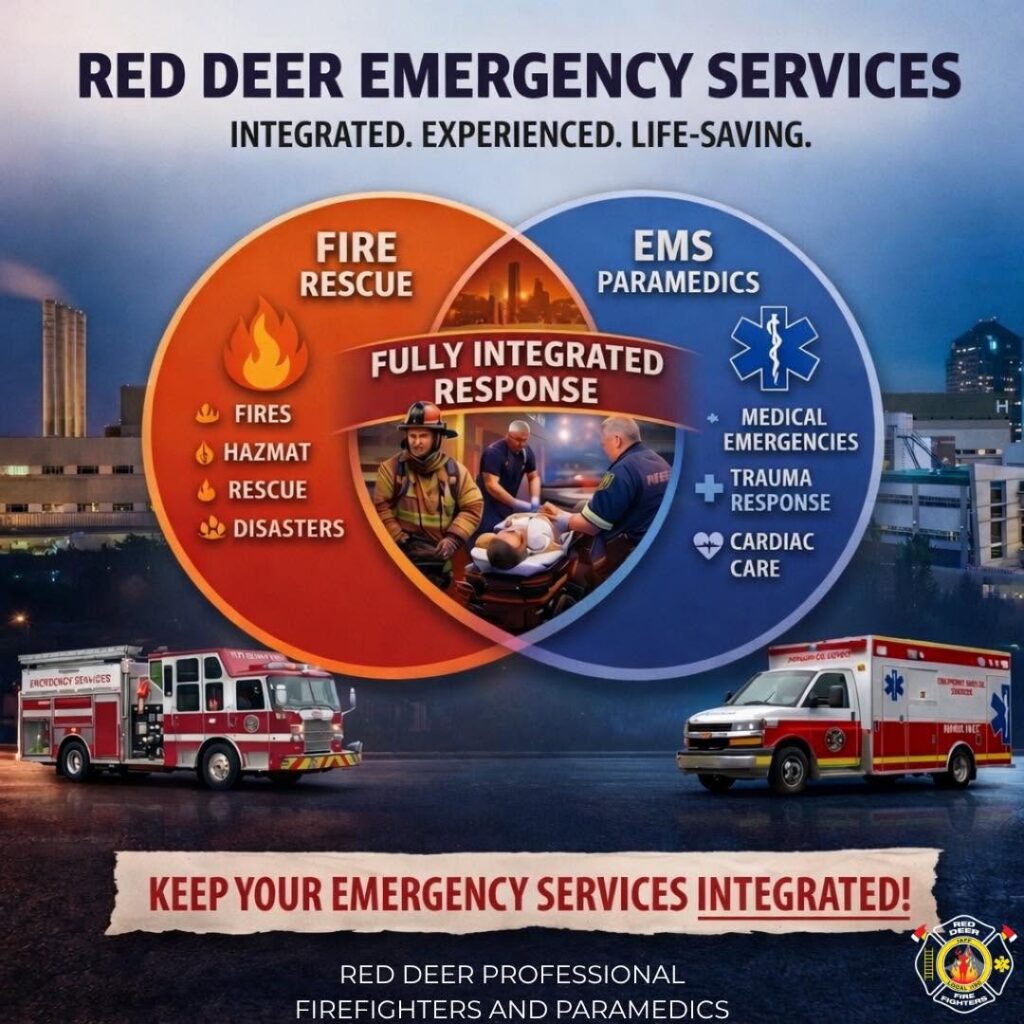

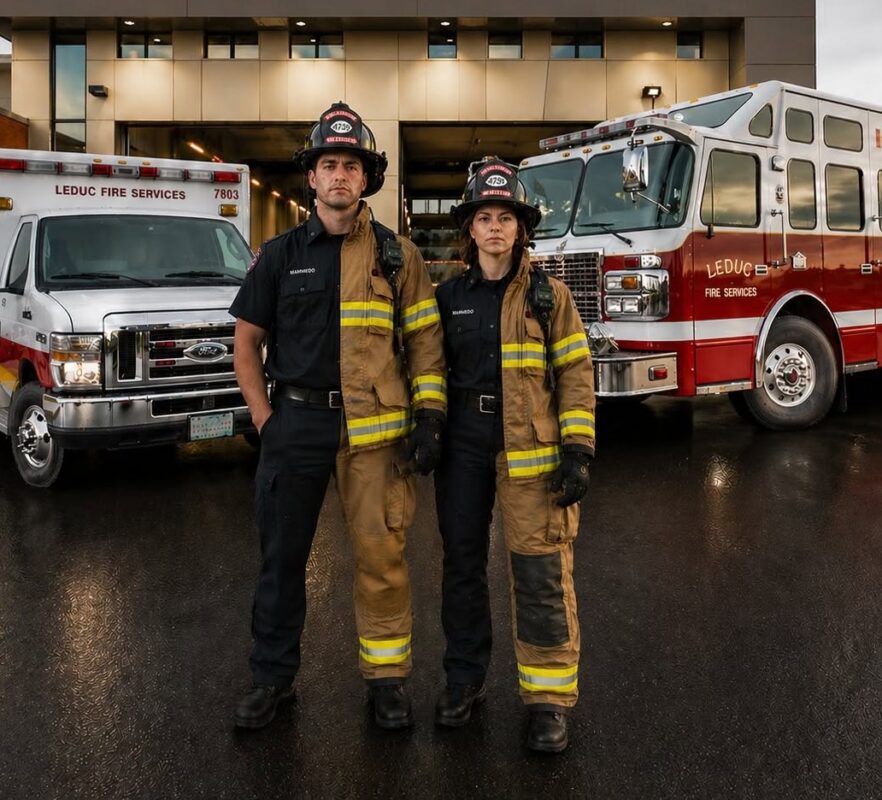
Historically, Red Deer, St. Albert, Strathcona County, Leduc, Spruce Grove, Lethbridge, and the Regional Municipality of Wood Buffalo have all provided integrated EMS services through their fire departments, the most concentrated example of the dual-mode model in Canada. Under the integrated model, fire fighters provide ambulance and prehospital emergency care, improving coordination and streamlining emergency response.
But in March, the Alberta government told municipalities they would no longer receive the same provincial funding for emergency service delivery, instead opting for a privatized, contracted model.
This left municipalities with a difficult choice – either give up their integrated systems, lay off personnel and allow the province to contract out EMS services to private providers, or raise revenues to make up the funding gap. Initially, the provincial government gave cities just two weeks to make their decision, although the deadline was later extended.
The IAFF and APFFPA immediately mobilized, ensuring Locals had the resources and messaging support to rally the public to the fight. Using informational graphics, social media posts, community events, and short videos, impacted Locals and the APFFPA were able to raise awareness about the issue and encourage residents to speak up.
The campaign quickly made the proposal one of the biggest local political issues in the province. While some municipalities – including Red Deer, Strathcona County, and St. Albert – voted to preserve their integrated systems, others voted to divest and accept the province’s new plan. But despite the mixed result, fire fighters continued speaking out on the issue.
The reversal of the government position demonstrates the value of the IAFF and the work we do, at every level, to ensure we protect the public and our members. This was an extremely difficult position for our affiliate leaders to be in, and they stood tall and proud in the face of that to ensure they did what was best for everyone.
6th District Vice President Mike Carter
Their continued public statements, combined with the rising pushback from residents, ultimately forced the province to back down.
6th District Vice President Mike Carter said he cannot overstate the “amazing work” done by affiliate leaders, the APFFPA, and IAFF staff to defend the integrated services and the jobs that go with it.
“The reversal of the government position demonstrates the value of the IAFF and the work we do, at every level, to ensure we protect the public and our members,” said Carter. “This was an extremely difficult position for our affiliate leaders to be in, and they stood tall and proud in the face of that to ensure they did what was best for everyone.”
While all impacted Locals are celebrating the decision, the news is especially impactful for Lethbridge Professional Fire Fighters Local 237, whose members have provided prehospital emergency care for over 114 years. The reversal will protect 78 jobs for the Local.
“We’re just really proud of our community for standing up and having our backs,” said Local 237 President Brent Nunweiler. “And when they call 911, they can know we’ll have their backs moving forward.”

St. Albert Local 2130, Spruce Grove Local 3021, and other impacted Locals all praised the reversal on social media, thanking the public for standing with them during the fight.
While Alberta IAFF members have saved the integrated services and those jobs in the short term, they remain vigilant.
For Davis, the goal has now shifted towards creating sustainability for the integrated model, ensuring they’re no longer beholden to short-term funding agreements, and creating an environment where the model can continue to grow.
“We’re confident we’ve shown why this model works and is so important,” Davis added. “Now, we’ll look for opportunities to expand it even further.”