Memphis, TN Local 1784 fire fighter Jeffrey Scott Arick had just finished a grueling 30-hour shift, intensified by COVID-related staffing shortages, and a physically demanding two-hour vehicle extrication in full turnout gear under the Memphis heat, when he collapsed at home.
His wife, Stephanie, remembers him walking through the door, complaining of chest pain, thinking he had only pulled a muscle. Instead, he suffered a massive heart attack. Despite her desperate efforts, Arick died in front of their 11-year-old daughter.
For years, the family fought to have his death recognized as a line-of-duty death, but the city repeatedly denied their claim. Then the IAFF stepped in.
The IAFF’s Medical Assistance Program – led by Chief Medical Officer Dr. Dan Whu – took the case and helped overturn the denials, securing the benefits the Arick family had earned.
“The union was my lifeline,” said Stephanie. “They didn’t just fight for benefits, they checked on us, prayed for us, became friends, and that meant everything.”
The Arick’s story is just one example of how the IAFF delivers real results for members’ health and safety.
“Every fire fighter knows our job comes with risk,” General President Edward Kelly said. “We understood that reality when we took our oath. But that doesn’t mean we can’t work to make a dangerous job safer. That’s the mission of the IAFF.”
From cancer prevention and behavioral health to stronger safety standards and independent research, the IAFF’s Health & Safety Division is driving change across the fire service.
Under Kelly’s leadership, the IAFF has doubled down on protecting members’ health – creating new roles and expertise to make the fire service safer for the next generation. At the heart of that effort are three people whose work defines what it means to protect those who protect others – Sean DeCrane, Dr. Derek Urwin, and Whu.
This is their story.
Setting New Standards for Safety
When a cargo ship fire at the Port of Newark killed Local 71 fire fighters Augusto “Augie” Acabou and Wayne “Bear” Brooks Jr. in 2023, it underscored the urgent need for better training and standards.
Within weeks, the IAFF secured a grant to develop specialized shipboard firefighting training and began working with the National Transportation Safety Board and U.S. Coast Guard to strengthen response protocols and equipment standards for port and vessel fires.
These efforts led to the creation of an eight-hour shipboard fire response awareness course, now available through the IAFF – turning tragedy into concrete action that saves lives.
If we really want to impact the health and safety of our members, we have to take ownership of it.
Sean DeCrane, IAFF Assistant to the General President for Health & Safety
At the center of these efforts is Assistant to the General President for Health & Safety Sean DeCrane, a 26-year veteran of the Cleveland Division of Fire. From his early days as a battalion chief and director of training to his time as a research engineer for UL Solutions, DeCrane has approached fire fighter safety with precision and purpose.
“Our Health and Safety team really interacts with our members,” DeCrane said. “We’re working on a variety of issues that involve fire fighter health and safety, from nutrition to survival training to cancer prevention.”
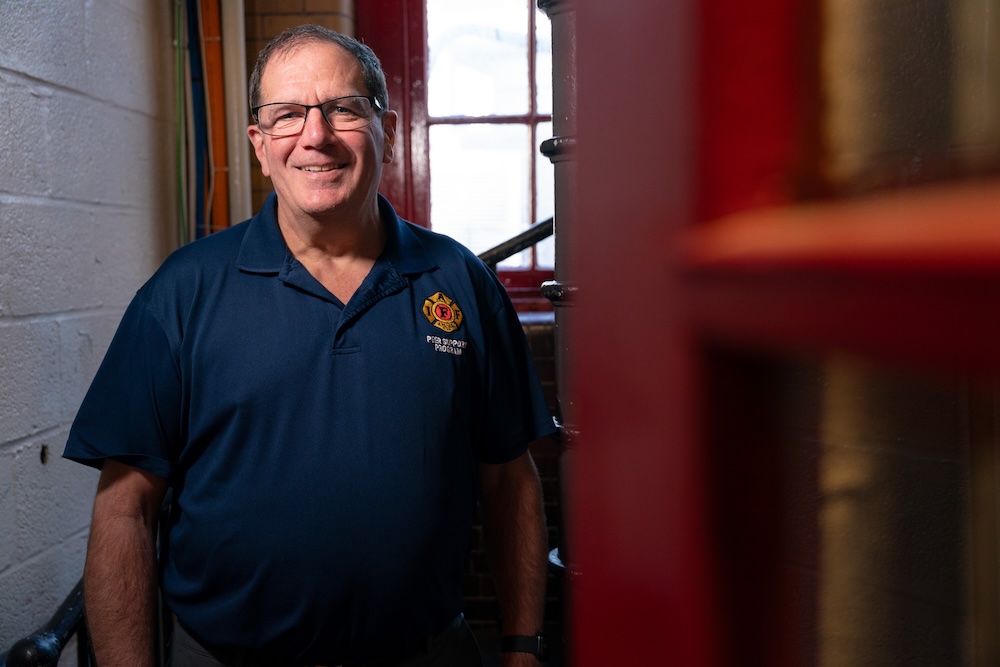
General President for Health & Safety
On any given day, DeCrane is traveling across the U.S. and Canada, meeting with members, reviewing incident investigations, developing training resources, and managing grants. “We’re not only trying to teach our members what to do during dangerous situations, but we also work with partners to educate them on various types of fire science, like how ventilation affects fire behavior, to help prevent emergencies from happening,” he said.
One of the IAFF’s most significant victories in the fight to protect members’ health is the redesign of fire fighter personal protective equipment (PPE). For years, cancer risk from chemical exposure was a hidden hazard. Addressing it became an IAFF priority.
The union collaborated with researchers, members, subject matter experts, and industry representatives to propose changes to NFPA 1970. The goal: create a restricted substance list for manufacturers and eliminate the moisture barrier UV light degradation test — a requirement that had resulted in the inclusion of toxic PFAS chemicals in bunker gear.
The IAFF’s efforts paid off.
The NFPA published its revised standard in 2024 and introduced the restricted substance list in September 2025. Existing gear can continue to be sold through March 2026, after which all gear must comply with the newly revised standard. Through these efforts, the IAFF reduced exposure to cancer-causing toxins and set a new benchmark for fire fighter safety – turning research and advocacy into tangible protection for every member on the frontlines.
While DeCrane and the division are tackling PPE and safety head-on, they’re also enlisting members to be involved.
“IAFF members are appointed to the International Code Council (ICC), NFPA, and industry technical committees, ensuring that standards reflect the realities faced on the frontlines,” said DeCrane. “This involvement influences everything from turnout gear and apparatus to training, medical evaluations, and building design, helping make the structures where fire fighters operate as safe as possible.”
The IAFF also collaborates with external stakeholders, including UL Solutions and the Fire Safety Research Institute, to study emerging technologies such as lithium-ion batteries. Findings are translated into practical guidance that keeps members safe from evolving threats.
When policymakers called for specialized training to prepare fire fighters for wildland and urban interface incidents, the IAFF acted, creating the Responding to the Interface (RTI) program.
RTI has trained thousands of IAFF members across the U.S. and Canada, strengthening wildfire readiness. Recently supported by a $600,000 grant in Texas and partnerships across Canada, the program ensures members are ready to safely meet the growing challenges of interface fires.
The division also supports behavioral health through peer training, the IAFF Center of Excellence, and the Behavioral Health Standing Committee.
“If we really want to impact the health and safety of our members, we have to take ownership of it,” DeCrane said.
Every initiative – from PPE redesign to shipboard firefighting training to behavioral health programs – reflects the mission of the IAFF: keeping members safe, now and in the future.
A Doctor on the Frontlines
The Arick family’s case exemplifies how the IAFF’s Medical Assistance Program (MAP), led by Dr. Whu, delivers support to members and families facing complex medical and legal challenges. The program was one of the first major initiatives launched after Kelly created the Chief Medical Officer position in 2022, reflecting the union’s investment in medical science and its commitment to ensuring that every decision about members’ health is guided by experts and evidence.
Since its start, the MAP has helped dozens of members and families navigate cases involving cancer, cardiac disease, PTSD, and other job-related health conditions.
Doing dangerous work doesn’t mean enduring unsafe conditions.
Dan Whu, MD, IAFF Chief Medical Officer
A Metro-Dade, FL Local 1403 member for more than 35 years, Whu has held leadership roles throughout his career – including Division Chief of Fire, Rescue & EMS Operations for Miami-Dade County, Assistant Director of the Miami-Dade Office of Emergency Management, and Disaster Physician and Medical Team Manager with FEMA Urban Search & Rescue, Florida Task Force-1. He has responded to major disasters including Sept. 11, Hurricane Katrina, the Haiti earthquake, Hurricane Maria, and the Surfside condominium collapse.
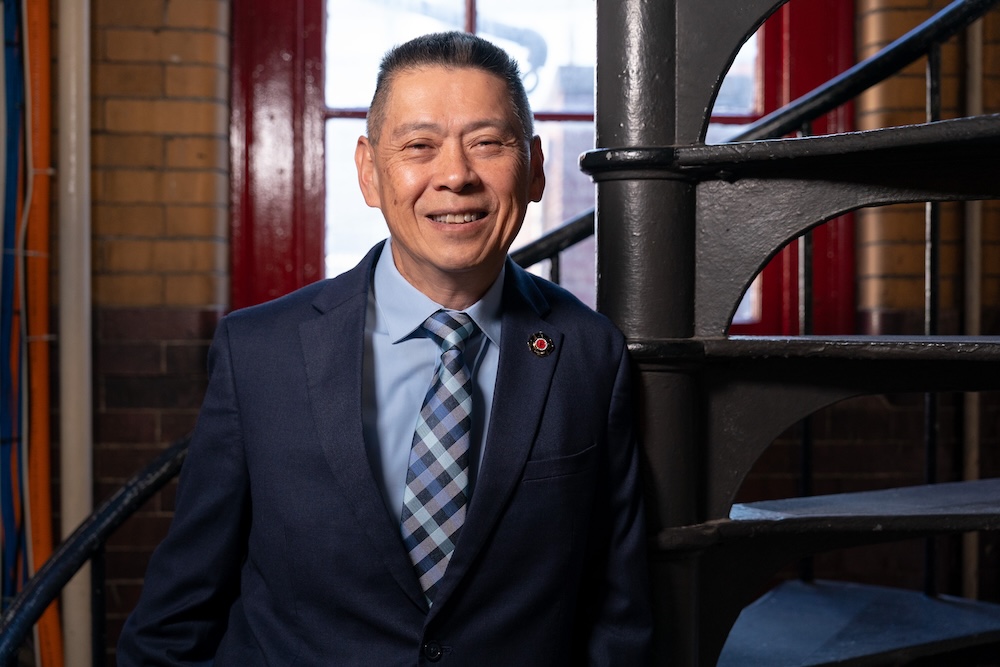
His dual perspective – as both a fire fighter-paramedic and a physician – gives him a rare understanding of the risks members face and the science behind their health outcomes.
At the core of the MAP is personalized support for members and their families as they navigate illnesses, exposures, and benefit disputes. Formally adopted by delegates at the IAFF’s 57th Convention in 2024 after a two-year trial, MAP evaluates cases with medical, social, familial, and occupational risk factors – correlating the latest research in epidemiology, toxicology, and exposure science. The MAP has already worked on dozens of cases across the U.S. and Canada.
Presumptive laws were meant to make it easier for fire fighters to qualify for benefits when they develop occupational illnesses or injuries. But, Whu said, they often don’t work as intended.
“Fire fighter presumptive laws have been adopted by all U.S. states and most Canadian provinces and territories for some injuries and illnesses that, absent clear non-occupational causes, are more likely than not to have occurred in and out of the performance of firefighting duties,” he said. “But, all of these laws are ‘rebuttable,’ which means employers or insurers can easily rebut them by hiring a medical expert who will opine that the illness or injury isn’t work-related. When that happens – and it happens often – the burden of proof is shifted back to the fire fighter.”
That’s why, Whu said, “it’s critical our members have access to properly credentialed, well-qualified, and knowledgeable medico-legal representation.”
“Everything the IAFF does aims to improve the health, safety, and well-being of our members,” said Whu. “One might think wages and benefits are separate from health, but when optimally negotiated, they contribute to the emotional and psychological stability of our members.”
As Chief Medical Officer, Whu reviews medical programs, health screenings, and treatment protocols; helps Locals make evidence-based decisions; and advises affiliates and researchers on studies relevant to the fire service.
“Our job is dangerous, and the mission of the IAFF is to make it safer in every respect,” said Whu. “Doing dangerous work doesn’t mean enduring unsafe conditions. We’re focused on advancing the health, safety, and well-being of our members’ minds, bodies, and spirits, so they can perform at their best throughout their careers and enjoy a long, healthy, and well-deserved retirement afterward.”
Through the MAP and other initiatives, Whu and the IAFF ensure that no member or family faces those challenges alone.
Research Driven by Purpose
Fulfilling a lifelong dream, Derek Urwin began his career as a fire fighter with Miami-Dade Fire Rescue, later continuing in California with Los Angeles County, CA Local 1014.
But that dream took a deeply personal turn when his younger brother, Isaac, was diagnosed with leukemia in his early 30s.
Throughout Isaac’s long fight, Urwin made countless trips to New York to be by his brother’s side during chemotherapy, supported by his L.A. County firehouse, whose members covered his shifts without hesitation. When Isaac died in 2014 after three courageous years, the loss left Urwin devastated – but also determined to turn his grief into purpose.
“We didn’t have any previous family history of cancer, and I couldn’t understand how or why he had gotten sick,” said Urwin. “So after things settled down, I went back to graduate school at UCLA to study how exposures to chemicals can drive the development of cancer.”

That decision reshaped both his career and his mission. Urwin earned a Ph.D. in chemistry in 2023 and now conducts fire fighter cancer research at UCLA’s Department of Chemistry and Biochemistry and the Jonsson Comprehensive Cancer Center – honoring his brother’s memory while giving back to the fire service family that supported him through tough times.
Along the way, Urwin met Kelly, who shared his vision of connecting the fire service with academic research to improve fire fighter health and safety. For decades, the union relied on research done by the same manufacturers producing the gear and equipment fire fighters use on the job. Kelly wanted to change that. He established the Chief Science Advisor position – another first for the IAFF – to build independent research the union could trust. Urwin’s mission: turn that science into real-world protection for members.
Today, Urwin manages several grant-funded research projects examining how fire fighter exposures contribute to cancer and other long-term health risks. His work blends science with service, ensuring fire fighters are not just study subjects, but equal partners in research affecting their lives.
“I focus on employing community-based participatory research approaches where fire fighters and scientists are equal partners in research, working together to develop research aims, study design and execution, design of interventions, and dissemination of findings,” said Urwin.
Among his current projects helping IAFF members: measuring complex exposures during wildfires – including chemicals from vegetation, structures, vehicles, and alternative energy systems; analyzing biological effects of exposure, from gene expression changes to chronic inflammation and immune suppression; and studying mutational patterns linked to breast cancer in women fire fighters using highly precise DNA sequencing techniques.
“The exposures that we endure when fighting wildfires are substantial and complex, and in order to better understand how these exposures can increase cancer risk, we work on three fronts: characterizing toxic chemicals, measuring what we’re exposed to, and quantifying the resultant biological effects,” he said.
Beyond the lab, Urwin’s goal is to ensure every policy and safety standard in the fire service is grounded in credible, peer-reviewed science.
“All too often, narratives in fire fighter health and safety have been dominated by industry-driven or junk science. We as fire fighters need policies to be developed based on sound data gathered by ethical and impartial researchers that are peer-reviewed and published in reputable scientific journals,” he said.
We as fire fighters need policies to be developed based on sound data gathered by ethical and impartial researchers that are peer-reviewed and published in reputable scientific journals.
Derek Urwin, Ph. D., IAFF Chief Science Advisor
At the IAFF, Urwin is helping to expand partnerships that connect experts across disciplines to advance prevention, early detection, treatment, and survivorship for fire fighters and their families.
“There is no single go-to expert when it comes to cancer and other adverse health outcomes faced by our 350,000+ members and our families,” said Urwin. “There is an abundance of experts in multiple fields of research that have never worked with fire fighters, but who are eager to engage in the fight against cancer and the other health and safety challenges that we face.”
For Urwin, the work is both scientific and personal. Each new study, partnership, and discovery carries the memory of his brother Isaac – and the determination to ensure no other family in the fire service has to face the same loss.
For Kelly, their collective work defines what it means for the IAFF to lead from the front.
“Tomorrow’s fire fighters and emergency medical workers will be better off because of the work this union is doing today,” Kelly said. “Dan, Derek, Sean, and their teams are taking some of our biggest threats head-on and turning those challenges into real progress for the fire service. That’s the kind of work that changes – and saves – lives.”