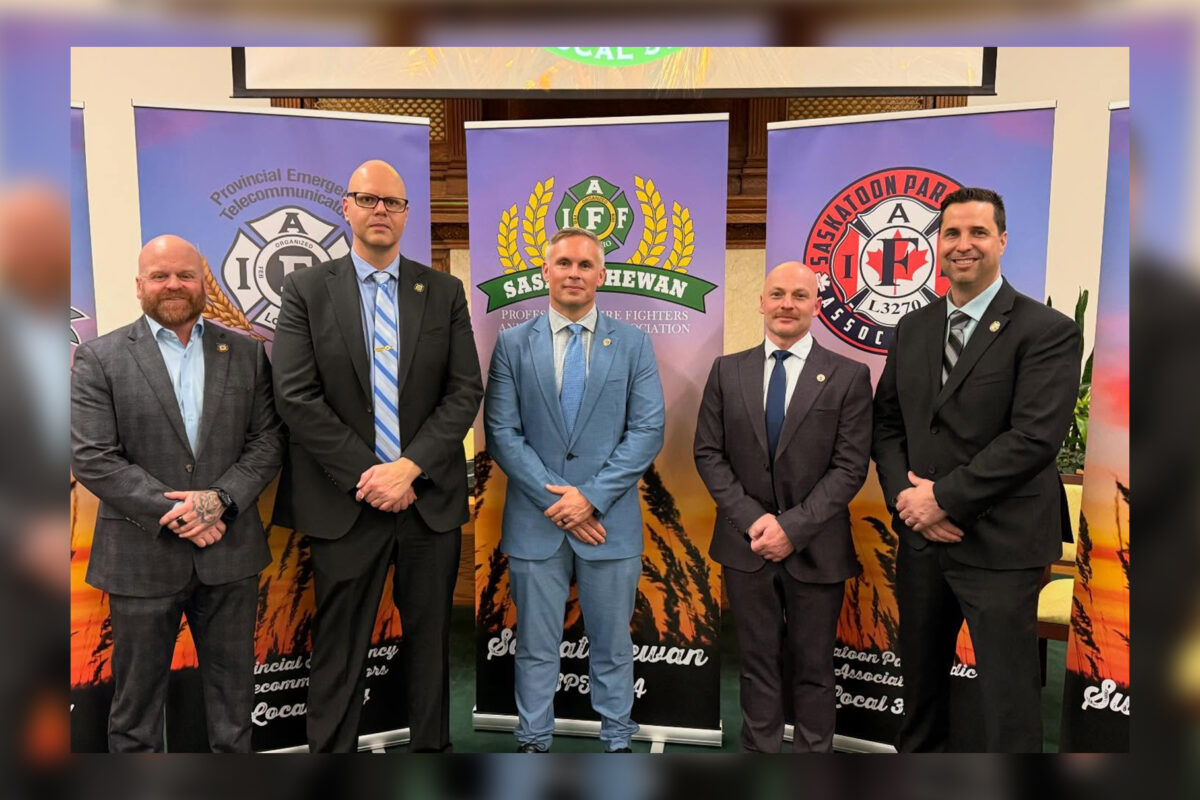
More than 30 IAFF fire fighters and paramedics met with provincial lawmakers in late November to push for enhanced mental health resources, updated EMS legislation and important labour law changes during the Saskatchewan Professional Fire Fighters and Paramedics Association’s (SPFFPA) 28th annual Legislative Lobby.
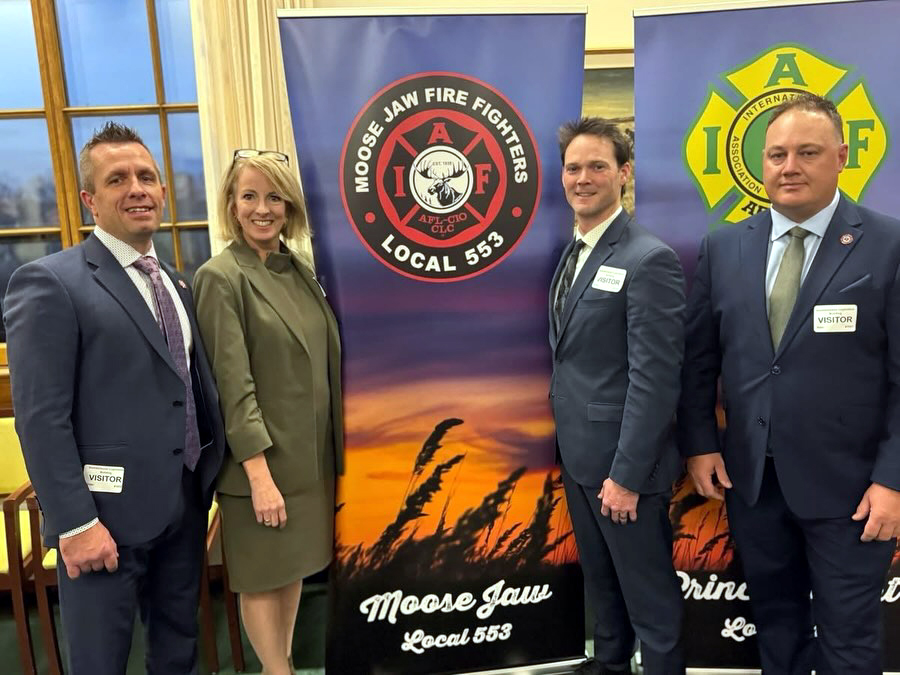
The association, which represents 1,205 members in 10 Locals across Saskatchewan, used a group meeting format for its lobby, including roundtable sessions with members of the governing Saskatchewan Party’s Human Services Committee and with opposition New Democratic Party politicians. The SPFFPA also hosted a joint reception at the Legislature attended by 25 members of the province’s Legislative Assembly.
“We had a good lobby this year. We met with a good number of MLAs and had meaningful discussions about issues that are very important to our members,” said SPFFPA President Aron Gidluck.
The SPFFPA is urging the Saskatchewan Government to establish a Provincial First Responder Mental Health and Resilience Fund of up to $3 million for peer support and resilience training, clinician education and early intervention and post-incident programs.
Delegates cited data showing that first responder mental health-related WBC claims in the province have increased 224% since 2019. Nationally, 45% of public safety personnel report symptoms of a mental disorder, which is more than four times the national average.
“Our members stand ready to serve. Let’s ensure they have the support to do so with strength, resilience and dignity,” SPFFPA members told the legislators.
SPFFPA delegates also asked MLAs to repeal a 2013 section of the Saskatchewan Employment Act that removed the right to binding arbitration from fire fighters in cities with a population of less than 20,000.
We had a good lobby this year. We met with a good number of MLAs and had meaningful discussions about issues that are very important to our members.
spffpa president aron gidluck
The legislation unfairly impacts four IAFF Locals – Weyburn Local 2989, North Battleford Local 1756, Yorkton Local 1527 and Swift Current Local 1318 – which are consequently among the lowest paid in Canada. Access to binding arbitration is essential to resolving standard negotiations, maintaining fair wages, and supporting recruitment and retention.
“We’re really hoping that this year we can finally get this 20,000-population threshold out of the Employment Act so that all of our Locals can arbitrate,” Gidluck said. “It creates a big wage gap for us. I think we’ve got people interested in this issue and we’re hoping they follow through.”
SPFFPA delegates warned that outdated legislation governing land ambulance services is contributing to challenges seen across Canada, including resource shortages, long response times, recruitment and retention issues and personnel burnout. Saskatchewan’s Ambulance Act and Regulations don’t specify rules around meal breaks and shift duration, and paramedics are trying to serve the public with outdated equipment – including ambulances with more than 300,000 kilometres on them.
Delegates asked MLAs to open the legislation and regulations to address paramedic health and wellness and to support emerging models of care, such as community paramedicine and allowing paramedics to transport patients to medical clinics instead of hospitals.

The SPFFPA has made solid gains through past lobby efforts. In 2003, Saskatchewan was among the first provinces to implement presumptive cancer legislation for fire fighters, and it currently leads Canada with 22 cancers covered.