Lawmakers are pressing for rail safety reforms that would close dangerous gaps that leave fire fighters responding to derailments without timely information or adequate safeguards.
The IAFF-backed Railway Safety Act would require railroads to provide first responders with real-time information about hazardous materials, expand federal HazMat training programs, and strengthen safety standards for high-risk freight.
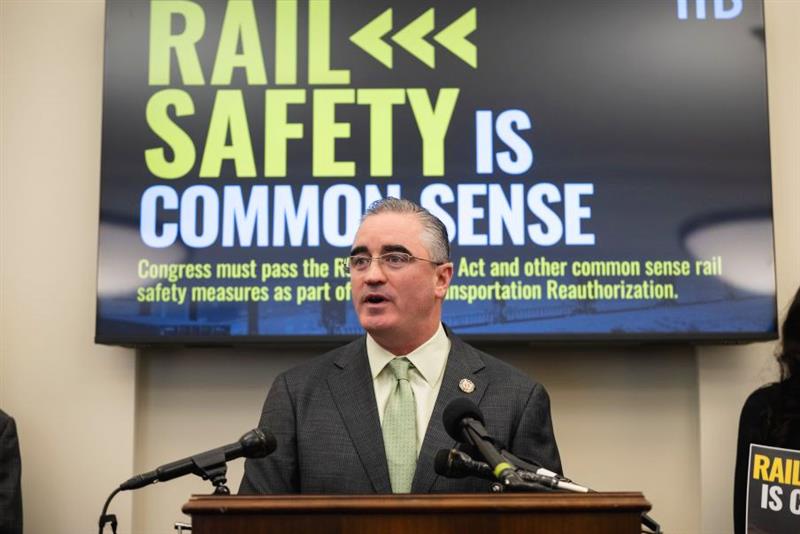
“Millions of Americans live and work along HazMat railways,” General President Edward Kelly said. “We need to protect them. And, ultimately, we need to protect every fire fighter who responds to a derailment.”
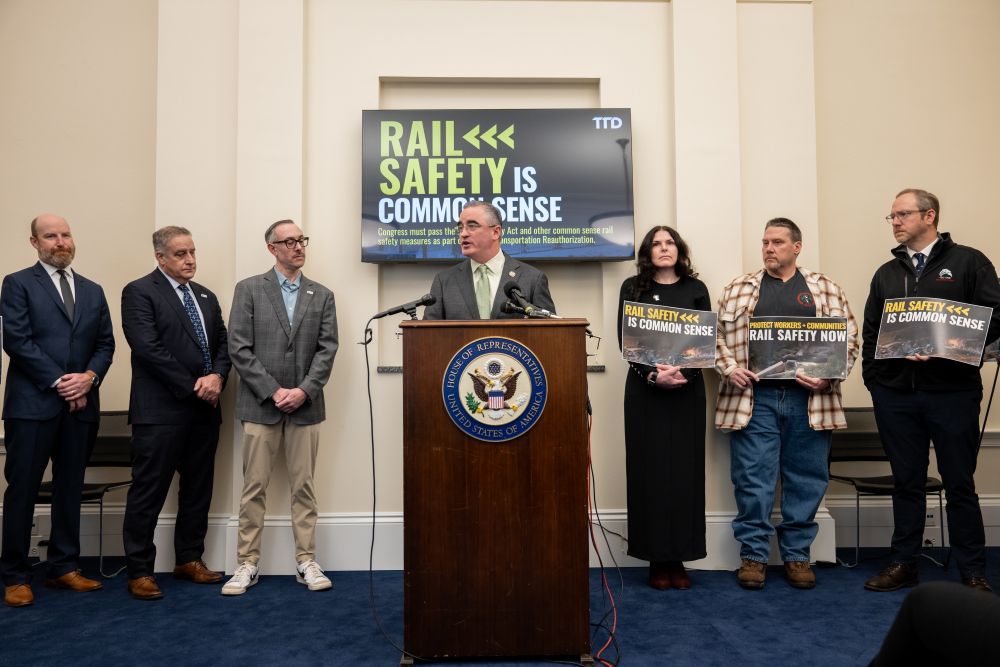
The remarks came at a press conference marking the third anniversary of the Norfolk Southern derailment in East Palestine, Ohio. Speakers included bill co-leads Reps. Chris Deluzio, D-Pa.; John Garamendi, D-Calif.; and Mike Rulli, R-Ohio, along with co-sponsor Rep. Mike Lawler, R-N.Y.; House Rail Subcommittee Ranking Member Rep. Dina Titus, D-Nev.; Pittston Mayor Michael Lombardo; Altoona Mayor Matt Pacifico; and labor leaders, including Brotherhood of Railroad Signalmen President Mike Baldwin and Transportation Trades Department, AFL-CIO President Greg Regan.
Millions of Americans live and work along HazMat railways. We need to protect them. And, ultimately, we need to protect every fire fighter who responds to a derailment.
IAFF General President Edward Kelly
It took more than an hour for HazMat-trained fire fighters to reach the scene in East Palestine, while local crews attempted to control the fire with limited equipment and information.
Since then, there have been more than 200 rail collisions and 3,100 derailments nationwide, several including hazardous materials. On average, a train derails in the United States and releases at least 1,000 gallons of toxins every two months, according to the Howard Center for Investigative Journalism. Nearly half of those incidents resulted in evacuations.
The bipartisan legislation would double federal funding used to train fire fighters to respond to HazMat incidents. It would also strengthen rail safety requirements aimed at preventing derailments, including requiring additional crew members on trains, implementing defect detectors, and barring railroads from setting unsafe time limits on inspections.
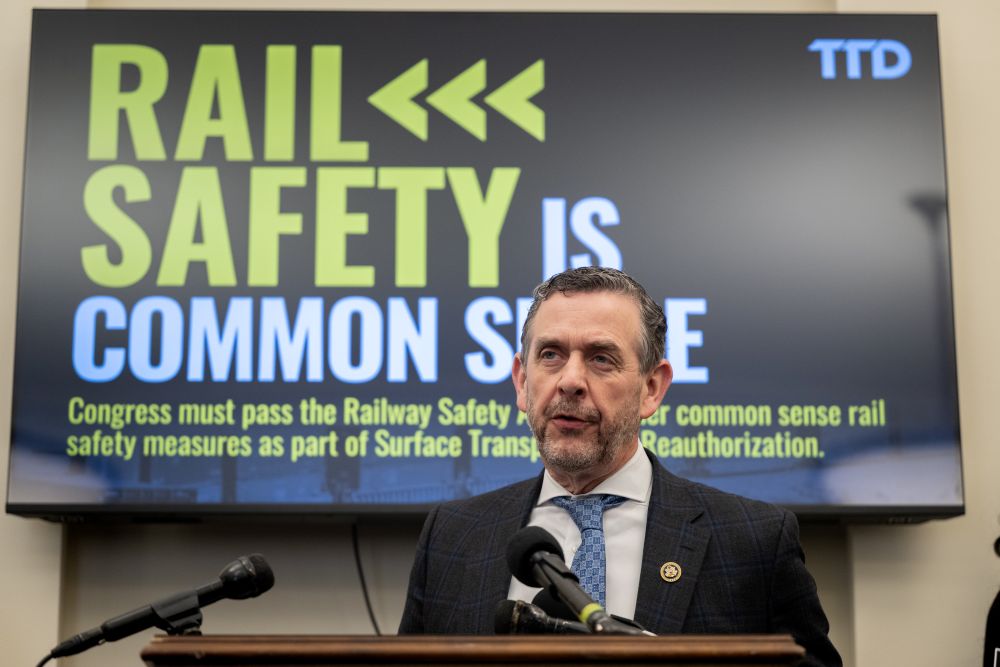
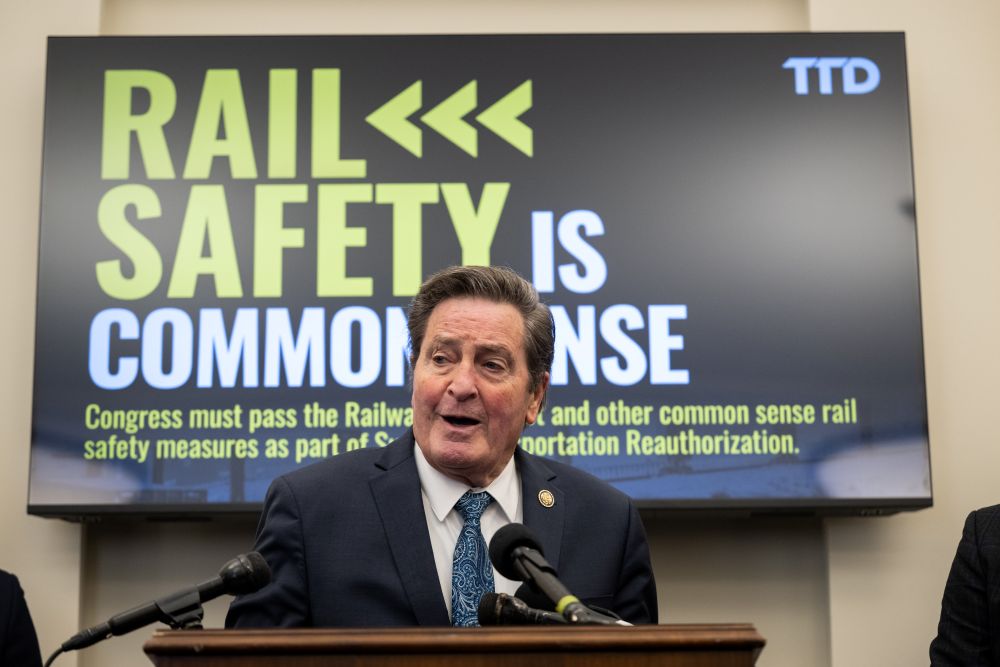
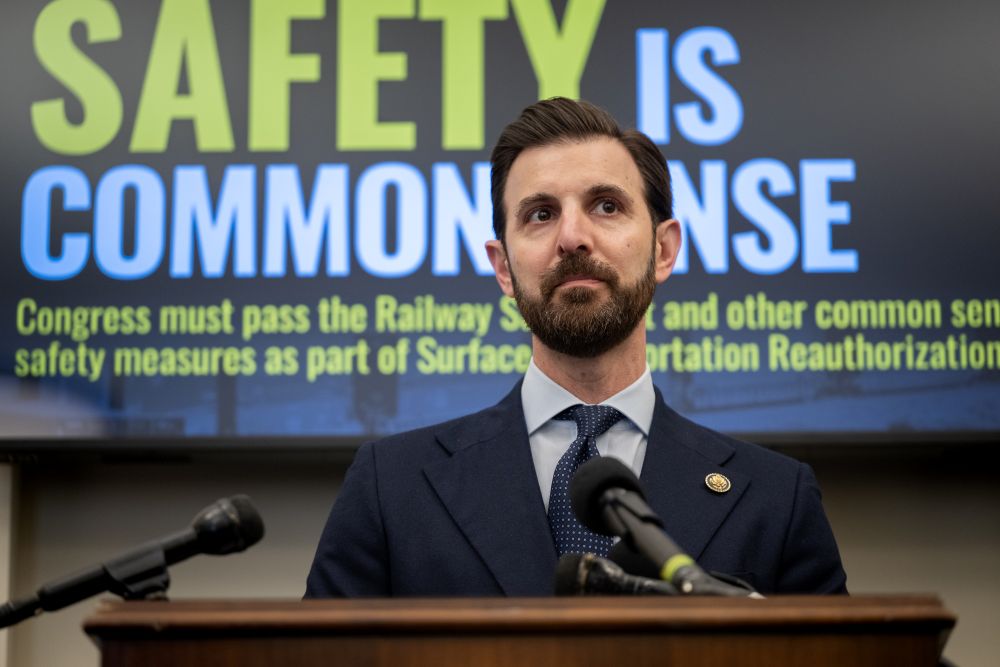
“Safety regulations are not obstacles to progress,” Baldwin said. “They are the guardrails that keep people alive. Regulations and technology are the difference between a job done right and a disaster waiting to happen.”
Advocates say reform is needed to prevent another incident like East Palestine.
“The time for action is now,” Regan said.