The fire apparatus crisis that prompted a U.S. Senate hearing in September is hitting Canada just as hard – forcing departments to wait years and pay inflated prices for new trucks while deteriorating apparatus continues to jeopardize fire fighter and community safety.
“Steadily and purposefully, apparatus manufacturers have rigged the game,” General President Edward Kelly testified before the U.S. Senate Homeland Security Subcommittee. “Taking a well-used page out of the corporate big money playbook, a small group of manufacturers have caused prices of fire engines and ladder trucks to balloon in recent years. This market manipulation has created a clear and present danger.”
That same “clear and present danger,” which Kelly also likened to monopolistic behavior, is playing out across Canada – in injuries, years-long wait times, and prices that keep climbing.
In Richmond, British Columbia, two fire fighters suffered partial hearing loss from malfunctioning sirens on apparatus kept in service past its safe lifespan while the department waited for replacements.
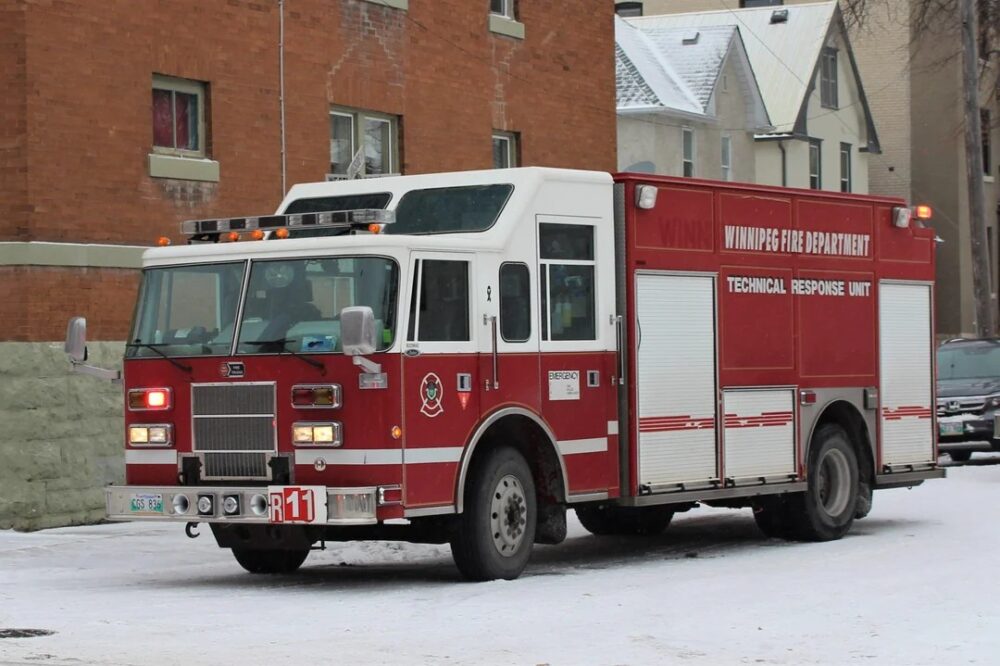
In Winnipeg, Manitoba, the department is waiting longer and longer for the delivery of each piece of new apparatus it orders. These long wait times come with a stiff price tag. The cost of an average engine truck has grown from $300,000-$500,000 in the mid-2010s to over $1 million. Ladder truck prices have doubled, now costing $2 million or more.
When we order a new engine or ladder, we are essentially buying a spot on the production line. But it is difficult to wait when the need is immediate. The city has tried more commercial, cheaper options, but those are poor quality builds that continuously fall apart on us.
Winnipeg Local 867 President Nick Kasper
For Winnipeg, finding alternatives isn’t simple.
“When we order a new engine or ladder, we are essentially buying a spot on the production line,” Winnipeg Local 867 President Nick Kasper said. “But it is difficult to wait when the need is immediate. The city has tried more commercial, cheaper options, but those are poor quality builds that continuously fall apart on us.”
The department responds to over 100,000 calls per year, making it one of the busiest in North America. It is also one of the coldest cities, with temperatures getting as low as 40 degrees below zero.
“We have tried standard models, which are not designed to withstand our temperatures and call volume. They come back to me with cracks and other issues,” said Jeff Whitney, a fire department mechanic and Local 867 member. “So, we have refurbished as many of our older models as we can. But that will only work for so long. NFPA standards only allow us to keep them on the road for a maximum of 25 years.”
Winnipeg is just one department pushing older models to their limits.
Richmond, where two fire fighters suffered hearing loss, exemplifies the broader problem: half of their fleet is more than 20 years old as the department waits on newer apparatus.
A recent survey conducted by the British Columbia Professional Fire Fighters Association (BCPFFA) found that long wait times and rising cost of apparatus are a province-wide issue.
“Forcing departments to extend the service life of aging, unreliable equipment poses a direct threat to the operational safety of our members and the communities they protect,” BCPFFA President Todd Schierling said. “Strategically, we must exhaust all opportunities to combat the current market conditions. Long waits and inflated prices on fire apparatus are not sustainable.”
Surrey, BC Local 1271 officials said they were expecting a new aerial truck for delivery in 2022. Instead, they were told it would be delayed by a year and cost $700,000 more than the original estimate. It didn’t stop there. Last year, Surrey was given a three-year wait time on five engines and at least a four-year wait time on a new aerial.
“We have been lucky that we have not experienced any serious safety issues. But these extended wait times and increased costs are a real concern,” Local 1271 President Saverio Lattanzio said. “Before the COVID-19 pandemic, the wait time was between one year and 18 months. Now, the wait time seems to get longer with each order.”
Similarly, Fort Saint John, BC Local 2143 officials report they have been waiting on a new truck since 2022. The original cost was $1.2 million. Delivery is not expected until January 2026, and the cost will now be more than $1.5 million.
“This has been a frustratingly slow process. Our city put in the down payment in January 2023, but the manufacturer didn’t start building the apparatus until earlier this year,” Local 2143 President Adam Horst said. “We are fortunate enough to have a relatively new fleet, so we have to depend less on older apparatus than other departments.”
Departments across the country are seeking other solutions to help mitigate the issue.
In Shawinigan, Quebec, the Shawinigan Fire Protection Service needed to replace its two main pumpers. When officials heard they could be waiting up to four years for delivery, the department was forced to look for alternatives.
“The wait time was just too long,” Local 5209 President Felix Champagne said. “So, we supported the department’s decision to purchase used trucks to ensure we could maintain a full fleet while we waited on the new ones. That was two years ago.”
The new apparatus is not expected until the middle of 2026.
Similarly, in Calgary, Alberta, the department is leasing new-to-them fire trucks and running older ones longer.
“The delayed delivery times on new apparatus are not acceptable. But while the IAFF and others are working to solve the manufacturer and supply chain issues, we must find more efficient ways of keeping apparatus on the road,” Local 255 President Jamie Blayney said.
“Now that we know that longer than usual delivery times are to be expected, the department needs to be even more vigilant as they manage our fleet. Ordering earlier will be a necessity,” he continued.
The city and the fire department need to be more proactive, knowing that we will be waiting for extended periods of time on any new apparatus or replacement parts for our older engines. We don’t want to be in a position where we don’t have enough to respond because management did not consider that delivery could take years instead of months or that our back-up engines could be unexpectedly taken out of service because parts aren’t immediately available.
15th District Vice President Chris Ross
IAFF 15th District Vice President Chris Ross, who also serves as Montréal Local 125 president, agrees that the city and fire department must manage and plan better.
As the IAFF reported in September, an auditor’s report confirmed what Local 125 has been saying for a decade: the department is not properly managing its equipment – from vehicles to PPE.
“The city and the fire department need to be more proactive, knowing that we will be waiting for extended periods of time on any new apparatus or replacement parts for our older engines,” Ross said. “We don’t want to be in a position where we don’t have enough to respond because management did not consider that delivery could take years instead of months or that our back-up engines could be unexpectedly taken out of service because parts aren’t immediately available.”
Montréal is currently waiting on 32 pieces of apparatus all purchased between 2022 and 2024. The first deliveries were originally scheduled for 2025, but those have since been pushed to 2026 and there’s no word on when the second round of deliveries will occur.