10th District Report
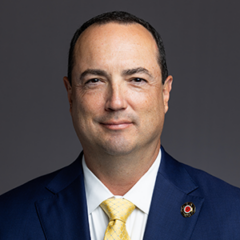
Stephen Gilman
10th District Vice President
Professional Fire Fighters of Arizona
Arizona firefighters operate in one of the most hostile legislative environments in the country. Right-to-work, perpetual pension threats, and a legislature that routinely tests the boundaries of what labor can absorb. What follows is not a list of wins and losses. It is a record of a state affiliate that stayed on the field, round after round, and moved the line.
Legislative Front
Certificate of Need, EMS System Defense
Arizona fought off multiple attempts to dismantle the Certificate of Need system that governs ambulance transportation in this state. These were not procedural disputes. The bills in question would have opened Arizona to an unregulated ambulance market, threatened fire-based EMS response thresholds, stripped rural communities of reliable ambulance coverage, and created budget deficits for fire districts by allowing hospitals to move into transportation and take revenue that currently sustains local EMS operations. We killed them. The CON system stands.
Gift Clause Expansion, Union Release Time
One bill sought to expand the gift clause provision in a way that would have eliminated union release time entirely, cutting members off from the ability to represent themselves and their colleagues where it matters most. We helped defeat it.
Supermajority Requirement for Tax and Capital Increases
A bill requiring supermajority votes at the city council level to raise taxes or approve capital increases would have kneecapped local governments’ ability to fund fire protection. We helped defeat that too.
Wildfire Mitigation, Statewide Ad Hoc Committee
Arizona fire districts are severely underfunded, and wildfire mitigation demands are not shrinking. We pushed to form a statewide ad hoc committee on wildfire mitigation and earned a seat at that table. That seat gave us the opportunity to testify directly on the funding gaps and operational realities that legislators rarely hear from the people living them.
Tier 3 Pension Reform, Two Years of Ground War
This fight deserves an honest account. In year one, operating under a 50/50 contribution split, we pushed to cap the member’s 50% at 9.5%. Other stakeholders were not ready, and the conversation collapsed. We did not get what we came for. In year two, we pushed to allow members to take distributions after 25 years of service regardless of age. That effort was defeated in committee on a bipartisan basis after our opponents attached a $400 million price tag to the proposal. The number was designed to end the conversation, and for this session, it did. We will be back.
Bills Trending Toward Passage This Session
The session is still open. These measures are moving: banning PFAS in firefighting foam; clarifying cancer presumptions to specify adenocarcinoma as a standalone cancer and creating a pathway to recognize papillary thyroid cancers; renewing the Craig Tiger Act for mental health with the sunset clause removed permanently; and redefining “firefighter” under statute to expand workers’ compensation protections to members who currently fall outside coverage.
Services and Programs
Arizona Firefighter Foundation
The Foundation launched ahead of schedule when Arizona suffered a double line-of-duty death in the White Mountains. We were not fully ready. We launched anyway. The effort worked, and it accelerated everything. In our first year, the Foundation raised several hundred thousand dollars. That money funded the development and sponsorship of the Workers’ Compensation Technician Class, where we train leaders from across the state to become effective advocates for their members by learning directly from the experts who handle these cases.
PFFA Political Training Academy
Arizona hosted its first ever PFFA Political Training Academy, bringing leaders from across the state together for Arizona-specific political training tailored to one of the most challenging right-to-work environments in the country. The program was a genuine success and it will not be the last one.
Fire District Funding Committee
We stood up a fire district funding committee to facilitate structured conversations on funding models and legislative opportunities. The committee moderates those conversations now and will carry the strongest proposals to the legislature.
Challenges
Fire district funding and Tier 3 pension reform are the two issues that keep Arizona fire labor up at night, and they should. Underfunded districts cannot staff adequately, cannot train properly, and cannot retain members long enough to build a professional fire service. Tier 3 has now beaten us back two sessions in a row with manufactured fiscal arguments. We are building the counter-argument, lining up the right stakeholders, and coming back with a stronger coalition. Neither of these fights is over.
Closing
Arizona does not have the luxury of working in a friendly political climate. Every gain here gets tested immediately, and every setback requires a rebuilt strategy. What this affiliate has demonstrated is the ability to absorb resistance and keep moving. The Foundation is raising real money. The political training infrastructure is in place. The legislative relationships are deepening. Arizona is building something that will last.
Local 3066, United Yavapai Firefighters, Labor-Management Recovery
In the months leading up to the 57th IAFF Convention in Boston, the labor-management environment at United Yavapai Firefighters had deteriorated to a breaking point. Under Chief Freitag, anti-labor actions had mounted, trust had eroded, and firefighters had been systematically excluded from meaningful dialogue about decisions affecting their careers and their department. Local 3066 responded the way a union responds when every other avenue has been exhausted. The local adopted a Vote of No Confidence. Delegates to the convention unanimously supported a resolution censuring Chief Freitag. The message was unambiguous: the treatment of firefighters and their elected representatives was unacceptable, and the IAFF would not look away.
The solidarity demonstrated by Local 3066, the PFFA, and the IAFF created the political pressure that mattered. In September, the elected governing board terminated Chief Freitag. The relief was immediate. The Local President’s job was restored. Threatened demotions against two members were stopped. And the work of rebuilding a functional labor-management relationship could finally begin.
What followed was not a return to the status quo. The parties developed a Meet and Confer resolution and built a workplace culture where firefighters have a real voice in decisions that affect their safety, their careers, and the communities they serve. The resulting framework established safeguards that protect current members and the members who will come after them — transparency, accountability, due process, and meaningful employee involvement, codified and in place.
Local 3066 continues to build on that foundation. What happened at United Yavapai Firefighters is a demonstration of what collective action and institutional solidarity can produce: not just the removal of a bad actor, but the construction of something better in his place.
California Professional Firefighters
California firefighters are not waiting to be protected. They are building the architecture of protection themselves, through legislation, research, and the hard work of locals who refuse to accept that occupational cancer, behavioral health failures, and inadequate retirement are simply the cost of the job.
This report covers California’s legislative progress, cancer research investments, behavioral health work, and the California Fire Foundation’s response to the most destructive fire event in the state’s history.
Legislative Front
California moved a full slate of legislation in 2025 and 2026. This is not a wish list. These are bills with teeth, most of them already signed or advancing through the second house.
AB 1181 (2025), PFAS in Firefighter Turnout Gear
California did not stop at banning PFAS. This bill grants Cal OSHA authority to adopt standards more protective than NFPA 1970, and it closes the substitution loophole by prohibiting regrettable replacements like brominated flame retardants. Manufacturers cannot simply swap one toxin for another and call the gear clean.
SB 230 (2025), Workers’ Comp Presumptions for Federal and DOD Firefighters
Federal firefighters, NASA installation firefighters, and airport firefighters had been left outside the presumption framework. SB 230 closes that gap. When a firefighter gets hurt in the line of duty, the jurisdiction of their employer should not determine whether they receive protection.
AB 841 (2025), Lithium-Ion Battery Fire Response
Lithium-ion battery fires represent a category of hazard the fire service is still catching up to. This bill directs the State Fire Marshal to convene experts and produce recommendations on PPE, decontamination protocols, and post-fire health screening. California members respond to these fires daily in vehicles, homes, and utility-scale energy storage systems. They need updated guidance, and now the state is mandated to provide it.
SB 283 (2025), Battery Energy Storage Facility Safety
The frequency of battery energy storage facility fires made this legislation necessary. Working with the IBEW, CPF secured requirements that project applicants meet and confer with fire agencies, that fire inspections become part of project approval, and that the State Fire Marshal weigh facility location during the next building standards update.
AB 123 (2025), Pre-Apprenticeship EMT and Paramedic Academy Funding
California secured $10 million in the State Budget for the California Firefighter Joint Apprenticeship Committee to continue pre-apprenticeship EMT and Paramedic academies. This includes upskilling programs for active-duty firefighter EMTs. Workforce development at this scale is a long-term investment in the quality and readiness of the fire service.
SB 1180 (2024), Community Paramedicine Reimbursement
CPF built the community paramedicine and triage-to-alternate-destination framework. The problem was that departments provided these services without reimbursement. SB 1180 requires health care plans to reimburse for community paramedicine, triage-to-alternate-destination, and mobile integrated health programs. The programs are now financially sustainable.
AB 3025 (2024), 1937 Act Pension Protections
After SB 278 addressed disallowed compensation in CalPERS, members in 1937 Act systems remained exposed. AB 3025 implements protections for both active members and retirees to prevent repayment demands and benefit reductions caused by employer-side compensation manipulation.
AB 1383 (2026), Retirement Benefits for PEPRA Safety Members
This is CPF’s highest legislative priority in 2026, and it is currently moving through the second house. AB 1383 lowers the retirement age for PEPRA members from 57 to 55. It creates a new formula option of 3% at 55, subject to local bargaining. It allows employers to move between tiers so agencies previously stuck at lower formulas can offer stronger retirement. It raises the compensation cap to align with the Social Security wage base, addressing an arbitrary ceiling that undermines recruitment and retention. Every one of those provisions matters. This is the retirement bill California firefighters have needed since PEPRA took effect.
SB 1024 (2026), Post-Birth Leave
Paid leave for firefighters who have given birth is not standardized across California departments. Some locals have won 16 weeks. Most have not. SB 1024 would mandate 26 weeks of paid post-birth leave without requiring members to first burn through their accrued leave. This is a direct recruitment and retention measure for women in the fire service.
Fire Ops 101 for the California Legislature
Sacramento Area Firefighters Local 522 and surrounding agencies hosted California legislators through a full Fire Ops day: fireground survival, ladder climbs, burn trailer, full PPE and SCBA. Legislators who have voted on firefighter bills for years, many without ever pulling a charged line, now have a physical understanding of what the job demands. That education matters when we go back to the table.
Firefighter Cancer Research
California did not wait for a federal program. California built its own.
AB 700, California Firefighter Cancer Prevention and Research Program
This program originated from a resolution brought by Andrew Ghali, President of Hayward Firefighters Local 1909, at the 2020 CPF Convention. What started on the convention floor became the first legislation in the country to fund community-based participatory cancer research specifically for the fire service. In Fall 2024, eight research teams received awards totaling nearly $6 million. Every project is co-led by California firefighters and UC researchers, focused on exposures, behaviors, decontamination, and cancer risk reduction.
CAFF-CRS Biomarkers Substudy
CPF secured $10 million in funding for a study led by LA County Firefighter and researcher Dr. Derek Urwin, in partnership with UC Davis. The study tracks long-term biomarker data to identify the biological mechanisms behind fire service cancer and provides participating firefighters with actionable health information. Dr. Urwin expanded this work in partnership with CPF following the LA Firestorm in January 2025.
Kaiser Permanente California Firefighter Health Study
CPF partnered with Kaiser Permanente researchers on a new California Firefighter Health Study. The study examines cancer risk factors and includes firefighters who retired within the last decade, recognizing that latency periods mean retired members carry risk we are still measuring.
Behavioral Health
During a 90-day window in the Fall of 2025, California lost four active-duty firefighters to suicide. Four. That number is not a statistic to move past quickly. It reflects a system under pressure and members in pain, and California’s fire service and labor leadership must be clear-eyed about what it demands of us.
The California Fire Service Behavioral Health Task Force expanded the Suicide Prevention Stand Down from a one-day event to a month-long observance in September. The Task Force also added a retiree subcommittee, acknowledging that the risk does not end at retirement and that our responsibility to members does not either.
California Fire Foundation
The LA Firestorm in January 2025 was the most destructive fire event in California history. The California Fire Foundation deployed $1.8 million in immediate short-term relief to affected communities during the fires. Additional funding continues flowing through grants for long-term recovery to firefighter associations, community-based organizations, fire departments, federally recognized tribes, and nonprofit organizations.
Construction completed on Phase 1 of the California Firefighters Memorial site expansion. Fundraising for subsequent phases continues.
The next California Firefighters Memorial Ceremony is October 3, 2026. We will honor 37 fallen California firefighters. Thirty were honored at the 2025 ceremony.
Closing
California labor does not measure its work by what it introduced. It measures by what it moved, what it built, and what it protected. California advanced pension reform, cancer research, occupational health standards, behavioral health infrastructure, and EMS sustainability simultaneously. The locals doing this work did not wait for favorable conditions. They created them.
California stands ready to carry this work forward at the International level and to support every affiliate doing the same.
Hawaii Fire Fighters Association
Hawaii fire fighters operate across a chain of islands separated by ocean and linked by shared commitment. The HFFA’s work over the past two years has reflected that commitment: honoring a fallen brother, securing fair compensation through arbitration, advancing occupational health legislation, and preparing for an election cycle that will shape the conditions of fire service labor for years to come.
Line of Duty Death
Fire Fighter Jeffrey Fiala died in the line of duty on January 6, 2025. He was 25 years old. He is survived by his wife Fiona, his parents Michael and Kristine, his twin brother Andrew, and his older brother Matthew. Fire Fighter Fiala entered the Honolulu Fire Department in July 2023, graduated in March 2024, and was assigned to Station 9. He did not have long on the job. He gave everything he had.
The IAFF’s presence and recognition at his memorial service meant something to his family, to the Department, and to every brother and sister across the state who stood with them. Brother Fiala was honored at the National Fallen Firefighters Memorial in May 2025. He will be remembered at the IAFF Fallen Firefighter Memorial in September 2026. His name will not be forgotten.
Interest Arbitration
HFFA’s interest arbitration hearing ran December 8 through December 12, 2025. The HFFA arbitration team brought expert witnesses who gave the panel what it needed to understand the full scope of what Hawaii fire fighters face on the job. Dr. Danny Whu, IAFF Chief Medical Officer, presented testimony on fire-related hazardous working conditions. Dr. Derek Urwin, IAFF Chief Science Advisor, addressed the occupational risks to physical and mental health across a career in the fire service.
The HFFA is grateful to the IAFF for making both experts available. Their testimony was not background material. It was central to the case. The resulting arbitration decision secured salary adjustments and health care premium commitments that the membership had earned and that the employer was required to fund. Those commitments are now law.
Legislative Front
The 2026 Hawaii Legislative Session adjourned on May 8, 2026. More than 3,000 bills were introduced. Two hundred sixty-eight reached the Governor’s desk. HFFA engaged on both offense and defense throughout the session.
HB 2387 HD1, Cancer Presumption Expansion
This bill represented a major step forward for Hawaii fire fighter occupational health. The legislation would have expanded workers’ compensation medical benefits to cover adenocarcinoma and mesothelioma of the respiratory system, along with cancers of the buccal cavity, cervix, colon, esophagus, ovary, pharynx, skin, female reproductive organs including the uterus, endometrium, and fallopian tubes, thyroid, and malignant melanoma. Critically, it would have shifted the burden of proof, requiring an employer to affirmatively demonstrate that a cancer was not associated with firefighting duties before benefits could be denied.
The bill did not make it out of the House and Senate Conference Committee. That outcome is not acceptable, and it will not stand as the final answer. HFFA has secured commitments from House and Senate members that the bill will be reintroduced next session. The work does not stop because the session ended.
HB 2272 CD1, Arbitration Funding
This bill appropriated the funds required to implement the health care premium and salary adjustments secured through HFFA’s arbitration decision. The Legislature passed it. Governor Green signed it on May 22, 2026. The money is committed. The members will receive what the arbitration panel awarded.
2026 Elections
Hawaii’s 2026 election cycle runs a Primary on August 8 and a General on November 3. More than three hundred candidates are competing for more than one hundred elected positions. The races include the Governor, Lieutenant Governor, Maui Mayor, and Kauaʻi Mayor, along with more than ninety state and county seats.
This is a cycle that matters. The officials elected this year will determine the legislative environment Hawaii fire labor operates in for the next several years. HFFA is engaged, and it will be present through November.
Closing
Hawaii fire fighters work in conditions that are distinct from every other state in the district. Remote geography, island-by-island jurisdiction, and a political environment that requires sustained relationship-building rather than volume. What the HFFA has demonstrated over this period is the discipline to do that work on every front simultaneously: honoring a fallen member, winning at the arbitration table, pushing the legislature on occupational health, and preparing to exercise political power in an election year. That is what an affiliate that takes its responsibilities seriously looks like. Hawaii will continue to do the same.
New Mexico Professional Firefighters Association
New Mexico fire labor operates with a smaller footprint than most state affiliates, but the work coming out of the past two sessions has not been small. The NMPFFA has overhauled the state’s presumptive disability framework, secured the funding to build New Mexico’s second dedicated firefighter training academy in northern New Mexico, and its first Line of Duty Death memorial, and continued to grow the IAFF footprint in a state where every new local is hard-won. This is what building from the foundation looks like.
Legislative Front
HB 128 (2026), Firefighter Occupational Disease Disablement
This was a full overhaul of New Mexico’s presumptive disability act. The bill expanded the presumptive cancer list from 11 to 21 cancers, bringing state law into alignment with the federal Honoring Our Fallen Heroes Act. Equally important, and in some ways more so, it lowered the qualifying threshold for presumption from 10 to 15 years of service down to 5. That change matters because cancer does not wait until year ten or fifteen to manifest, and members were being denied coverage on a service-length technicality that had no medical foundation. The bill also preserved existing coverage for heart injuries, blood-borne illnesses, and PTSD, with no statute of limitations. We did not trade old protections for new ones. We raised the floor.
HB 255 (2025), Public Safety Workforce Building Program
The NMPFFA secured state grant funding for targeted initiatives that increase available workforce and expand employment capacity at fire departments and public safety agencies across the state. In a state where recruitment and retention numbers are tightening every year, this funding gives departments a direct mechanism to grow their ranks rather than simply absorb attrition.
Bills That Moved But Did Not Cross the Finish Line
Two bills the NMPFFA sponsored advanced through the House before dying in the Senate Judiciary Committee.
HB 170, Cannabis Employment Protection Limits, sponsored by House Floor Leader Reena Szczepanski, would have protected firefighters from adverse employment action based solely on off-duty cannabis use. It passed the House. Senate Judiciary did not let it move.
HB 101, the Firefighter and EMS Provider Peer Support Act, sponsored by Representative Liz Thompson, would have established a formal peer support framework for firefighters and EMS providers while providing protections to those peer supporters who serve our most vulnerable. It passed the House. Same committee, same result.
Both bills will be back.
Infrastructure and Recognition
Northern New Mexico Fire Training Academy
The NMPFFA lobbied for and helped secure $40 million in state funding to establish the DHSEM Northern New Mexico Fire Training Academy. For generations, New Mexico firefighters in the central and northern part of the state traveled to Socorro in the south to access most of their required training. That distance created real barriers — to attendance, to frequency, and to the State Fire Marshal’s ability to train firefighters to national standards at the scale the job demands. The new academy changes that equation entirely. Central and northern New Mexico firefighters will have a facility close enough to use regularly, and the State Fire Marshal will have the infrastructure to close the gap between where training participation is and where it needs to be. New Mexico firefighters have for too long depended on a singular location to host them. That changes now.
New Mexico Line of Duty Death Memorial
On the grounds of the new academy, the NMPFFA is building New Mexico’s first dedicated Line of Duty Death memorial. New Mexico has lost firefighters in the line of duty for generations without a single physical place to honor them collectively. That ends in December 2026, when the memorial holds its ribbon-cutting ceremony. It will be built and maintained to honor our fallen for as long as New Mexico has a fire service.
Local 244 Capital Outlay
Local 244 Treasurer and NMPFFA Legislative Director Gus Pydrotty helped secure nearly $5 million in capital outlay funding in 2024 for fire service projects across the state, including station remodels, apparatus replacement, and new station construction. That is the work of someone who knows how to move money through a state budget process, and New Mexico fire labor is better equipped because of it.
Organizing and Affiliate Growth
The NMPFFA has run an aggressive organizing program since 2024, expanding the IAFF footprint in a state where every new charter is earned the hard way. Three new locals have been chartered or reaffiliated in that window: Local 3545 in Ruidoso, Local 4348 in Alamogordo, and Local 5441 in Torrance County. Coordinated talks are currently underway, in partnership with the 10th District, to organize the Portales Fire Department.
These are not symbolic gains. Each new local represents firefighters who, until recently, had no collective voice in their working conditions, no formal mechanism for representation, and no seat at the table when their employer made decisions about their livelihoods. They have one now.
Executive Board
At the NMPFFA Biennial Convention in September 2025, the membership elected the following Executive Board by acclamation:
President Miguel Tittmann, Local 244, Albuquerque (newly elected)
Secretary/Treasurer Dusty Warden, Local F294, White Sands (incumbent)
District 1 Vice President Teddy Ygbuhay, Local 244, Bernalillo County (newly elected)
District 2 Vice President Chris Johnson, Local 2362, Las Cruces (incumbent)
District 3 Vice President Eutimio Ortiz, Local 4366, Santa Fe County (incumbent)
District 4 Vice President (Federal) Adan Fabela, Local F294, White Sands (incumbent)
Trustee Chris Torres, Local 2362, Las Cruces (newly elected)
Trustee Charles Gonzales, Local 2059, Santa Fe (newly elected)
Acclamation matters. It signals a membership unified behind the direction of the affiliate at a moment when unified direction is the precondition for every fight that follows.
Closing
New Mexico is building. The legislative framework now offers stronger occupational health protections than it did two years ago. The training infrastructure will expand to keep up with the continual training needs of New Mexico firefighters, ensuring growth of services to New Mexicans rather than depending on the willingness of neighbors to host us. The memorial will give every New Mexico firefighter who has died in the line of duty a place where their name is read. The capital outlay work is putting real money into stations and apparatus. And the organizing pipeline keeps adding voices to this association, one local at a time.
New Mexico is not the largest state affiliate, and the NMPFFA does not pretend otherwise. What this affiliate has demonstrated is that size and capacity are not the same thing. New Mexico moves, and what it moves stays moved.
Northern Marianas Professional Firefighters Union, Local 5335
The Commonwealth of the Northern Mariana Islands does not have a long history of organized labor in the public sector. Local 5335 is working to change that. What this local has undertaken since its founding is not just a fight for a contract. It is a fight for the right to exist as a union at all, and every step forward has been earned against a government that has made obstruction its default position.
Who They Are
The Northern Marianas Professional Firefighters Union, Local 5335, was established in 2021 and affiliated with the IAFF. It is the first public-sector union in the history of the CNMI. That fact alone deserves to be stated plainly. In a jurisdiction where public employees have never had a collective voice, these firefighters built one from the ground up.
The Fight for Recognition
Since 2023, Local 5335 has pursued every available avenue to be recognized as the bargaining representative for its members. The local presented a comprehensive Memorandum of Agreement to the Government of the Northern Mariana Islands. The government’s response has been two negotiation meetings in two and a half years, followed by a refusal to meet at all.
There is currently no law in the CNMI requiring the government to recognize a public employee union. That is the core of the problem, and Local 5335 has taken it directly to the legislature. Proposed legislation is under consideration that would recognize fire and police unions, but it is facing sustained pressure to delay, dilute, or bury the language before it can take effect. The local has testified regularly before congressional subcommittees, making the case that firefighters who run toward emergencies in the CNMI deserve the same basic right to negotiate their working conditions as firefighters everywhere else in this district.
If Local 5335 secures recognition, it will become the first public employee union in CNMI history. That is not a footnote. It is a precedent that will outlast any single contract cycle.
Closing
Local 5335 has not backed down. Two and a half years of obstruction, a government that will not come to the table, and no statute requiring it to do so — and the members are still standing. Still testifying. Still united. The 10th District stands with them. This fight is not over, and it will not be abandoned. When Local 5335 wins recognition, it will make history not just for CNMI firefighters, but for the IAFF. That moment is worth fighting for, and these members have proven they are willing to fight for it.
10th District Legal Affairs
The 10th District does not wait for legal problems to become permanent. Since the 2024 Convention, this district has carried eight Guardian Policy cases, five active FLSA lawsuits representing thousands of members, two amicus briefs in state appellate courts, and formal legal guidance across more than a dozen locals. What follows is a record of that work — what it cost to bring, what it produced, and what is still in motion.
Guardian Policy
Eight Guardian Policy cases have been active in this district since the last convention. Five are closed. Three are still moving.
Local 112, Los Angeles, CA
IAFF General Secretary-Treasurer Lima participated in a peaceful labor rally at LAX, coordinated in advance with the LAPD, and was subsequently issued a written reprimand by the City of Los Angeles. The IAFF filed suit. The City rescinded the discipline shortly after the lawsuit landed. The case settled with the City paying $15,000 in legal fees to the IAFF. Closed.
Local 3066, United Yavapai Firefighters, AZ
IAFF General Counsel issued a cease-and-desist letter to Chief Freitag and CAFMA officials after the department unlawfully surveilled union members, threatened reprisal for protected activity, and blocked promotions. Three firefighters filed harassment complaints. What followed was terminations and demotions. Following Chief Freitag’s removal, the interim chief paused all pending discipline. The investigation ultimately dismissed the termination in its entirety and downgraded both demotions to two-day suspensions. Closed.
Local 4348, Alamogordo, NM
After affiliating with the IAFF, firefighters had their pay unilaterally reduced by the City. IAFF Legal Counsel sent a demand letter. The City restored all firefighters to status quo pay and terms of employment. A new collective bargaining agreement is being negotiated. Closed.
Local 4361, El Mirage, AZ
The City refused to comply with an arbitration award and fired Vice President Glynn in retaliation for his protected union activity and public statements about the City’s pay practices. The IAFF filed suit in federal district court. The matter settled for $50,000 to Vice President Glynn, $10,000 above his actual damages, plus $49,000 in attorneys’ fees reimbursed to the IAFF EDF, representing substantially all recoverable fees in the case. His termination was converted to a resignation and a neutral job reference was secured. Closed.
Local 5441, Torrance County, NM
Three local officers faced pretextual investigations and intense scrutiny within months of affiliating with the IAFF. One was terminated. IAFF Legal Counsel filed a Prohibited Practices Complaint with the New Mexico PELRB and amended it days later when the County retaliated again. Both charges were favorably settled. Closed.
Local 3545, Ruidoso, NM
After Local 3545 filed a representation petition, the Village responded by reassigning fifteen firefighters across shifts in a transparent attempt to disrupt organizing. IAFF Counsel filed for a temporary restraining order. The TRO was granted, upheld on appeal, and converted into a preliminary injunction that will remain in effect for the duration of the case. Local 3545 has since amended its petition to seek certification under a PEBA grandfathering clause based on the local’s recognized status in 1999. The Village has not yet responded. This fight continues.
Local 3602, Clovis, NM
IAFF Counsel filed a certification petition for the newly formed local. The City challenged the composition of the bargaining unit, arguing that officers should be excluded. A Hearing Examiner sided with the local. The City appealed. The PELRB ruled that Local 3602 was already the exclusive representative of the department under a grandfathering provision of New Mexico’s Public Employee Bargaining Act and ordered the parties to bargain over final unit composition. That bargaining is underway.
Local 5335, CNMI
There is no law in the Commonwealth of the Northern Mariana Islands requiring the government to bargain in good faith with a public employee union. Because of that gap, IAFF Legal Counsel drafted proposed legislation establishing mandatory public sector bargaining specifically for CNMI firefighters. The bill is currently pending in the Senate.
Local 3395, Hollister, CA
Local President Grewohl applied for Guardian coverage in February 2026 after the City opened an investigation into his communications with government officials on matters of public concern. The application is pending while the investigation continues.
FLSA Litigation
The district is carrying five active FLSA lawsuits. Three of them involve Local 112 in Los Angeles alone. Taken together, these cases represent thousands of members and some of the most consequential wage and hour litigation on the IAFF’s national docket.
Local 112, Los Angeles, CA — Regular Rate
More than 663 Local 112 members are plaintiffs in a federal lawsuit alleging the City systematically excluded contractually required pay increases and premium payments from overtime calculations. A companion labor arbitration ordered the City to conduct a third-party payroll audit at its own expense. The parties have since negotiated a comprehensive settlement framework that resolves willfulness and good faith issues without further litigation, requires individualized verification for every bargaining unit member, and mandates pension recalculations for retired employees based on corrected backpay. The audit is expected to be complete by Fall 2026. Federal court approval of the settlement is anticipated to follow.
Local 112, Los Angeles, CA — Rotational Paramedics
More than 430 members are plaintiffs in a separate FLSA lawsuit targeting the City’s application of the 207(k) partial overtime exemption to rotational firefighter paramedics who perform no fire suppression duties during ambulance shifts. Discovery runs through August 2026. Summary judgment motions are due September 2026. If the legal issues are not resolved at summary judgment, trial is set for January 2027. IAFF Legal Counsel has been prepared to try this case and will be ready when the date arrives.
Local 112, Los Angeles, CA — Early Relief
In January 2026, IAFF Legal Counsel filed a third FLSA lawsuit on behalf of Local 112 members who were owed overtime for work performed between shifts, the City’s so-called early relief practice, and who had no avenue to participate in earlier litigation. More than 1,033 members have signed retainer agreements. The final plaintiff count is expected to reach between 1,100 and 1,200. The parties are discussing early mediation.
Local 112, Los Angeles, CA — Canine Search Specialists
IAFF Legal Counsel confirmed that the City was paying Canine Search Specialists for only 10 hours per week of dog care and training time, despite the actual time running 15 to 20 hours on average. General President Kelly approved litigation in July 2025. The seven CSS members are currently deciding whether to move forward.
Local 2260, AZ — Gilbert, Mesa, Superstition Fire, Queen Creek
The IAFF filed FLSA lawsuits against the Town of Gilbert and the City of Mesa in summer 2025, targeting the improper application of the 207(k) exemption to dual-trained firefighter paramedics assigned to ambulances. Both defendants filed motions to dismiss on overlapping legal theories, and both cases are now before Judge G. Murray Snow. Plaintiffs filed Second Amended Complaints in May 2026 addressing the Court’s concerns about pleading specificity. If Gilbert and Mesa are resolved in the members’ favor, the remaining municipalities are expected to settle without litigation.
Amicus Filings
Benchmark Insurance v. VanderKrol, Arizona Supreme Court
The IAFF filed an amicus brief arguing that Arizona’s 2021 firefighter cancer presumption applies retroactively to claims filed before the statute took effect. The brief argued that the presumption is a procedural right — it governs how a claim is proved, not what underlying entitlement exists — and that Arizona law permits retroactive application of procedural statutes. The Arizona Supreme Court has not yet issued a decision. When it does, it will set the standard for how far back Arizona members can reach with their cancer claims.
IAFF Local 1319 v. City of Palo Alto, California Court of Appeal
The IAFF filed an amicus brief in support of Local 1319’s position that Palo Alto violated the Meyers-Milias-Brown Act by bypassing its meet-and-confer obligations through a ballot initiative. The brief made clear that allowing municipalities to use the ballot box to escape bargaining obligations would give California employers a roadmap to hollow out public sector labor law statewide. In June 2024, a California appellate court reversed the adverse trial court ruling 2-1, adopting the IAFF’s and Local’s position. The decision stands. Closed.
Legal Guidance
Alongside litigation, IAFF Legal Counsel provided formal guidance to locals across the district on governance, bargaining, and statutory interpretation. The reach of that work tells its own story about the demand for legal support across this district.
Silver City, New Mexico tried to implement an overpayment claw back agreement without bargaining with Local 2430. IAFF Legal Counsel drafted a threat letter. The City rescinded the agreement and agreed to bargain. Taos County unilaterally rescinded a voter-approved fire and EMS gross receipts tax. IAFF Legal Counsel advised Local 5245 that the County likely exceeded its authority and identified a declaratory judgment pathway. Local 3898 in Hanford faced a City Council threatening to unilaterally remove Battalion Chiefs from the bargaining unit mid-negotiation. Counsel advised the local that such action would constitute an unfair labor practice and gave the local a six-month window to file charges if the City moved.
Additional guidance was provided on officer election eligibility and DOL compliance to Locals 55, 112, 1364, and 1634; electronic voting standards to Local 1186; CBL amendment correction procedures to Local 1289; membership category restrictions under the IAFF Constitution to Local 2274; contractual wage survey compliance to Local 2974 in Lake Havasu; and officer vacancy procedures to Local 3821.
The legal program is not a last resort for this district. It is a standing tool, used early and used often, because the locals here have learned that the law is only as useful as the willingness to invoke it.
IAFF Staff
The work of this district does not happen in isolation. The IAFF’s Technical Assistance and Information Resources Department has been an indispensable partner to locals across the 10th District, producing hundreds of Municipal Financial Analyses, GIS and Standard of Coverage reports, and pay analyses that give our locals the data they need to walk into a negotiation, a budget hearing, or a legislative chamber and make an argument that cannot be dismissed. That work is often invisible to the members who benefit from it, but it is foundational to every contract win and every funding fight documented in this report.
To the staff of the General President’s office and the General Secretary-Treasurer’s office — thank you. The support this district has received from the IAFF’s leadership staff has made a real difference in real locals, and it is recognized and appreciated here.
Acknowledgment
None of the work documented in this report happens without the people who show up every day across this district to do it. The 10th District is a large and demanding geography covering five states, an island chain, and a territory spread across the Pacific, and the staff and representatives who cover it bring the same commitment to this work that our members bring to the job.
District Field Service Representatives Floyd Rollins, James Smith, and Justin Cheney carry the work of this district into locals across Arizona, California, Hawaii, New Mexico, and the CNMI. Their presence on the ground, in the locals, and at the table makes the difference between good intentions and real outcomes.
The State Representatives and State Presidents who serve this district are the connective tissue between the 10th District and the members in every corner of it. Their advocacy, relationships, and tireless work on behalf of their locals deserve recognition here:
Aaron Lenchanko
Andrew Fukuda
Anthony McHale
Brian Centoni
Byong Kim
Daniel Freiberg
Darrell Roberts
David Padilla
Eric Rowley
Gerald May
Hunter Clare
Jair Juarez
John Bagala
Kevin Aguayo
Kevin Fugate
Matt Cole
Michael Feyh
Miles Sweeney
Miguel Tittman
Nicholas Latini
Robert Lee
Ryan Ward
Sean Burrows
Seth Olyer
Shawn Stark
Timothy Hill
Tony Spitaleri
Vincent Wells
To every member of Team10 — thank you. This district moves because you move it.